Autoimmune Hyperthyroidism: Causes, Symptoms, and Treatment Insights
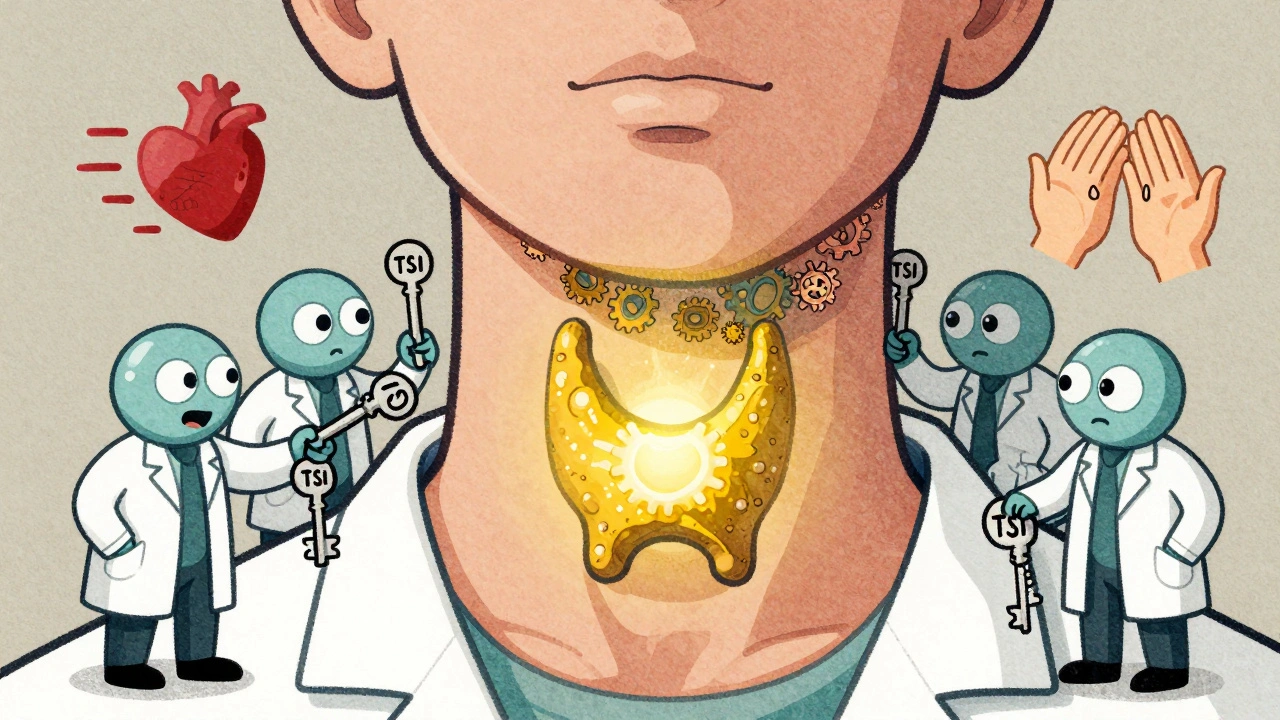
When your immune system mistakenly targets your thyroid, you get autoimmune hyperthyroidism, a condition where the thyroid produces too much hormone due to immune system error. Also known as Graves' disease, it’s the most common cause of an overactive thyroid—and it’s not just about feeling jittery or losing weight. This isn’t a simple hormone imbalance; it’s your body turning against itself.
This condition doesn’t show up overnight. It often starts with subtle signs: a racing heart, unexplained weight loss, shaky hands, or trouble sleeping. But it can also bring eye swelling, skin changes, or even muscle weakness. What makes it tricky is that many people mistake these for stress or aging. The real clue? High levels of thyroid antibodies, proteins that attack thyroid tissue and trigger excess hormone release. These antibodies, especially TSI (thyroid-stimulating immunoglobulin), are the smoking gun doctors look for.
Treatment isn’t one-size-fits-all. Some people start with methimazole, a drug that blocks thyroid hormone production and is often the first-line choice for managing autoimmune hyperthyroidism. Others use radioactive iodine to quiet the gland down. But there’s growing evidence that adding selenium, a mineral that helps reduce inflammation and thyroid antibody levels can protect the eyes and improve outcomes, especially when used early. It’s not a cure, but it can make the difference between mild symptoms and long-term damage.
What you won’t find in most quick guides is how lifestyle and other meds interact with this condition. For example, if you’re on methimazole, certain foods or supplements can mess with absorption. If you’re also taking blood thinners or statins, your doctor needs to know—because autoimmune hyperthyroidism changes how your body handles those drugs too. And if you’ve been told to just "wait and see," that’s not always safe. Left unchecked, it can lead to heart rhythm problems, bone loss, or even a life-threatening surge called thyroid storm.
Below, you’ll find real-world advice from people who’ve been there—from managing side effects of antithyroid drugs to understanding why selenium helps and when it doesn’t. You’ll see how Graves’ disease connects to other autoimmune issues, what lab results actually mean, and how to talk to your doctor about treatment options that fit your life—not just your numbers. This isn’t theory. It’s what works when you’re trying to feel like yourself again.