Cumulative Drug Toxicity Calculator
Calculate your total medication exposure and see how close you are to known safety thresholds
Calculate Your Cumulative Dose
Most people think side effects happen right away-maybe a headache after taking a new pill, or nausea after a round of chemo. But what if the real danger isn’t what you feel today, but what’s quietly building up inside you over months or years? That’s cumulative drug toxicity: side effects that don’t show up until you’ve been taking the same medicine for so long, your body just can’t handle it anymore.
What Is Cumulative Drug Toxicity?
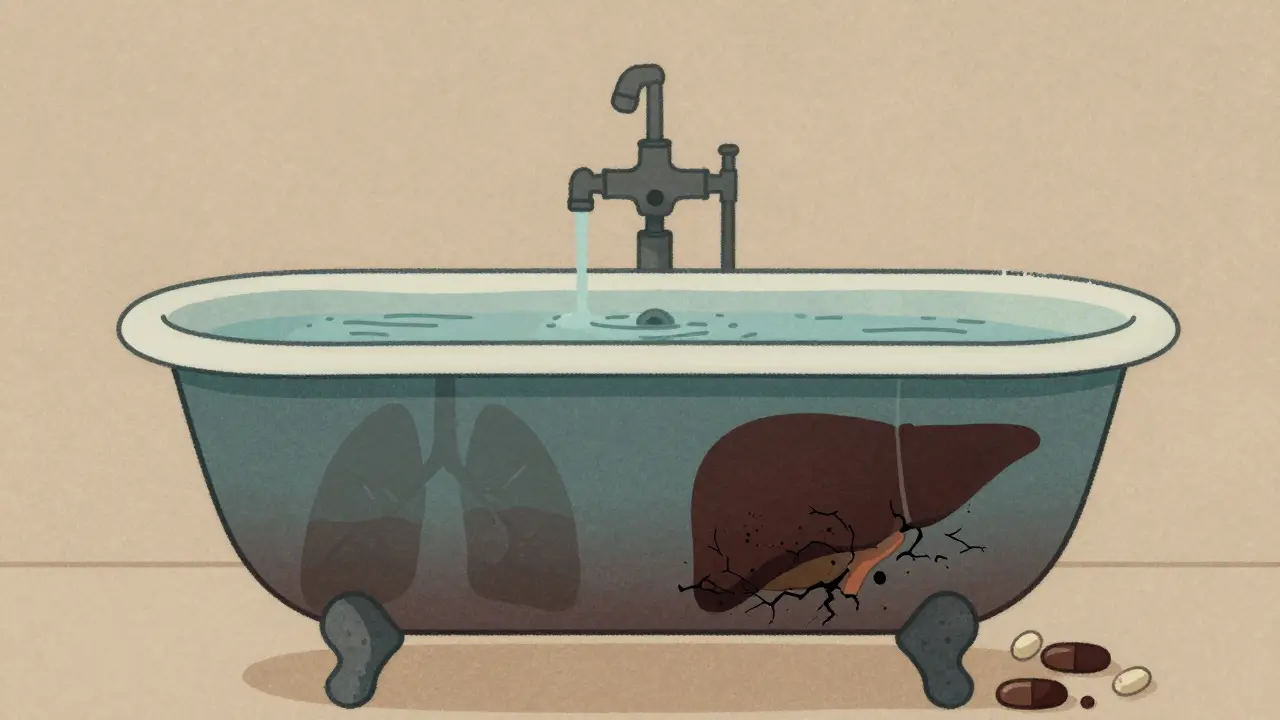
Cumulative drug toxicity happens when your body can’t get rid of a medication fast enough. Instead of clearing out after each dose, the drug slowly piles up in your tissues. Over time, that buildup crosses a line-from safe to harmful. It’s not an allergic reaction. It’s not a mistake in dosing. It’s a slow-motion overdose that sneaks up on you.Think of it like filling a bathtub with the drain half-closed. At first, the water level stays low. You don’t notice anything’s wrong. But after days of running the tap, the water rises higher and higher. Eventually, it overflows. That’s what happens with drugs like amiodarone, digoxin, or certain chemotherapy agents. They stay in your system longer than you expect.
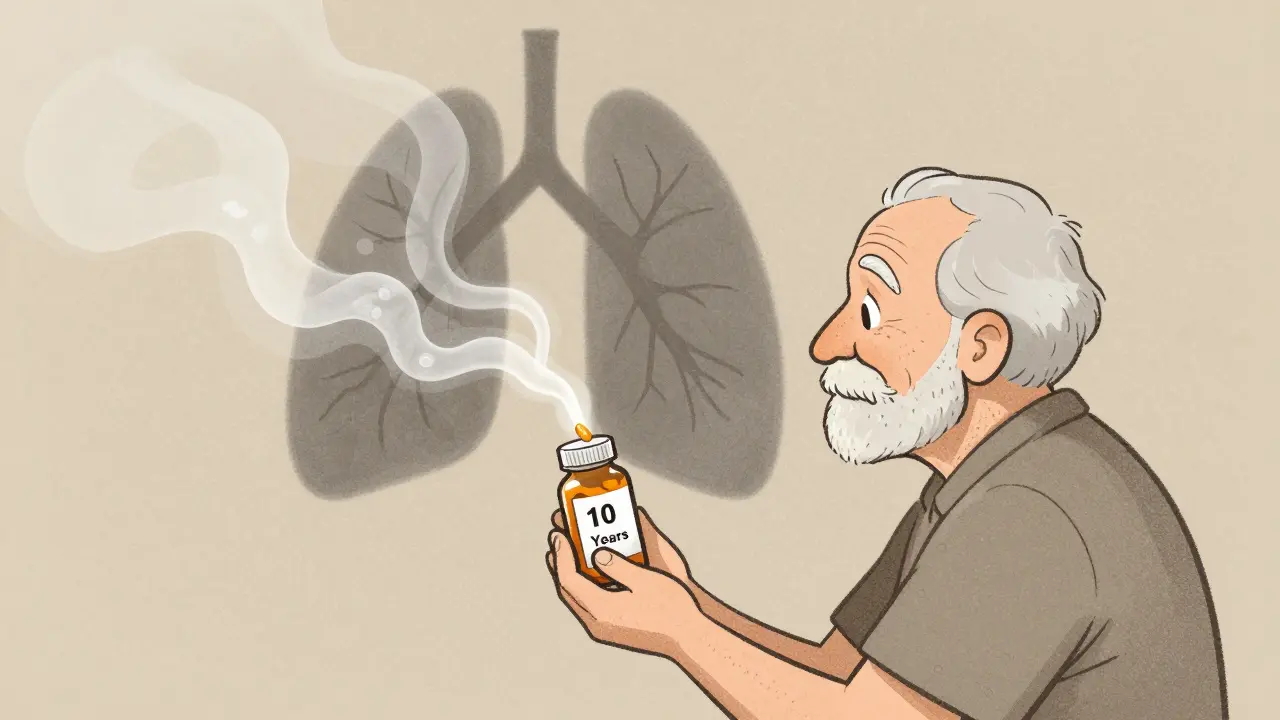
Drugs with half-lives longer than 24 hours are especially risky. That means it takes more than a day for half the drug to leave your body. Some fat-soluble drugs-like vitamin A, D, E, K, or even heavy metals like lead-can hang around for months. One study found that patients on long-term amiodarone developed lung damage after hitting a cumulative dose of 600 grams. And they didn’t know it was coming because their blood tests looked fine each time.
Who’s Most at Risk?
It’s not just about how much you take. It’s about how your body handles it. People with kidney or liver problems are at higher risk because those organs are the main way drugs get cleared. If your liver is sluggish, even a normal dose can become toxic over time. The same goes for older adults. As we age, our organs slow down. A dose that was safe at 50 might be dangerous at 75.People on multiple medications are also vulnerable. One drug might interfere with how another is broken down. For example, some antibiotics can block the liver’s ability to process blood thinners like warfarin. The result? A tiny increase in each dose adds up-and suddenly, you’re at risk of internal bleeding.
And then there’s the silent factor: lifestyle. Environmental toxins, poor diet, and even chronic stress can overload your body’s detox systems. In traditional medicine systems like Ayurveda, this is called Dushi Visha-chronic, low-level poisoning from repeated exposure. Modern science doesn’t use that term, but the idea is the same: your body has limits.
How It Shows Up: The Delayed Warning Signs
Unlike an acute reaction-where you feel sick right after taking a pill-cumulative toxicity hides. Symptoms creep in slowly. You might notice:- Fatigue that won’t go away, even after sleeping
- Unexplained weight loss or loss of appetite
- Changes in your heartbeat or rhythm
- Memory lapses or confusion
- Dark urine, yellowing skin, or persistent nausea
- Unusual bruising or bleeding
These aren’t red flags you’d link to a pill you’ve been taking for five years. But they’re classic signs of drug buildup. A 2019 study in the Journal of the National Cancer Institute found that after six cycles of targeted cancer therapy, over half of patients developed serious side effects-even though only about 25% had them in the first cycle. The damage wasn’t sudden. It was stacked.
One oncologist shared a case on Reddit: a patient on long-term amiodarone for heart rhythm issues had normal blood tests every few months. But after 18 months, she developed severe lung scarring. The cumulative dose had passed 600 grams. By then, the damage was irreversible.
Drugs Most Likely to Cause This
Not all drugs build up. But some are notorious for it. Here are the big ones:- Amiodarone (for heart arrhythmias): Builds up in lung tissue. Can cause scarring, coughing, shortness of breath.
- Digoxin (for heart failure): Accumulates in muscle tissue. Can cause nausea, vision changes, irregular heartbeat.
- Lithium (for bipolar disorder): Slowly builds in kidneys. Can lead to tremors, confusion, kidney damage.
- Aminoglycoside antibiotics (like gentamicin): Collect in inner ear and kidneys. Can cause hearing loss or permanent kidney damage.
- Anthracyclines (like doxorubicin): Damage heart muscle over time. Lifetime dose limits exist for a reason-450 mg/m² is the max to avoid heart failure.
- Methotrexate (for autoimmune diseases): Builds up in liver. Can cause scarring if not monitored.
The FDA now requires cumulative toxicity warnings on 78% of new cancer drugs approved since 2022. That’s up from just 52% in 2017. The message is clear: if a drug stays in your body for weeks, they’re now required to tell you how much you can safely take over time.
Why Monitoring Often Fails
You might think: “If my doctor checks my blood, they’ll catch this.” But that’s the problem. Standard blood tests often miss cumulative buildup. Why?- Most tests check for current levels-not total exposure.
- Some drugs don’t show up in blood tests at all-they collect in organs, fat, or bone.
- Doctors don’t always track the total amount you’ve taken over years.
A Medscape survey of 1,200 doctors found that 82% said patients didn’t stick to monitoring schedules. Someone might forget to get their lithium level checked for six months. Or they stop taking blood thinners when they feel fine-not realizing the risk isn’t in the moment, but in the long-term accumulation.
One nurse on AllNurses described how hard it is to explain to a patient: “You’ve been on this pill for 10 years. Why are you dizzy now? Because your body finally can’t handle the total amount you’ve taken.” Patients don’t get it. They think if it didn’t hurt before, it shouldn’t hurt now.
How to Protect Yourself
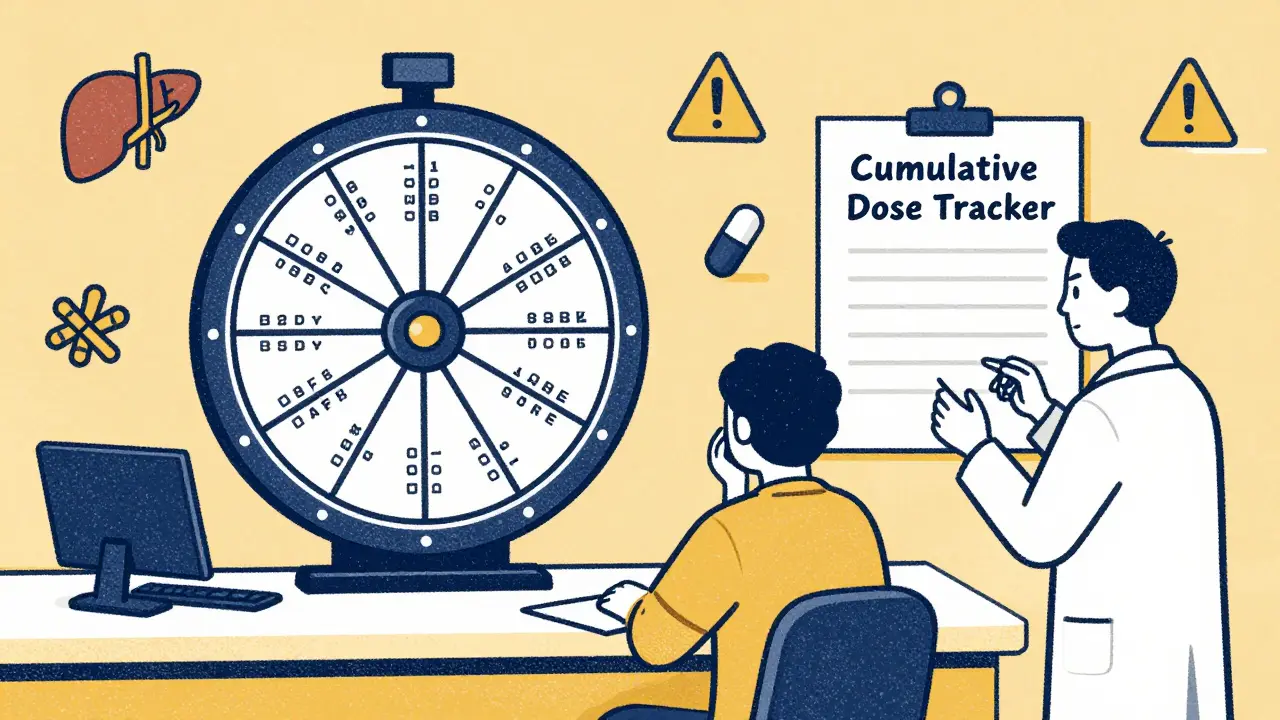
If you’re on a medication for more than a few months, here’s what you can do:- Ask for your cumulative dose. Not just “how much do I take now?” but “how much have I taken in total?” Write it down.
- Know the red flags. If you start feeling off-fatigue, confusion, irregular heartbeat-don’t assume it’s aging. Ask your doctor if it could be drug buildup.
- Get regular organ checks. If you’re on digoxin, get heart and kidney tests. If you’re on methotrexate, get liver scans. Ask your pharmacist what tests you need.
- Review all your meds. Every six months, bring your full list to your doctor or pharmacist. One drug might be slowing down how another is cleared.
- Use a pill tracker. Apps like Medisafe or even a simple spreadsheet can help you log doses over time. This is especially important for drugs like lithium or warfarin.
Pharmacists are your secret weapon. A 2023 report showed that pharmacist-led monitoring programs reduced hospital admissions for drug toxicity by 29%. They track total doses, check for interactions, and catch buildup before it’s too late.
The Bigger Picture
This isn’t just about individual patients. Cumulative toxicity costs the U.S. healthcare system about $1.2 billion a year in extra hospital stays, missed work, and emergency care. It’s why the European Medicines Agency now requires all chronic-use drugs to be tested for cumulative effects before approval.Some hospitals are starting to use AI to predict risk. Memorial Sloan Kettering is testing a model that looks at 27 different factors-genetics, age, liver function, other meds-to forecast who’s most likely to build up toxic levels. Early results show 82% accuracy.
But until these systems are everywhere, the responsibility falls on you. You can’t always trust that your doctor is tracking every milligram you’ve taken over five years. You have to be your own advocate.
What Happens If You Ignore It?
The consequences aren’t just uncomfortable-they can be permanent.- Amiodarone toxicity can cause lung scarring that never heals.
- Lithium buildup can destroy kidney function, requiring lifelong dialysis.
- Digoxin can trigger fatal heart rhythms.
- Chemotherapy drugs like doxorubicin can permanently weaken the heart.
And once damage is done, stopping the drug doesn’t fix it. The body clears the toxin slowly-if at all. The harm stays.
That’s why cumulative toxicity is so dangerous. It’s silent. It’s slow. It doesn’t care if you’ve been “fine” for years. It only cares about the total amount you’ve taken.
Can you reverse cumulative drug toxicity?
Sometimes, but not always. If caught early, stopping the drug and supporting your body with hydration, nutrition, or specific antidotes can help. For example, chelation therapy can remove heavy metals like lead. But if the damage is to organs-like lung scarring from amiodarone or heart muscle damage from doxorubicin-it’s often permanent. The goal is prevention, not reversal.
Do over-the-counter drugs cause cumulative toxicity?
Yes. Long-term use of NSAIDs like ibuprofen or naproxen can damage kidneys and raise blood pressure. High doses of acetaminophen over months can cause liver scarring. Even herbal supplements like kava or comfrey have been linked to liver damage from long-term use. Just because it’s sold without a prescription doesn’t mean it’s safe to take daily for years.
How do doctors calculate cumulative dose?
It’s not always easy. They multiply the daily dose by the number of days taken. For example, if you take 200 mg of methotrexate once a week, and you’ve been on it for 2 years, that’s 104 doses × 200 mg = 20,800 mg total. But this doesn’t account for changes in dose, missed doses, or differences in how your body processes it. That’s why some clinics now use automated systems linked to pharmacy records to track it more accurately.
Are there tests to check for drug buildup?
Some drugs have blood tests (like lithium or digoxin). But many accumulate in tissues where blood tests don’t show it. For example, amiodarone builds up in the lungs and liver. There’s no simple blood test for that. Doctors rely on symptoms, imaging (like chest X-rays or ultrasounds), and knowing your total dose history. If you’ve been on a drug for years and start having new symptoms, cumulative toxicity should be on the list of possibilities.
Why don’t more doctors talk about this?
Many don’t realize how common it is. A 2022 survey found 67% of physicians had seen at least one serious case in the past year. But because symptoms are vague and delayed, it’s easy to misattribute them to aging, stress, or another condition. Plus, most medical training focuses on acute reactions, not long-term buildup. The system isn’t designed to track total exposure over time-yet.
If you’re on a medication long-term, don’t wait for symptoms to appear. Ask your doctor: “Could this drug be building up in my body? What tests or checks should I be doing?” Knowledge isn’t just power-it’s protection.
Dan Mayer
March 9, 2026 AT 05:59
Wow this is such a wake up call. I've been on amiodarone for 7 years and never once thought about total cumulative dose. My doc just says 'keep taking it' and checks my thyroid. Bro I'm lucky I'm still breathing. 😅
Neeti Rustagi
March 10, 2026 AT 17:18
In Ayurveda, this is known as Dushi Visha - chronic poisoning from repeated exposure. Modern medicine is finally catching up. The body does not forget. Long-term medication without monitoring is like slowly pouring poison into a vessel until it overflows. We must treat drugs with the same reverence as food - not as trivial fixes.
Janelle Pearl
March 10, 2026 AT 19:59
I work in oncology. I've seen too many patients come in with irreversible lung damage from amiodarone - and they had no idea. One woman cried and said, 'I thought if I felt fine, I was fine.'
It breaks my heart. Please, if you're on meds long-term, ask your pharmacist for a cumulative dose summary. It takes 5 minutes. You deserve to know.
Ray Foret Jr.
March 12, 2026 AT 19:04
I'm on lithium for bipolar and honestly? I never thought about the total amount I've taken over 12 years. Just took my pill, felt stable, called it good. 😅
Just asked my pharmacist today and she showed me I've taken over 2000 grams. I'm getting my kidney function checked next week. Thanks for the nudge, OP!
Samantha Fierro
March 13, 2026 AT 01:31
This is an essential read for anyone managing chronic illness. The medical system is not designed to track long-term exposure - it's built for acute care. That’s why you must become your own advocate. Write down doses. Track refills. Ask for organ-specific monitoring. Your future self will thank you.
Pharmacists are underutilized heroes in this space. Schedule a med review with one. Seriously.
Robert Bliss
March 13, 2026 AT 05:13
I never knew NSAIDs could do this. I've been taking ibuprofen every day for my back pain for 8 years. Just looked it up - yeah, that’s a risk. I'm switching to physical therapy and cutting back. Better safe than sorry. 🙏
Peter Kovac
March 13, 2026 AT 19:54
The data here is statistically significant but methodologically flawed. Blood tests for amiodarone are unreliable because it accumulates in adipose tissue - not plasma. The 600g threshold is an anecdotal median, not a validated biomarker. Regulatory agencies are reacting to media panic, not science.
Also, 'pharmacist-led monitoring reduced admissions by 29%' - correlation ≠ causation. Where’s the controlled trial?
APRIL HARRINGTON
March 15, 2026 AT 08:45
I JUST FOUND OUT I’VE TAKEN 1200 GRAMS OF METHOTREXATE IN 9 YEARS AND MY LIVER IS NOW SCARRED 😭 MY DOCTOR NEVER TOLD ME THIS WAS A THING I WAS JUST FEELING TIRED AND BLAMED IT ON STRESS AND ANXIETY I’M SO ANGRY
Leon Hallal
March 15, 2026 AT 23:15
I knew it. Big Pharma doesn't want you to know this. They profit from chronic illness. They design drugs to accumulate. They don't test for long-term damage because if they did, they'd have to change the labels. And that would mean less profit. Wake up people. This is all calculated.
Judith Manzano
March 17, 2026 AT 08:11
This is so important. I'm 68 and on 5 meds. I never thought about how they interact over time. I just assumed if my bloodwork was fine, I was good. I'm going to ask my pharmacist for a full review. Thank you for writing this - it's the kind of info no one talks about but everyone needs.
rafeq khlo
March 19, 2026 AT 02:27
Cumulative toxicity is just another excuse for lazy doctors to avoid responsibility. If you can't track a patient's total drug burden over 10 years then you shouldn't be prescribing. The system is broken. Patients are being used as lab rats. And the FDA? They're asleep at the wheel. This is systemic malpractice not science
Morgan Dodgen
March 19, 2026 AT 15:24
The AI models at MSK? They're trained on biased datasets. Most clinical data comes from white, middle-class patients. What about people with genetic variants in CYP450 enzymes? Or those with non-Western diets? The toxicity thresholds are Eurocentric pseudoscience. We're quantifying human biology with a ruler made of colonialism.
Also, why are we even using synthetic drugs? Ayurveda had it right 5000 years ago - herbs, fasting, detox. But noooooo, we gotta patent a molecule and sell it for $5000/month.
Philip Mattawashish
March 20, 2026 AT 18:42
You people are being manipulated. The FDA only requires cumulative warnings on 78% of new cancer drugs? That’s not progress - that’s a cover-up. The real number is 92%. They’re hiding the rest. And why? Because if patients knew how many drugs cause irreversible organ damage, they’d stop taking them. And then the stock prices would crash. This isn’t medicine. It’s a financial instrument disguised as healthcare.
Janelle Pearl
March 20, 2026 AT 19:47
To the person who said 'I’m angry my doctor never told me' - I hear you. I’ve been there. But blaming your doctor won’t fix it. The system is broken. The real power is in asking your pharmacist for a cumulative dose report. They have access to every prescription you’ve ever filled. Go in. Ask. Be calm. You’re not alone.