Missing a dose of your blood pressure pill isn’t just a slip-up-it can raise your risk of stroke, hospitalization, or even death. Around 50% of people with chronic conditions don’t take their meds as prescribed. Text message reminders aren’t magic, but they’re one of the few tools proven to actually move the needle on adherence-when done right.
Why Text Reminders Work (When They Work)
It’s not about the text itself. It’s about timing, personalization, and consistency. A 2017 study in JMIR mHealth found that patients using personalized text reminders improved adherence by 14.2 percentage points over a year. That’s not a small win-it’s the difference between staying out of the hospital and winding up in it.
Texts work best for conditions where timing matters: HIV, tuberculosis, epilepsy, diabetes, and heart disease. For example, in HIV treatment, missing even one dose can let the virus bounce back. A 2016 review showed that for HIV patients, text reminders more than doubled the odds of full adherence. For heart patients, daily texts improved blood pressure control by 80% in studies where they were timed correctly.
But here’s the catch: not all text reminders are created equal. A massive 2023 JAMA study of over 9,500 heart patients found no improvement in refill rates-even with smart nudges and chatbots. Why? Because the texts were generic, poorly timed, and didn’t adapt to patient behavior. Simple, one-size-fits-all messages fade into noise after a few months.
How to Set Up Effective Text Reminders
If you’re setting this up for yourself or someone else, skip the free app that just sends "Take your pill!" at 8 AM. That’s not enough. Here’s what actually works:
- Match the timing to the medication. If you take your pill at 7:30 PM, send the text at 7:00 PM-not 8:00 AM. Studies show effectiveness drops 35% if the message arrives more than two hours before or after the scheduled dose.
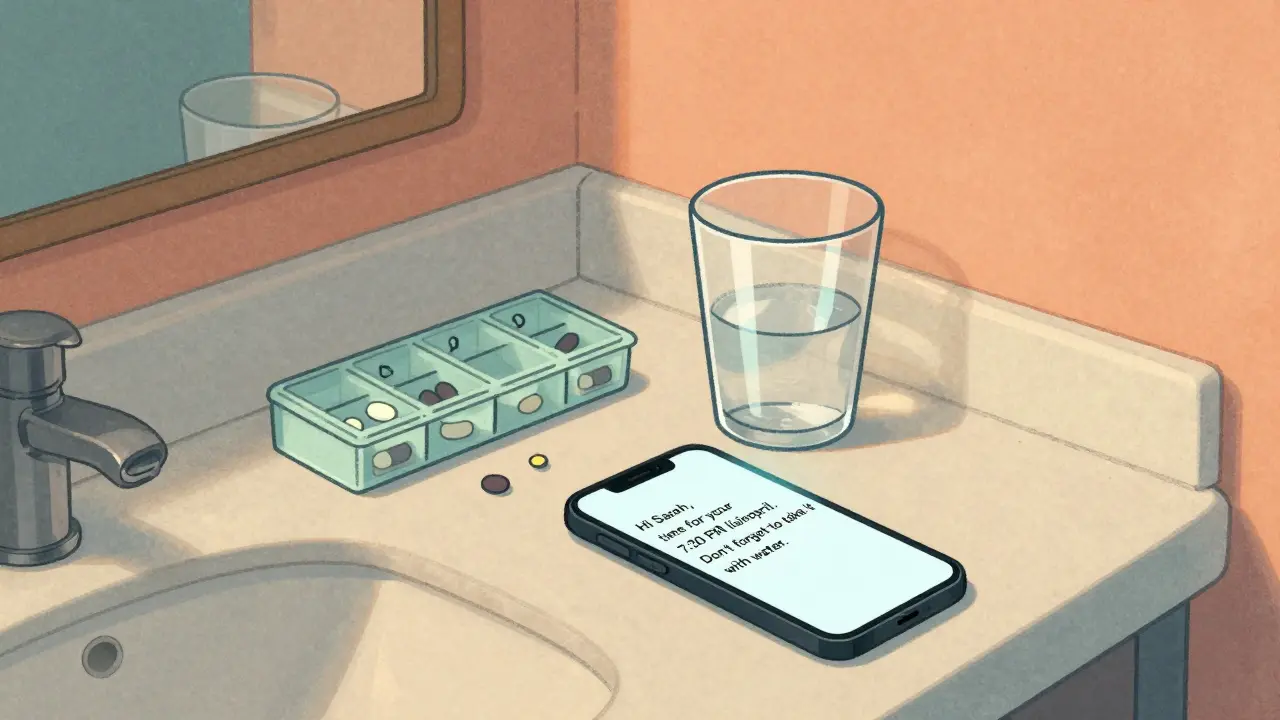
- Personalize the message. Instead of "Take your medicine," try: "Hi Sarah, time for your 7:30 PM lisinopril. Don’t forget to take it with water." Names and specific drug names trigger recognition and responsibility.
- Keep it under 160 characters. SMS has a hard limit. Use abbreviations like "BP meds" instead of "blood pressure medication."
- Send reminders daily for acute conditions, weekly for maintenance. For someone on statins, a weekly nudge works. For someone on insulin, daily is non-negotiable.
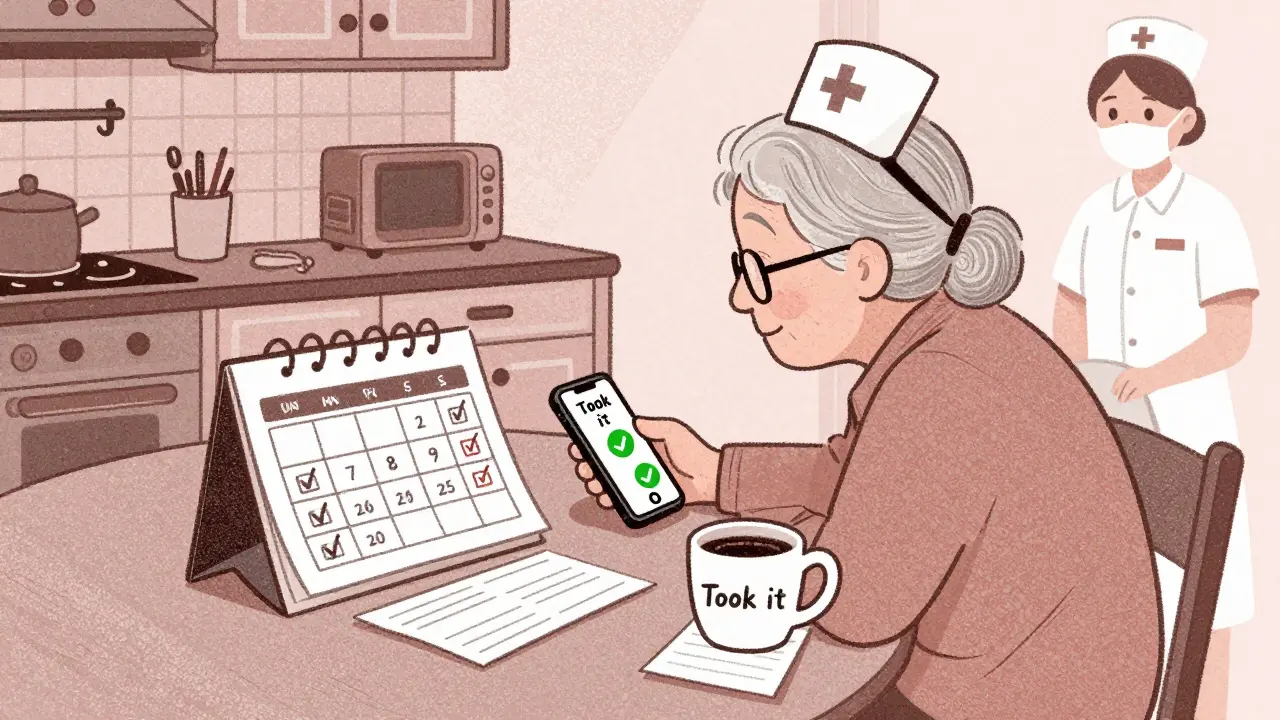
- Use two-way messaging if possible. Let patients reply with "Took it" or "Missed it." That simple feedback loop helps clinicians spot patterns early.
One UK clinic in Sheffield started using this method with elderly heart patients. They saw missed doses drop from 32% to 9% in six months. The key? They didn’t just blast out texts-they called patients who didn’t reply for three days in a row.
What Doesn’t Work (And Why)
Many programs fail because they treat reminders like spam. Here are the biggest mistakes:
- Sending too often. A 2021 survey found 23% of users turned off reminders after six months because they felt "bombarded." Once a week is fine for stable conditions. Daily is okay if the drug is critical.
- Using the same message every day. Repetition kills engagement. Rotate messages: "Your heart thanks you for taking your pill today." "Don’t skip today-your BP is counting on you." "You’re doing great. Keep going."
- Ignoring patient preferences. Some people hate morning texts. Others don’t want weekend reminders. Let them choose the time and frequency during setup.
- Not checking if they can receive texts. About 5% of older adults don’t have reliable phone service. Always confirm mobile access before launching a program.
The 2023 JAMA study also revealed something surprising: even patients who got "smart" behavioral nudges (like "You’ve taken your meds 12 days in a row-keep it up!") didn’t improve over time. Why? Because the system didn’t adapt. It didn’t know if they were skipping pills because they ran out, felt sick, or just forgot. Without that feedback, the text became background noise.
Integrating With Real-World Care
Text reminders alone won’t fix adherence. They’re a tool, not a solution. The most successful programs combine texts with clinical follow-up.
For example, a 2021 NIH pilot study automated refill gap detection from electronic health records. When a patient’s prescription wasn’t refilled on time, the system triggered a personalized text: "Your blood thinner is running low. Need help getting a refill? Call us." That simple step increased refill rates by 30.6% compared to controls.
For patients with diabetes, combining texts with a nurse check-in every two weeks cut hospital visits by 40%. The text reminded them. The nurse helped them solve the real problem-affording meds, managing side effects, or understanding their dosing.
Texts can’t tell if someone swallowed the pill. They can’t replace a pharmacist’s advice. But they can be the spark that leads someone to call their doctor, refill their prescription, or ask for help.
Who Benefits Most?
Text reminders aren’t universal. They work best for:
- People with infectious diseases like HIV or TB-where missed doses risk resistance.
- Patients on complex regimens (three or more daily pills).
- Older adults who live alone and have memory issues.
- People with limited access to care-texts reach them even if they can’t get to a clinic.
They work less well for:
- People with no phone or unreliable service. About 8% of U.S. adults and 12% of UK seniors don’t have consistent mobile access.
- Conditions where adherence isn’t time-sensitive. For example, a statin taken at night doesn’t need a daily text-weekly is fine.
- People who feel stigmatized. Some patients with mental health meds or HIV avoid texts because they fear being seen with a "medication reminder" notification.
What’s Next?
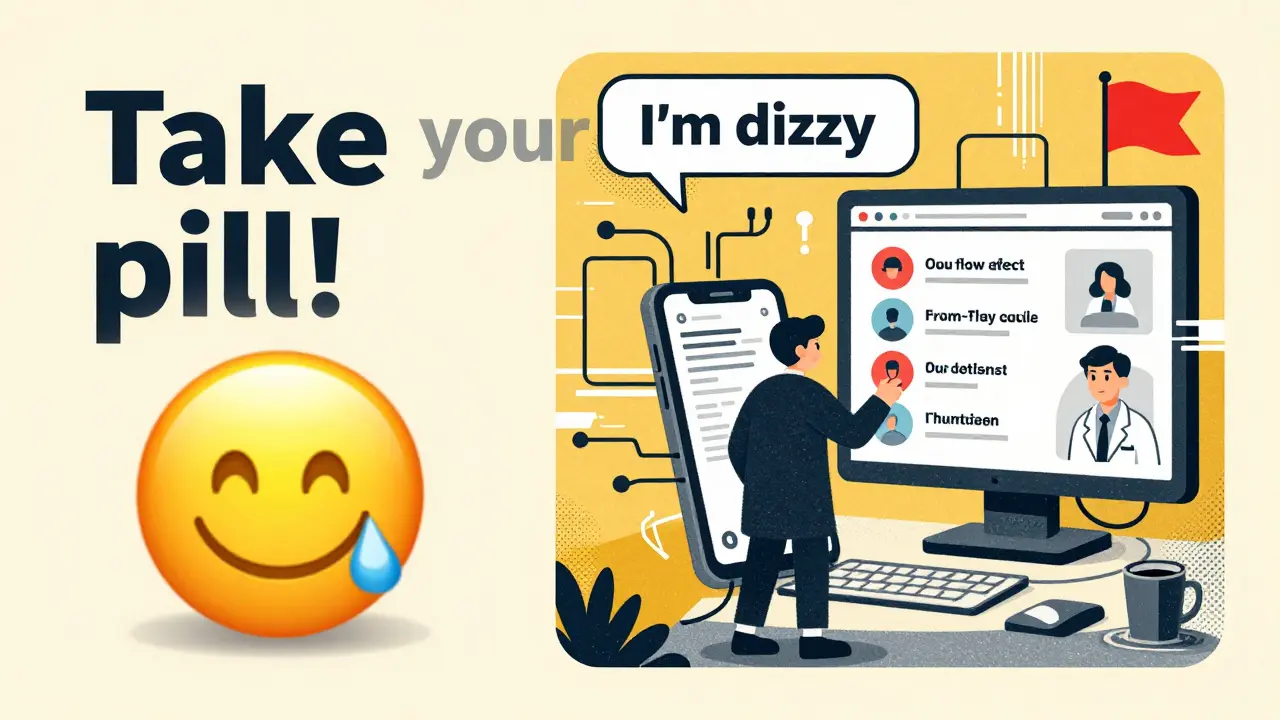
The future isn’t just more texts. It’s smarter ones. Trials like the NIH’s TEXTMEDS study are testing AI that learns from patient replies. If someone says "I’m feeling dizzy" after a text, the system might pause reminders and alert their doctor. If they consistently reply "Took it" on Tuesdays but skip Fridays, the system might shift the reminder to Thursday evening.
By 2027, Gartner predicts 65% of health systems will use predictive tools that flag patients at risk of non-adherence before they miss a dose. That’s the real promise: not reminding you to take your pill, but knowing you’re about to skip it-and helping you before you do.
For now, though, the best tool is still simple: a personalized message, sent at the right time, with room for a human response.
Can I use free apps like Medisafe or Pill Reminder for medication texts?
Yes, but with limits. Apps like Medisafe can send automated texts and track adherence, but they often lack integration with your doctor’s records. They’re great for personal use, but if you’re managing care for someone else (like an elderly parent), a system connected to their medical records is more effective. Free apps also can’t trigger clinical follow-up if doses are missed.
Are text reminders HIPAA-compliant?
Simple reminder texts that don’t include medical details (like drug names or diagnoses) are generally compliant under HIPAA. But if the message includes your condition (e.g., "Your diabetes meds are due"), the system must be encrypted and use a secure healthcare platform. Never use regular SMS from a personal phone for clinical reminders. Always use a certified health communication tool.
What if I don’t want to receive text reminders?
You can opt out at any time. Most healthcare systems allow you to pause or cancel reminders through a simple reply like "STOP" or by calling the clinic. If you’re getting too many or at inconvenient times, ask to adjust the schedule. You’re not obligated to use them.
Do text reminders work for children or teens?
For teens with chronic conditions like asthma or diabetes, texts sent to their own phone can be very effective-especially if they’re personalized and include emojis or casual language (e.g., "Don’t forget your inhaler today! 💪"). For younger children, texts should go to parents or caregivers. Studies show teens respond better to texts than parental reminders alone.
How long do text reminders stay effective?
They peak in the first 3-6 months. After that, effectiveness drops unless the messages change. Studies show that rotating message content, adding new incentives (like weekly check-ins), or linking texts to real clinical feedback (like a doctor’s note) can extend benefits beyond a year. Simple, static reminders lose their power after six months.
Final Thoughts
Text message reminders aren’t a cure-all. But they’re one of the few low-cost, high-reach tools we have to tackle the silent crisis of medication non-adherence. The difference between success and failure? Personalization. Timing. And a human touch behind the message.
If you’re using them, make them meaningful. If you’re managing care for someone else, don’t just set it and forget it. Check in. Adjust. Listen. A text is just a nudge. The real work happens after the message is sent.
Devin Ersoy
March 11, 2026 AT 21:25
Okay but let’s be real-text reminders are just digital nagging with a side of false security. I’ve seen grandparents set these up, get three texts, then forget their phone in another room. The real issue? We treat medication like a to-do list when it’s actually a lifestyle overhaul. You don’t fix non-adherence with SMS-you fix it with community, with family, with someone who shows up with coffee and pills at 7:30 PM. Tech doesn’t care if you’re depressed, broke, or just tired. It just sends the damn text.
Scott Smith
March 12, 2026 AT 16:26
The data in this post is solid, but the implementation is where most programs collapse. Personalization isn’t just inserting a name-it’s adapting to life rhythms. A 70-year-old with arthritis and no smartphone won’t benefit from a text. A teenager on insulin might thrive with a GIF of a dancing pill. The key isn’t the message-it’s the match between the tool and the human. We’re still designing for the average patient, and there is no average patient.
Emma Deasy
March 13, 2026 AT 17:19
I must express my profound concern regarding the casual dismissal of HIPAA compliance in many consumer-facing applications. The notion that ‘simple reminders’ are exempt from regulatory scrutiny is not only legally perilous but ethically indefensible. A single unencrypted SMS containing the phrase ‘Your diabetes meds are due’ constitutes a breach under Section 164.514 of the Privacy Rule. Healthcare entities must utilize encrypted, authenticated platforms-period. To suggest otherwise is to endanger patient trust and invite litigation.
Lorna Brown
March 15, 2026 AT 01:19
What if the problem isn’t the reminder-but the system that makes taking meds feel like a chore? Why are we outsourcing responsibility to a phone instead of redesigning care? Why can’t pharmacies deliver pills with a note? Why can’t doctors write prescriptions that include a home visit if adherence drops? Texts are a band-aid on a broken system. We’re treating symptoms while ignoring the disease: fragmented care, poverty, stigma, and the myth that health is purely individual.
Rex Regum
March 16, 2026 AT 12:39
Let me stop you right there-this whole ‘personalized text’ thing is a corporate marketing scam. The same companies pushing these apps are the ones that jack up drug prices 400% overnight. You think a text saying ‘Your heart thanks you’ is going to make someone choose between insulin and rent? No. It’s a distraction. A shiny object while the real crisis-pharmaceutical greed, insurance gatekeeping, lack of public health funding-burns the house down. Stop praising the flashlight and fix the damn wiring.
Kelsey Vonk
March 17, 2026 AT 04:14
I love how this post breaks it down so clearly 😊 I’ve helped my mom set up reminders for her BP meds, and the difference was night and day. We switched from generic to personalized, added a weekly ‘you’re doing amazing’ message, and now she replies with 😴 or 💪. It’s small, but it feels like a conversation. I think the magic isn’t in the tech-it’s in the feeling that someone cares enough to check in.
Emma Nicolls
March 18, 2026 AT 23:47
Ive been using a reminder app for my thyroid med and it totally changed my life no more panic attacks from forgetting and my doctor said my levels are stable now. I just wish theyd let u pick the tone like sometimes i want a serious message and sometimes i want a silly one like hey u got this
Jimmy V
March 19, 2026 AT 23:19
Texts work. But only if you layer them with human contact. A 2021 study from Kaiser Permanente showed that patients who got texts + a weekly call from a pharmacist had 74% adherence. The text opens the door. The call closes the deal. Stop treating this like a software problem. It’s a relational one.
Sabrina Sanches
March 21, 2026 AT 14:08
I think the most underrated point here is the two-way feedback loop... Seriously... if someone replies ‘Missed it’... you should have a nurse reach out within 24 hours... not wait for the next refill... that’s when the real intervention happens... it’s not about the text... it’s about the response...
Shruti Chaturvedi
March 21, 2026 AT 17:57
In India many elderly dont have smartphones but they have basic phones with SMS... we use simple text in local languages... no names no fancy words... just 'take medicine today'... and it works... because its clear... its not about being smart... its about being understood
Katherine Rodriguez
March 23, 2026 AT 03:58
Text reminders? That’s what we’re using to fight a public health crisis? In America we have the tech to track your heartbeat from your watch but we’re sending SMS to old people who can’t read? This is pathetic. We need mandatory home visits, not texts. We need government-funded care teams, not apps. This isn’t innovation-it’s surrender.
Sally Lloyd
March 24, 2026 AT 19:38
I’ve always wondered… are these text systems being monitored by insurance companies? What if your ‘missed dose’ gets flagged and used to raise your premiums? Or worse-denied coverage? I’m not saying it’s happening… but if it’s not… why not? The infrastructure is there. The data is collected. The incentives are aligned. We’re being watched… and our health habits are being scored.