TSI Antibodies: What They Are, Why They Matter, and How They Affect Thyroid Health
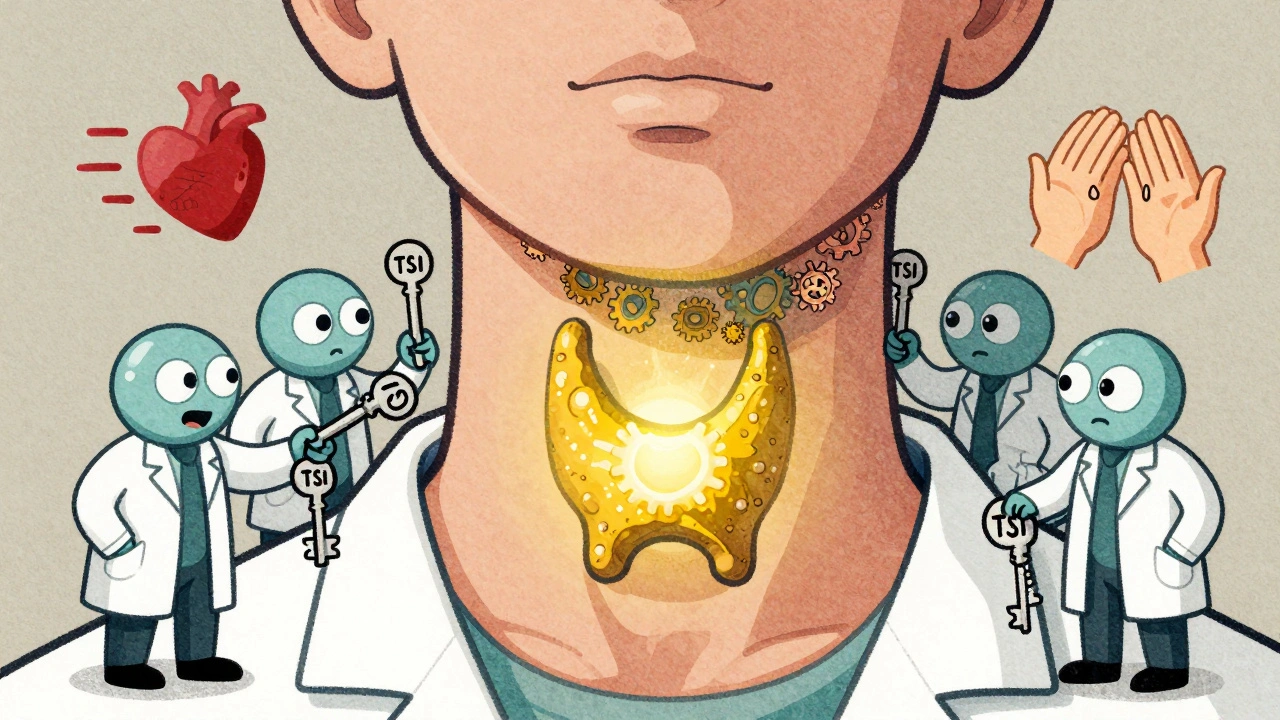
When your immune system goes off track, it can start attacking your own thyroid—and that’s where TSI antibodies, thyroid-stimulating immunoglobulins that mimic TSH and force the thyroid to overproduce hormones. Also known as thyroid-stimulating immunoglobulins, they’re the main driver behind Graves disease, the most common cause of hyperthyroidism. Unlike other thyroid antibodies that just damage tissue, TSI antibodies trick your thyroid into working overtime, leading to symptoms like rapid heartbeat, weight loss, anxiety, and bulging eyes.
This isn’t just about hormone levels—it’s about your body’s own defense system turning against itself. TSI antibodies are closely linked to Graves disease, an autoimmune disorder where the immune system mistakenly targets the thyroid gland, and they’re often present long before symptoms show up. Doctors test for them not just to confirm a diagnosis, but to track how well treatment is working. If TSI levels drop after medication or surgery, it’s a good sign the disease is under control. And if they stay high? That’s a red flag for relapse.
These antibodies also connect to other key players in thyroid health. For example, thyroid antibodies, a broader category that includes TPO and TG antibodies, which signal general autoimmune activity, often show up alongside TSI—but they don’t cause the same overstimulation. Then there’s thyroid function, the balance of T3, T4, and TSH that TSI antibodies directly disrupt. When TSI is high, TSH drops because your brain thinks you have too much thyroid hormone—even though your body is being forced to make more than it should.
What’s clear from the posts here is that thyroid health doesn’t happen in isolation. You’ll find articles on how methimazole and selenium work together to reduce TSI levels and protect the eyes in Graves disease. Others explain how protein shakes can interfere with thyroid meds, making it harder to control hormone swings caused by these antibodies. Even alcohol and smoking can mess with how your body responds to treatment. This isn’t just a lab result—it’s a whole-system issue.
There’s no cure yet for TSI antibodies, but we know how to manage them. Medication, radioactive iodine, and sometimes surgery can shut down the overactive thyroid. But the real win? Lowering those antibody levels over time so your immune system calms down. That’s what patients and doctors are chasing—and what the posts here dive into, from real-world treatment experiences to the science behind why some people respond better than others.
Below, you’ll find practical guides on how TSI antibodies affect daily life, what tests actually tell you, how treatment choices compare, and what to watch for when symptoms return. Whether you’re newly diagnosed or managing this for years, the info here cuts through the noise and gives you what matters.