Suicidal Ideation Monitoring Tracker
How to Use This Tool
Enter the start date of the medication and choose the drug type. This tool calculates recommended follow-up intervals based on FDA guidelines and clinical research.
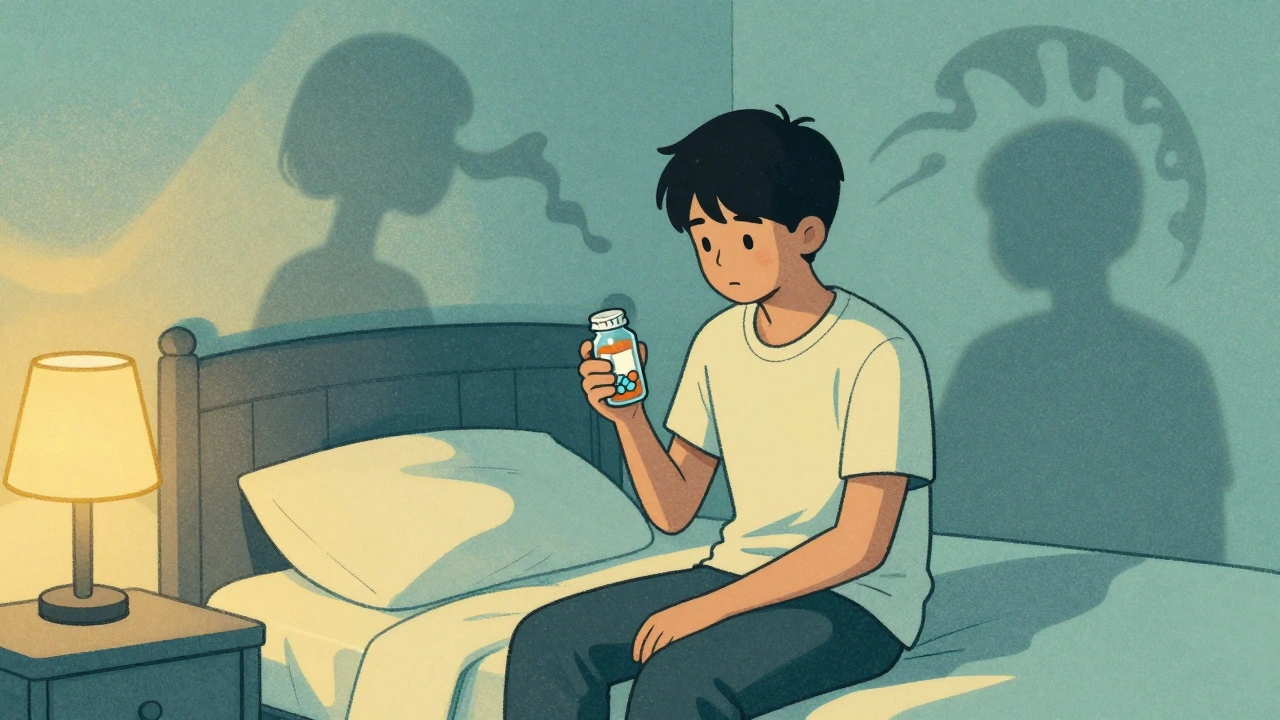
When a teenager starts taking psychiatric medication, the goal is to help them feel better. But for some, the very drugs meant to ease depression or anxiety can trigger thoughts of self-harm. This isn’t rare. It’s a known risk-and one that demands careful, consistent monitoring. The FDA first flagged this in 2004, requiring a black box warning on antidepressants for patients under 25. Since then, state guidelines, clinical research, and frontline providers have all agreed: suicidal ideation must be tracked like a vital sign-not just when a drug is started, but throughout treatment, and especially when it’s changed or stopped.
When the Risk Is Highest
The first few weeks after starting a new psychiatric medication are the most dangerous. For antidepressants, the peak risk window is between days 1 and 28. But it’s not just antidepressants. Antipsychotics, mood stabilizers, even stimulants used for ADHD can alter brain chemistry in ways that temporarily increase emotional instability. A teen who was withdrawn before treatment might suddenly become agitated, irritable, or express hopelessness. These aren’t signs the medication isn’t working-they’re red flags that the brain is adjusting.Studies show that suicide attempts among adolescents rose 51% between 2010 and 2020, even as antidepressant use increased by 38%. That doesn’t mean meds cause suicide. It means we’re missing critical safety checks. When a teen starts fluoxetine or sertraline, the prescriber doesn’t just hand over a script and say, "Call if things get worse." They need a plan.
What a Real Monitoring Plan Looks Like
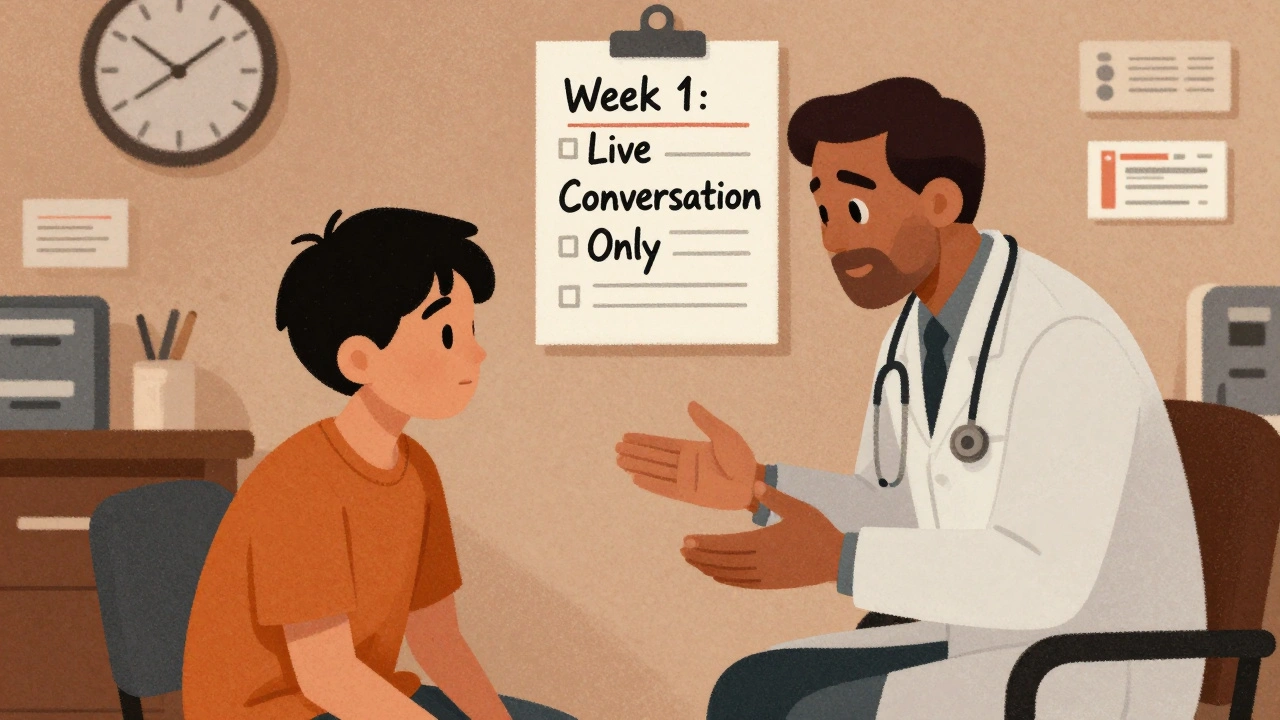
A proper monitoring protocol isn’t a checklist. It’s a rhythm. Here’s how it works in practice:- Week 1: A follow-up appointment within 7 days. Not a phone call. Not a portal message. A live conversation with the prescribing clinician. Ask: "Have you had any thoughts about not wanting to be here?" Don’t say "suicidal thoughts." Use their language. If they say "I just wish I could sleep forever," that’s a signal.
- Week 2-4: Every 7-10 days. Track changes in sleep, appetite, energy, and school attendance. Ask the teen directly: "Does the medicine feel like it’s helping?" and "Are you noticing any side effects you didn’t expect?"
- Week 5-12: Monthly visits. By now, you should see improvement-or clear signs it’s not working. If there’s no change, or if mood worsens, consider dose adjustments or switching meds.
- During dose changes: Go back to weekly check-ins. Whether you’re increasing, decreasing, or stopping a drug, the brain is still adapting. Withdrawal from SSRIs can cause rebound anxiety and suicidal ideation-even if the teen was stable on the medication.
California’s 2022 guidelines say it plainly: clinicians must document whether the teen believes the medication is helping. If they say "It makes me feel numb" or "I don’t care anymore," that’s not just a side effect-it’s a treatment failure that needs action.
Who’s Responsible for Watching?
This isn’t just the psychiatrist’s job. It’s a team effort. Parents, teachers, school counselors, and even coaches need to know what to look for. But here’s the problem: only 34% of child psychiatry residents get trained in how to properly talk to families about suicide risk. And in school-based settings, 68% of clinicians report that mental health staff and outpatient providers don’t communicate consistently about suicidal behavior.One teen in Perth was prescribed an SSRI after a panic attack. Her school counselor noticed she started skipping lunch and writing dark notes. She told the parents, who called the psychiatrist. But the clinic didn’t have a system to receive that feedback. Two weeks later, the teen was hospitalized after a suicide attempt. The medication had been started without a safety plan. The school had flagged it. No one connected the dots.
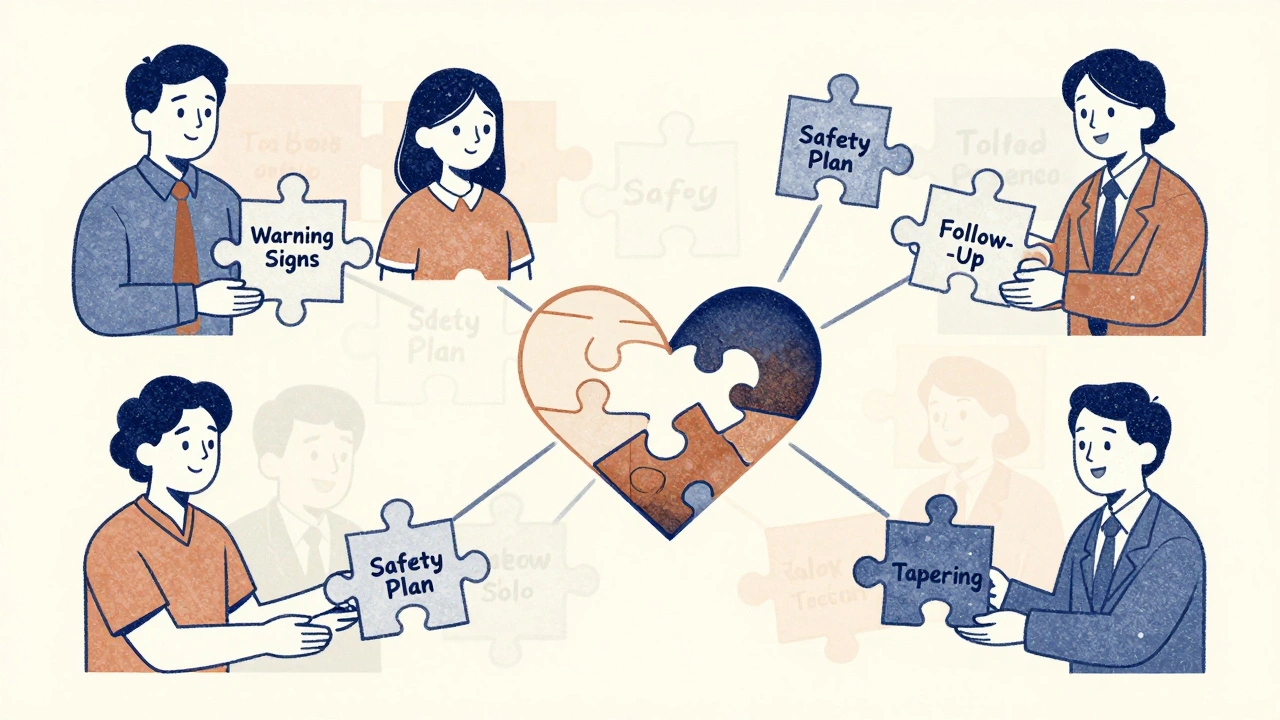
That’s why guidelines from New York and North Carolina require written safety plans before any medication is prescribed. The plan includes: who to call in crisis, how often to check in, and what signs mean it’s time to act. It’s not optional. It’s standard.
What Gets Missed: Discontinuation Risk
Most monitoring focuses on the start of treatment. But the biggest gap is when meds are stopped. Parents often want to quit after a few months because "they’re feeling better." But stopping abruptly can trigger withdrawal symptoms that mimic depression-or worse, suicidal thoughts.Oklahoma’s 2022 guidelines say: when tapering, patients may need to be seen more often than during maintenance. That means weekly visits, not monthly. The brain needs time to readjust. A teen who feels fine on medication might crash when it’s pulled too fast. One 16-year-old in Tennessee stopped sertraline cold turkey after her mom thought she was "cured." Within three days, she started talking about "ending it all." She was admitted to the ER. The doctor later said: "We never talked about how to stop it. We only talked about how to start it."
Technology Isn’t the Fix-But It Can Help
There are apps and digital tools that ask teens daily questions about mood and thoughts. Some are built into electronic health records. But here’s the catch: only 19% of these tools are designed specifically to track medication-related suicidal ideation. Most just ask, "Are you feeling sad?" That’s not enough.What works is a tool that asks: "Since your last dose, have you had thoughts that life isn’t worth living?" or "Have you thought about hurting yourself because of how the medicine is making you feel?"
By 2022, 38% of child psychiatry practices had adopted digital risk tools. But without training, they’re just checkboxes. The real value is in the conversation they spark-not the data they collect.
The Bigger Problem: We’re Not Listening
The most dangerous oversight isn’t missing a symptom. It’s ignoring what the teen says. A 2021 AACAP survey found that 42% of child psychiatry fellows felt unprepared to get truly informed consent about suicide risks. Parents sign forms. Teens nod along. But do they understand that the drug might make them feel worse before it gets better?Teens need to know: "This medicine might make you feel more anxious or hopeless at first. That doesn’t mean it’s not working. But if you feel like you can’t go on, call your doctor immediately. Don’t wait. Don’t feel guilty. This is normal-and it’s treatable."
That conversation doesn’t happen in 5 minutes. It takes time. And that’s the real barrier. Clinicians are pressured to see more patients faster. But when you’re managing a teen’s life, speed kills.
What Needs to Change
The science is clear. The guidelines exist. The tools are available. What’s missing is consistency.- All psychiatric meds-not just antidepressants-should trigger a suicide risk assessment before and during treatment.
- Every prescription should come with a written safety plan, signed by the teen, parent, and provider.
- Follow-up visits must be scheduled before the patient leaves the office-not left to "call if needed."
- Schools and clinics need shared protocols for reporting warning signs.
- Training on suicide risk monitoring must be mandatory for all providers working with youth.
There’s no magic bullet. But there is a simple rule: if you’re prescribing a psychiatric drug to a teen, you’re responsible for watching them like a hawk for the first three months. Not because you think they’ll try to hurt themselves-but because you know the risk is real, and you’ve committed to keeping them safe.
Can psychiatric medications cause suicidal thoughts in teens?
Yes. While these medications are meant to help, some teens-especially in the first few weeks of treatment-may experience increased suicidal thoughts. This risk is most documented with antidepressants, but it can occur with other psychiatric drugs too. The FDA requires a black box warning for all antidepressants used in patients under 25. It’s not common, but it’s serious enough that every prescriber must monitor for it.
How often should a teen be checked after starting psychiatric medication?
The first check-in should be within 7 days. Then every 7-10 days for the next 4 weeks. After that, monthly visits are typical-but if the teen is high-risk, has had suicidal thoughts before, or if the dose is changed, weekly visits are needed. Stopping medication requires the same level of attention-sometimes even more.
What signs should parents watch for at home?
Watch for sudden changes: increased agitation, withdrawal from friends, talking about death or feeling hopeless, giving away prized possessions, or writing dark messages. Also watch for sleep or appetite changes that aren’t explained by the illness. If the teen says the medicine is making them feel worse-or doesn’t believe it’s helping-that’s a red flag.
Is it safe to stop psychiatric meds if a teen feels better?
No-not without medical supervision. Stopping abruptly can cause withdrawal symptoms that mimic or worsen depression, including suicidal thoughts. Even if the teen feels fine, tapering must be slow and monitored. Many teens relapse or have crises during discontinuation because no plan was made for it.
What if my teen refuses to talk about how they’re feeling?
Don’t force it. Instead, ask open-ended questions: "What’s been the hardest part since you started the medicine?" or "Have you noticed anything different in your mood?" Sometimes writing it down helps. If they still won’t talk, contact their provider. There are validated tools clinicians use to assess risk even when the teen is quiet. Silence can be as telling as words.
Next Steps for Families and Providers
If you’re a parent: ask for a written safety plan before your teen starts any psychiatric medication. Make sure you know who to call in an emergency and what symptoms require immediate attention. Don’t assume the doctor will reach out if something’s wrong.If you’re a provider: document every conversation about suicidal ideation. Don’t wait for a crisis to create a plan. Schedule follow-ups before the patient leaves your office. Train your staff. Use tools that ask the right questions. And remember: you’re not just prescribing a drug. You’re responsible for a life.
There’s no perfect system. But when we treat suicidal ideation as a medical emergency-not a footnote-we save lives. The data is clear. The guidelines are there. What’s left is to do the work.
Paul Dixon
December 10, 2025 AT 12:40
Man, this hits different. I started on Zoloft at 16 and felt like my brain was rewiring itself upside down. Didn’t tell anyone because I thought I was just being weak. Turns out, the doc never even asked me how I was feeling after the first week. Just handed me the script and said "call if things get worse." Like that’s gonna happen. We need more than paperwork-we need real check-ins.
john damon
December 12, 2025 AT 08:54
THIS. 🚨 I’m a nurse and I’ve seen too many teens crash after meds were stopped cold. Parents think "feeling better = cured" and yank it. Nope. Brain’s still rebuilding. 😭 We need mandatory tapering plans. Like, right now.
Monica Evan
December 13, 2025 AT 23:43
so many of us grew up with this silence like it was normal to just take pills and hope for the best i remember my mom crying when i said i felt "numb" and the dr just nodded and upped the dose no one ever asked if the numbness was worse than the sadness and now i’m 32 and still healing from that lack of listening its not just meds its the whole system broken
Taylor Dressler
December 15, 2025 AT 07:58
This is one of the most comprehensive and clinically accurate summaries I’ve seen on this topic. The emphasis on discontinuation risk is particularly critical-most guidelines overlook it. The requirement for a signed safety plan before prescribing should be national policy, not state-by-state. Also, the point about digital tools being useless without trained clinicians is spot-on: technology amplifies intent, it doesn’t replace it.
Aidan Stacey
December 15, 2025 AT 15:02
MY BEST FRIEND TRIED TO KILL HIMSELF AFTER HIS DOCTOR TOOK HIM OFF HIS MEDS BECAUSE "HE LOOKED FINE." THREE DAYS. THREE DAYS AND HE WAS IN THE ER. NO PLAN. NO WARNING. NO BACKUP. This isn’t just medical-it’s moral. We’re literally gambling with kids’ lives because we’re too rushed to talk. Someone needs to get fired for this. And someone needs to get a medal for fixing it.
Michaux Hyatt
December 16, 2025 AT 19:37
As a school counselor, I’ve seen the gap between clinic and classroom. We flag kids, send notes, call parents-but half the time the clinic never replies. We need a shared digital dashboard. Not just emails. Something real. Like a live alert when a teen’s mood tracker spikes or they miss three check-ins. We’re all trying. We just need to talk to each other.
Raj Rsvpraj
December 18, 2025 AT 02:37
!!! This is why western medicine is failing youth! In India, we use yoga, meditation, family counseling-NO DRUGS! You Americans over-medicate everything! This is a moral crisis, not a medical one! Your society is weak! You give pills to children instead of teaching discipline! Look at our youth-no SSRIs, no suicidal ideation! You have lost your way!!!
Michelle Edwards
December 19, 2025 AT 11:49
Just wanted to say thank you for writing this. I’m a mom of a 14-year-old on fluoxetine, and I didn’t know what to look for. Now I check in every night with, "What’s the hardest part today?" Not "Are you okay?"-that’s too broad. He’s started telling me things he wouldn’t before. Small steps. But they matter.