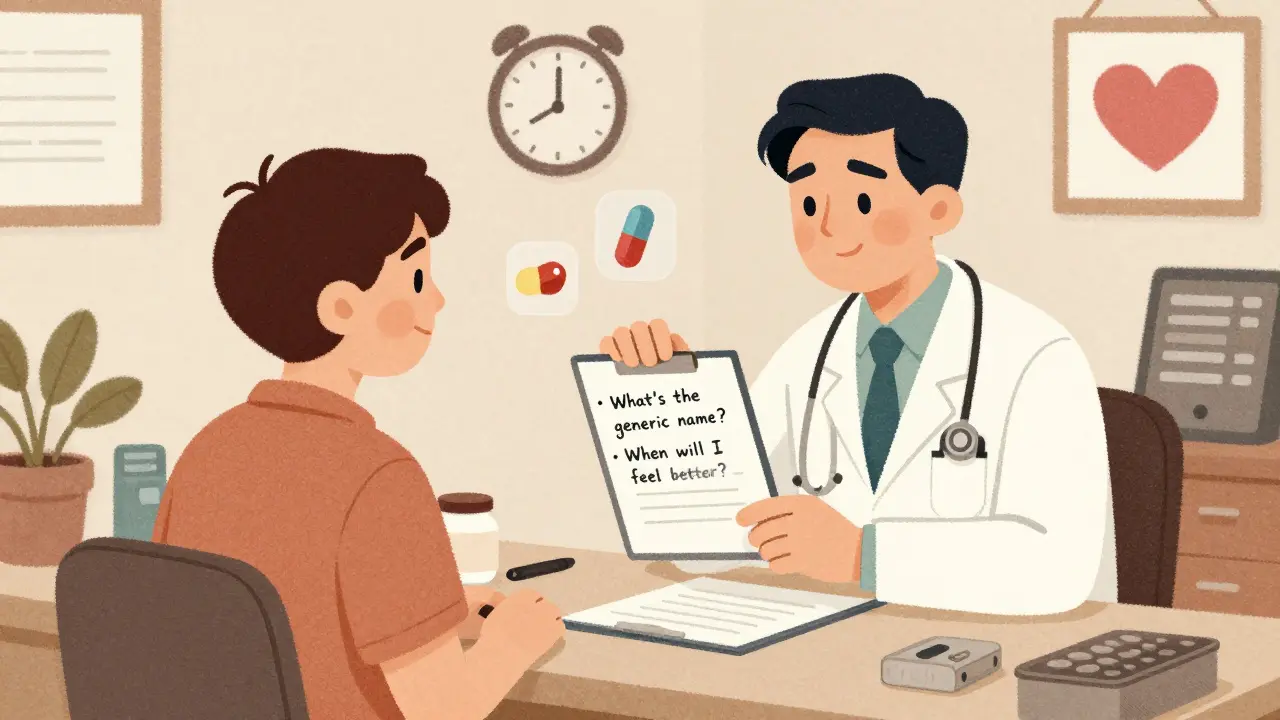
Starting a new medication can feel overwhelming. You might be relieved that something might help your symptoms, but also worried about what’s coming next. Will it work? Will it make you feel worse before it gets better? What if it interacts with your other pills? Too many people start a new prescription, take it for a few days, and then quit - not because it doesn’t work, but because they didn’t know what to expect. The good news? You don’t have to guess. Asking the right questions before you leave the doctor’s office can make all the difference.
What exactly is this medication, and why am I taking it?
Start simple. Ask for the exact name of the drug - both the brand name and the generic version. Why? A 2020 report from the Institute for Safe Medication Practices found that 23% of medication errors happen because patients confuse similar-sounding names. If your doctor says, "Take this for your blood pressure," ask: "Is this lisinopril? Or is it losartan?" Knowing the difference matters. Then ask: "Which specific problem is this meant to fix?" Don’t settle for vague answers like "It’ll help you feel better." You need to know: "Is this reducing my inflammation? Lowering my cholesterol? Balancing my serotonin?" The clearer you are on the purpose, the better you’ll recognize if it’s working - or if something’s wrong.
How and when should I take it?
Dosage instructions aren’t just suggestions. They’re science. Ask: "Exactly how many milligrams should I take, and how often?" Some pills need to be taken with food to avoid stomach upset. Others must be taken on an empty stomach or at the same time every day. A 2021 study by the Agency for Healthcare Research and Quality found that 34% of patients misunderstand how to take their meds. That’s not just a mistake - it’s a safety risk. If the pill is supposed to be taken at bedtime, ask why. If it’s twice daily, ask if it can be spaced evenly - like 8 a.m. and 8 p.m. Don’t assume. Write it down. And ask: "How long should I take this?" Some courses last 7 days. Others last years. You need to know which one you’re on.
How will I know if it’s working?
This is one of the most overlooked questions - and one of the most important. Many people stop taking their medication because they don’t feel any different after a few days. But not all drugs work fast. Antidepressants can take 4 to 6 weeks. Blood pressure meds might not show results for 2 weeks. Ask: "When should I start noticing a change?" and "What signs should I look for?" If you’re on a statin, you won’t feel your cholesterol drop - but your next lab test will. If you’re on a painkiller, you should notice less discomfort. Knowing what to expect helps you stay on track. A 2022 study in the Journal of General Internal Medicine found that 68% of patients quit their meds early because they thought they weren’t working - when they just hadn’t waited long enough.
What side effects should I watch for?
Not all side effects are equal. Some are mild and go away. Others are dangerous. Ask: "What side effects are normal in the first week?" and "Which ones mean I should call you right away?" For example, nausea from a new antibiotic might fade after a few days. But swelling in your throat? That’s an emergency. A 2023 review in the BMJ found that 28% of hospital admissions from medication problems were caused by side effects patients didn’t recognize as serious. Also ask: "Will any side effects get worse before they get better?" This is especially true for mental health meds. Many people stop taking antidepressants because they feel more anxious at first - not realizing that’s a common, temporary reaction. Knowing this ahead of time can save your treatment.
Will this interact with anything else I’m taking?
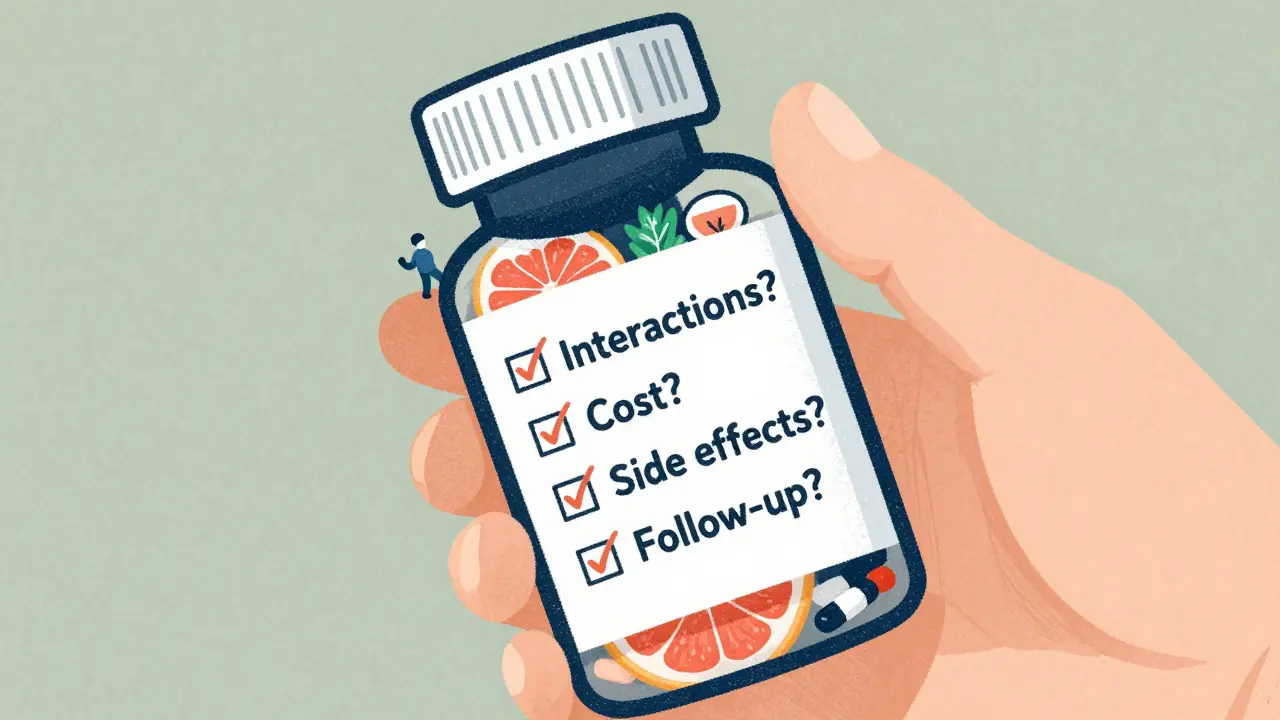
Bring a full list of everything you take - prescription, over-the-counter, vitamins, supplements, even herbal teas. Why? A 2023 FDA report showed that 40% of adults take five or more medications, and that increases the chance of dangerous interactions by 85%. A common example: St. John’s Wort (a popular herbal supplement) can cancel out the effect of birth control pills or make antidepressants too strong. Even grapefruit juice can interfere with certain heart meds. Your doctor might not know about your supplements unless you tell them. And don’t forget OTC painkillers. Taking ibuprofen with blood thinners? That’s risky. Ask: "Is there anything I should avoid completely - foods, alcohol, exercise?"
Are there other options?
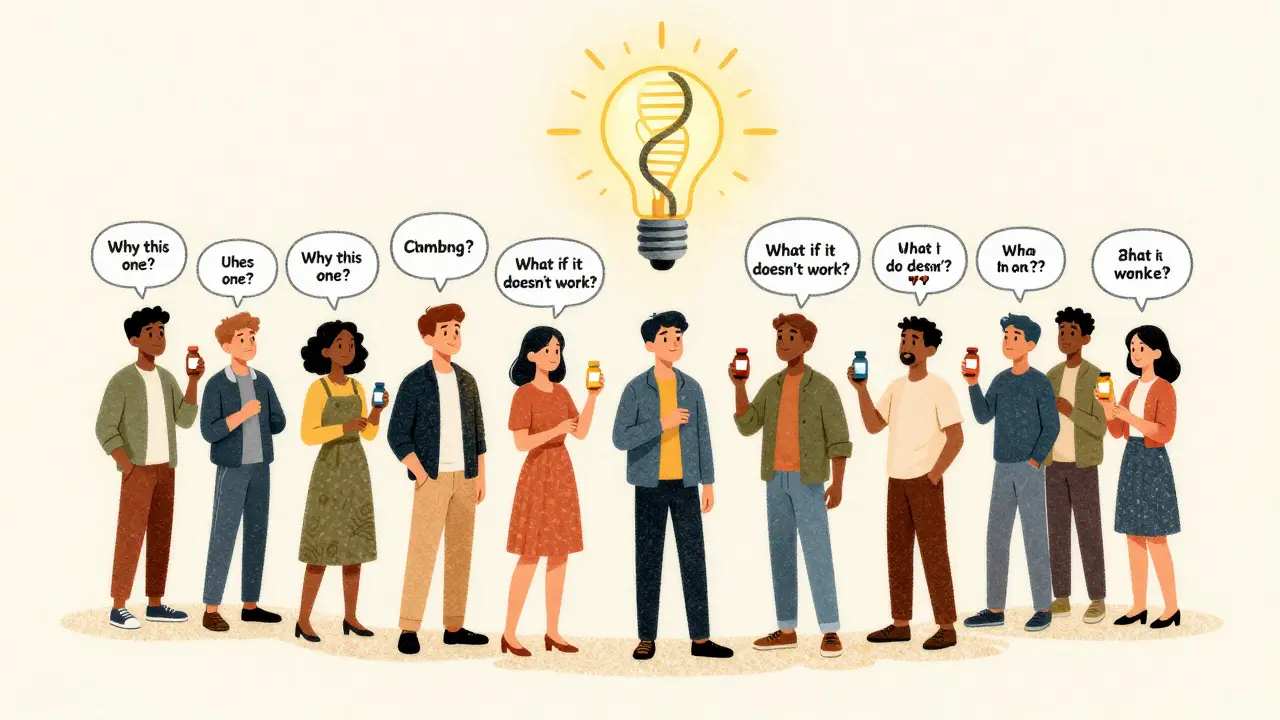
There’s rarely just one drug for a condition. Ask: "Why this one, and not another?" Sometimes it’s cost. Sometimes it’s your history. Maybe you had a bad reaction to a similar drug in the past. Or maybe your kidney function affects which meds are safe. If you’re on multiple medications, ask about pharmacogenetic testing - a simple DNA test that can show how your body processes certain drugs. Genomind’s 2022 trial showed this testing can predict 60-80% of how people respond to medications. If your doctor hasn’t mentioned it, ask. It’s not science fiction - it’s available now.
What if this doesn’t work?
Medications don’t always work. That’s not failure - it’s part of treatment. Ask: "What’s the plan if this doesn’t help?" and "When will we check in?" Some doctors schedule follow-ups automatically. Others don’t. Don’t wait for them to call. Ask: "Should I come back in two weeks? Or should I call if I don’t feel better by then?" A 2022 American Medical Association report found that 47% of patients never schedule the follow-up they need. If you don’t have a clear next step, you’re more likely to just stop taking it - and that’s when things get dangerous.
How much will this cost?
Cost isn’t just about the price on the bottle. It’s about whether you can afford to take it every day. Ask: "Is there a generic version?" and "Are there cheaper alternatives?" A 2023 KFF survey found that 72% of health plans now require doctors to discuss cost options. Still, many patients don’t ask. The Commonwealth Fund found that 25% of people skip doses because they can’t afford the full prescription. If cost is a barrier, ask about patient assistance programs, coupons, or mail-order options. Your pharmacist can help too - they’re not just there to fill prescriptions.
How do I keep track of everything?
Write down the answers. Don’t rely on memory. A University of Michigan study found that writing down what your doctor says increases retention by 70%. Bring a notebook. Or use your phone. Some apps, like Hero Health, are built around these exact questions - and they’ve been shown to reduce initial adherence failures by 38%. If you’re overwhelmed, ask your doctor if they have a printed checklist. The MedlinePlus "Medication Question Cards" use simple pictures and icons to help people with low health literacy understand what to ask. They’ve been downloaded over 250,000 times since 2022.
What if I feel rushed?
Most primary care visits last under 16 minutes. That’s not enough time to cover everything. But you have the right to ask. If your doctor seems impatient, say: "I really want to get this right. Can we take two more minutes?" You’re not being difficult - you’re being smart. A 2022 SurveyMonkey study found that 39% of patients felt rushed when asking more than three questions. Don’t let that stop you. Prepare ahead. Write your questions on paper. Bring someone with you. Ask for a follow-up call or a pharmacist consult. Your safety matters more than the clock.
Final thought: You’re not just a patient - you’re the most important part of your care team.
Doctors don’t have all the answers. They rely on you to tell them how you feel. The best outcomes don’t come from perfect prescriptions - they come from clear communication. The questions above aren’t optional. They’re essential. And you don’t need to be an expert to ask them. You just need to care enough to speak up.
What if I forget to ask a question during my appointment?
If you realize later that you missed something, call your doctor’s office. Most clinics have a nurse line or patient portal where you can send a secure message. You can also ask to speak with your pharmacist - they’re trained to review medications and can answer many of these questions. Don’t wait until you’re having side effects or feeling worse. A quick call now can prevent a bigger problem later.
Can I ask about natural remedies instead of prescription drugs?
Yes - and you should. Many people turn to supplements, herbs, or lifestyle changes before or alongside medication. But not all natural options are safe. Some can interfere with prescriptions or worsen conditions. For example, garlic supplements can thin your blood, which is dangerous if you’re on warfarin. Always tell your doctor what you’re using - even if you think it’s "just a supplement." They can help you weigh the risks and benefits honestly.
Should I ask about long-term side effects?
Absolutely. Some medications are fine for short-term use but carry risks if taken for years. For example, long-term use of NSAIDs like ibuprofen can affect kidney function. PPIs for acid reflux may increase bone fracture risk over time. Ask: "Are there any known long-term risks with this drug?" and "Should I be monitored with blood tests or scans?" This isn’t about scaring you - it’s about staying informed so you can make smart choices over time.
What if I’m scared to take this medication?
Fear is normal. You’re not alone. If you’re hesitant, say so. Ask: "What happens if I don’t take this?" and "What are the risks of waiting?" Sometimes the risks of not treating the condition are greater than the risks of the medication. Your doctor can help you compare the two. You can also ask for a trial period - like starting with a lower dose - to see how you respond. You don’t have to commit to a full course right away.
Is it okay to get a second opinion before starting a new drug?
Yes, and it’s often wise. Especially if the medication is expensive, has serious side effects, or you’re unsure why it was chosen. You can ask your doctor for a referral to a specialist - like a cardiologist for heart meds, or a psychiatrist for mental health drugs. Many health plans cover second opinions. Getting another perspective doesn’t mean you’re doubting your doctor - it means you’re taking control of your health.
John Cyrus
March 2, 2026 AT 02:08
People don't ask enough questions and then wonder why they feel worse after starting meds
Stephen Vassilev
March 4, 2026 AT 00:59
It is imperative, however, that one does not rely solely upon the physician's verbal explanation. Documentation must be requested, and cross-referenced with official pharmacological databases. The absence of such due diligence constitutes a gross negligence in personal health management.
John Smith
March 5, 2026 AT 18:07
Man, I used to be one of those guys who just swallowed whatever the doc handed me like a good little sheep. Then I got hit with a 6-month course of prednisone and woke up with a face like a balloon and a mood swing that made my dog cry. Now I come in with a printed list of 12 questions and a notebook. My doctor calls me "the human pharmacy" but honestly? I'd rather be called that than end up in the ER again.
Shivam Pawa
March 6, 2026 AT 00:33
Medication adherence is not just about understanding dosage. It's about cultural context. In India, many patients stop meds because they believe symptoms disappearing means cure. No one tells them chronic conditions require lifelong management. The system fails here. We need community health workers to bridge this gap.
Deborah Dennis
March 7, 2026 AT 06:22
This article is overly simplistic. You think asking "what side effects should I watch for?" is enough? What about the 37 documented interactions between St. John’s Wort and 12 different anticoagulants? The average patient can’t possibly memorize all this. And why isn’t the article pushing for mandatory pharmacist consultations before dispensing? That’s the real solution.
marjorie arsenault
March 7, 2026 AT 06:41
I love how this post breaks it down. It’s not about being a medical expert. It’s about being your own advocate. I used to be terrified to speak up. Then my mom had a bad reaction because she didn’t ask about interactions with her tea. Now I bring my phone, I record the conversation (with permission), and I ask for a handout. It’s not rude. It’s responsible.
Jessica Chaloux
March 8, 2026 AT 12:46
I started a new antidepressant and felt like I was dying for two weeks. I didn’t know it was normal. I thought I was broken. I cried so hard. I almost quit. I wish someone had told me it was just my brain adjusting. I’m still on it. I’m better now. But I almost gave up.
tatiana verdesoto
March 10, 2026 AT 04:43
I’m so glad someone wrote this. I’m a nurse, and I’ve seen too many patients stop meds because they didn’t know what to expect. I hand out these exact questions to my patients. I even color-code them. Green = essential. Yellow = good to know. Red = emergency. It helps. Small things make a big difference.
Darren Torpey
March 10, 2026 AT 20:00
Doctors treat meds like they’re magic bullets. But they’re not. They’re tools. And tools need maintenance. You wouldn’t buy a car and never check the oil. Why do we do that with our bodies? I started tracking my meds in a journal. Mood. Sleep. Energy. Bowel movements. Even my dreams. It turned me into a detective. And guess what? I caught a side effect my doctor missed.
Ethan Zeeb
March 11, 2026 AT 17:33
Cost is the elephant in the room. I have a friend on insulin. Pays $800 a month. She skips doses to make it last. She’s not lazy. She’s surviving. This article talks about coupons and programs. But those are band-aids. The system is broken. We need universal drug coverage. Not just better questions.
Lebogang kekana
March 12, 2026 AT 20:20
South Africa has the same problem. People wait until they’re sick to ask questions. By then, it’s too late. I started a WhatsApp group for patients on chronic meds. We share tips. We translate pamphlets. We remind each other. One guy missed his HIV meds for three months because he thought the clinic was closed. We found out. We called. He’s fine now. Community saves lives.
Diane Croft
March 13, 2026 AT 19:20
Ask for the checklist. Ask for the handout. Ask for the pharmacist. You don’t need to be loud. You just need to be clear. I’ve done this for 15 years. The best outcome isn’t the perfect prescription. It’s the patient who walks out knowing exactly what they’re taking and why.
Sharon Lammas
March 14, 2026 AT 05:12
There’s something deeper here than questions and answers. It’s about trust. We’re taught to obey doctors. But healing isn’t obedience. It’s collaboration. I used to think asking too many questions meant I was a burden. Now I realize: if I’m not asking, I’m not participating. And if I’m not participating, I’m not healing. This isn’t about medication. It’s about agency.