
You’ve just left the clinic after your baby’s vaccinations, and the anxiety starts to set in: Will they get a fever? Should I give them something now to stop it from happening? It is a common instinct to want to prevent discomfort before it starts, but the timing of when you give a pediatric medications like paracetamol or ibuprofen can actually change how well the vaccine works.
For years, the go-to move was to give a dose of fever reducer right before or immediately after the shot. However, recent medical evidence has flipped that script. The core issue isn't whether these medicines are safe-they are-but whether they interfere with the "training" the immune system is supposed to get from the vaccine. If you dampen the inflammatory response too early, you might accidentally dampen the protection the vaccine is meant to provide.
| Approach | Timing | Goal | Potential Impact |
|---|---|---|---|
| Prophylactic | Before or immediately after shot | Prevent fever from starting | May lower antibody response |
| Treatment | After fever develops (or >4 hours post-shot) | Manage existing fever/discomfort | Generally no effect on vaccine efficacy |
The Problem with Pre-emptive Dosing
When a child gets a vaccine, their body is designed to create a controlled inflammatory response. This is exactly how the body "learns" to recognize and fight the actual virus or bacteria in the future. Antipyretics is a class of medications used to reduce fever, such as acetaminophen and ibuprofen. When these are given as a "preventative" measure, they can block the very signals the immune system needs to build strong antibody levels.
Research published in The Lancet and subsequent studies have shown that babies who received fever reducers before their shots had lower antibody responses compared to those who didn't. Essentially, the medication told the body to "calm down" before the body had a chance to fully engage with the vaccine. While most children still develop a protective level of immunity, the goal is always to get the strongest response possible.
Finding the Sweet Spot: The 4-Hour Rule
So, if you can't give medicine before the shot, when is it safe? The general rule of thumb emerging from pediatric experts is to wait. Specifically, waiting until at least 4 hours after the vaccination appears to eliminate the negative effect on antibody production. This window allows the initial "alert" phase of the immune response to happen undisturbed.
It's also worth noting that not every temperature requires a pill. According to guidance from Seattle Children's Hospital, a low-grade fever-somewhere between 100°F and 102°F (37.8°C to 39°C)-is often just a sign that the vaccine is working. Unless your child is exceptionally fussy or miserable, these low temperatures usually don't need medication. Intervention is typically reserved for temperatures exceeding 102°F (39°C).

Navigating Specific Vaccines and Exceptions
Not all vaccines are created equal. Some have a much higher likelihood of causing a fever than others. For instance, the Prevnar 13 (pneumococcal conjugate vaccine) can cause fever in up to 35% of infants. However, there is one very specific exception to the "wait and see" rule.
In the UK, the NHS (National Health Service) provides different guidance for the MenB vaccine. Because the MenB shot is known to cause significantly higher fevers, the NHS explicitly recommends giving liquid paracetamol after the 8-week and 16-week doses. This is a calculated trade-off: the risk of a very high fever is seen as more concerning than the potential slight dip in immune response for this specific vaccine.
Safe Medication Protocols and Dosing
If your child has crossed the 4-hour mark and is running a high fever, you have two main options. Acetaminophen (commonly known as Tylenol) is generally the first choice. For infants, be extremely careful: it should not be used in babies younger than 12 weeks without a doctor's direct order. The typical dosing is every 4 to 6 hours, but never more than 4 doses in a 24-hour period.
Ibuprofen (Advil, Motrin) is another option, typically dosed every 6 to 8 hours. However, ibuprofen is only for older infants (usually 6 months and up). A critical safety warning: never give aspirin to a child. It is linked to Reye syndrome, a rare but devastating condition that causes swelling in the liver and brain.
Dosing should always be based on your child's current weight, not their age. For example, an infant between 6-11 months weighing roughly 18-23 lbs might only need 1.25 mL of acetaminophen. Always use the measuring tool that comes with the medication-never a kitchen spoon.
Comfort Measures Beyond the Medicine Cabinet
Medicine isn't the only tool in your kit. If you're in that 4-hour waiting window or dealing with a mild fever, focus on these non-drug interventions:
- Hydration: Keep the milk or water flowing. Fevers can lead to dehydration, especially in newborns.
- Dress Lightly: Don't bundle your baby in heavy blankets to "sweat out" a fever. This actually traps heat and can push their temperature higher. Use a single layer of breathable cotton.
- Skin-to-Skin: Sometimes just holding your baby helps regulate their temperature and calms them down.
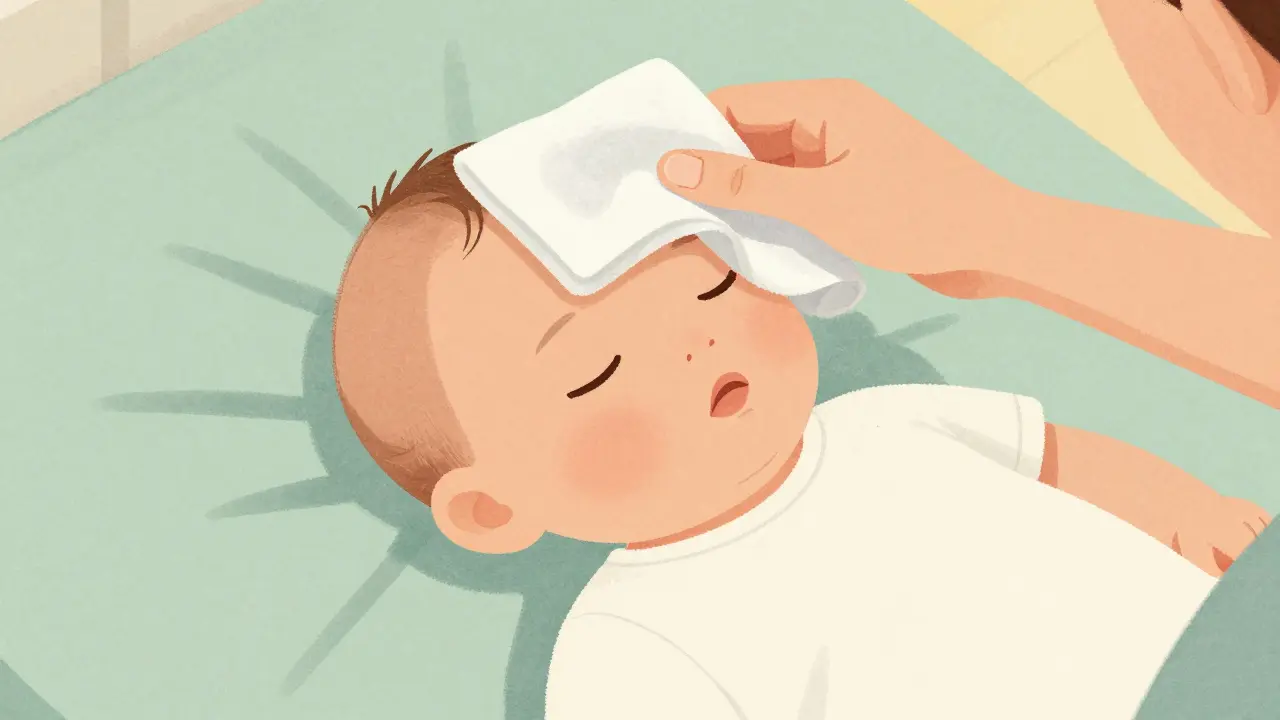
- Lukewarm Sponging: A lukewarm (not cold) washcloth on the forehead can help them feel more comfortable.
When to Call the Doctor
While most post-vaccine fevers resolve on their own within 1 to 2 days, some signs are red flags. You should contact your pediatrician immediately if:
- Your infant is under 12 weeks old and develops any fever.
- The fever lasts longer than 48 hours.
- Your child is unusually lethargic or won't wake up for feedings.
- They develop a rash that doesn't fade when you press on it.
- The fever exceeds 104°F (40°C) despite medication.
Can I give my child medicine before the appointment to keep them calm?
It is not recommended. Giving fever reducers before the vaccine can lower the amount of antibodies your child produces, potentially making the vaccine less effective.
Is it okay to vaccinate a child who already has a mild cold?
Yes. A mild illness or a low-grade fever usually doesn't affect how well the body responds to the vaccine. However, always check with your doctor if your child has a high fever or a moderate-to-severe illness.
What is the safest time to give paracetamol after a shot?
Most experts suggest waiting until at least 4 hours after the injection. This allows the immune system to initiate the necessary inflammatory response without interference.
Why does the NHS suggest medicine for the MenB vaccine but not others?
The MenB vaccine has a notably higher rate of causing high fevers compared to other routine shots. In this specific case, the health risk of a very high fever outweighs the small risk of reduced vaccine efficacy.
Can I use ibuprofen for a 3-month-old baby?
Generally, no. Ibuprofen is typically recommended for infants 6 months and older. For younger infants, acetaminophen is the standard choice, but you must consult your doctor first if the baby is under 12 weeks old.
william wang
April 16, 2026 AT 23:54
The 4-hour window is a great rule of thumb for parents. I've noticed that focusing on hydration and light clothing really helps keep the little ones comfortable while their immune systems do the heavy lifting. It's all about that balance between managing distress and letting the vaccine actually do its job.