
For decades, doctors turned to benzodiazepines and non-benzodiazepines to help people sleep. But today, the story has changed. These drugs - once seen as quick fixes for insomnia - are now viewed with serious caution. The risks often outweigh the benefits, especially over time. If you're taking one of these pills, or thinking about it, you need to know what’s really going on.
What Are Benzodiazepines and Non-Benzodiazepines?
Benzodiazepines are a group of drugs developed in the 1950s and 60s. Common ones include temazepam, alprazolam, and triazolam. They work by boosting GABA, a calming chemical in the brain. They don’t just help with sleep - they’re also used for anxiety, seizures, and muscle spasms.
Non-benzodiazepines, often called Z-drugs, came later - in the 1980s and 90s. These include zolpidem (Ambien), eszopiclone (Lunesta), and zaleplon (Sonata). They were designed to target sleep more specifically, with less impact on anxiety or muscle relaxation. At first, they were marketed as safer, cleaner alternatives.
But here’s the truth: both classes work in similar ways. They both bind to GABA receptors. The difference isn’t as big as the marketing suggested. Benzodiazepines hit multiple receptor sites. Z-drugs focus mostly on one - the omega-1 receptor - which is why they’re thought to be more sleep-specific. But that doesn’t mean they’re safer in practice.
How Long Do They Last? Half-Life Matters
The half-life of a drug tells you how long it stays in your body. This is critical for sleep meds because it affects how groggy you feel the next day.
Benzodiazepines vary widely. Triazolam has a short half-life - 1.5 to 5.5 hours. That means it helps you fall asleep fast but might not keep you asleep all night. Flurazepam, on the other hand, has a half-life of up to 250 hours. That’s over 10 days. It builds up in your system. People on flurazepam often wake up feeling foggy, uncoordinated, and tired - even if they didn’t feel drowsy the night before.
Z-drugs are mostly short-acting. Zaleplon lasts just 1 to 1.5 hours. Good for people who wake up in the middle of the night. Zolpidem lasts 1.6 to 4.5 hours. Eszopiclone is longer - 5 to 7 hours - so it helps you stay asleep. But even these short-acting drugs can leave residue in your system. The FDA lowered zolpidem’s dose for women in 2013 because studies showed many women still had enough drug in their blood the next morning to impair driving.
Longer half-life doesn’t mean better sleep. It means more risk of next-day drowsiness, memory lapses, and falls.
Side Effects: What You Might Not Expect
Everyone knows sleeping pills can make you drowsy. But the real dangers are hidden.
Both classes can cause:
- Short-term memory loss - you might not remember things that happened right after taking the pill
- Rebound insomnia - when you stop, your sleep gets worse than before
- Dry mouth, dizziness, headaches
- Unusual dreams or nightmares
But Z-drugs have a unique and terrifying risk: sleep-related complex behaviors. People have reported driving while asleep, cooking, making phone calls, or even having sex - and having zero memory of it afterward. Between 2005 and 2010, zolpidem was involved in 66% of FDA-reported sleep-driving incidents.
Benzodiazepines carry a different kind of risk: severe withdrawal. Stopping suddenly after just a few weeks can trigger panic attacks, seizures, hallucinations, and extreme anxiety. One user on Reddit described quitting temazepam after eight months: “I had panic attacks for three weeks straight.”
And then there’s the long-term toll. A 2024 VA report found that people on these drugs have:
- 5 times higher risk of memory and concentration problems
- 4 times higher risk of daytime fatigue
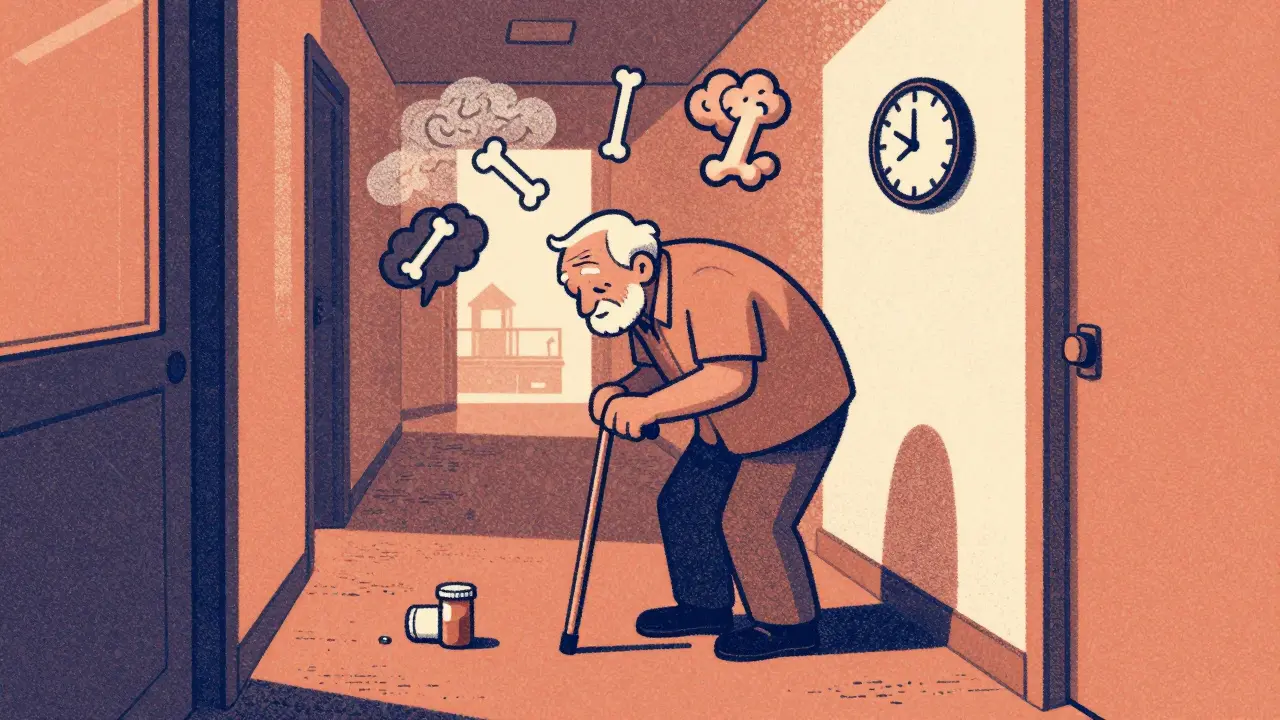
- 2 times higher risk of falls and fractures
For older adults, that’s not just inconvenient - it’s life-threatening. A 2012 JAMA study found benzodiazepines increased hip fracture risk by 2.3 times in seniors. Z-drugs? Still 1.8 times higher.
Efficacy: Do They Even Work Long-Term?
Here’s the uncomfortable truth: these drugs stop working.
Tolerance builds fast. Many people find that after two or three weeks, the pill doesn’t help anymore. They up the dose - and the risk climbs with it. A 2021 meta-analysis showed 34% of users reported daytime drowsiness bad enough to hurt their work performance.
A 2013 NCBI study looked at people taking zolpidem intermittently for eight weeks. The result? No improvement in health or daily function. The study had enough power to detect even small benefits - and found none.
Reddit users echo this. In r/insomnia, 68% said they stopped Z-drugs within three months because “they stopped working.” Others wrote: “I woke up with no memory of the last two hours.”
Meanwhile, benzodiazepines may seem more effective over time - but that’s because they’re more addictive. The brain adapts, and you need more to feel the same effect. That’s not efficacy. That’s dependence.
Who Should Avoid These Drugs?
These aren’t safe for everyone. In fact, they’re risky for most people over 65. The American Geriatrics Society explicitly lists both benzodiazepines and Z-drugs as “potentially inappropriate” for older adults because of falls, confusion, and memory loss.
People with sleep apnea should avoid them too. Studies show these drugs can make apnea worse - slowing breathing even more. That can lead to low oxygen levels, heart strain, and even sudden death.
Also avoid them if you’re taking:
- Opioids - together, they can stop your breathing
- Antidepressants or antihistamines - they multiply sedation
- Alcohol - even one drink can turn a sleeping pill into a dangerous mix
And if you have liver or kidney disease? These drugs can build up to toxic levels. Dosing adjustments aren’t enough. The risk is just too high.
What’s the Alternative?
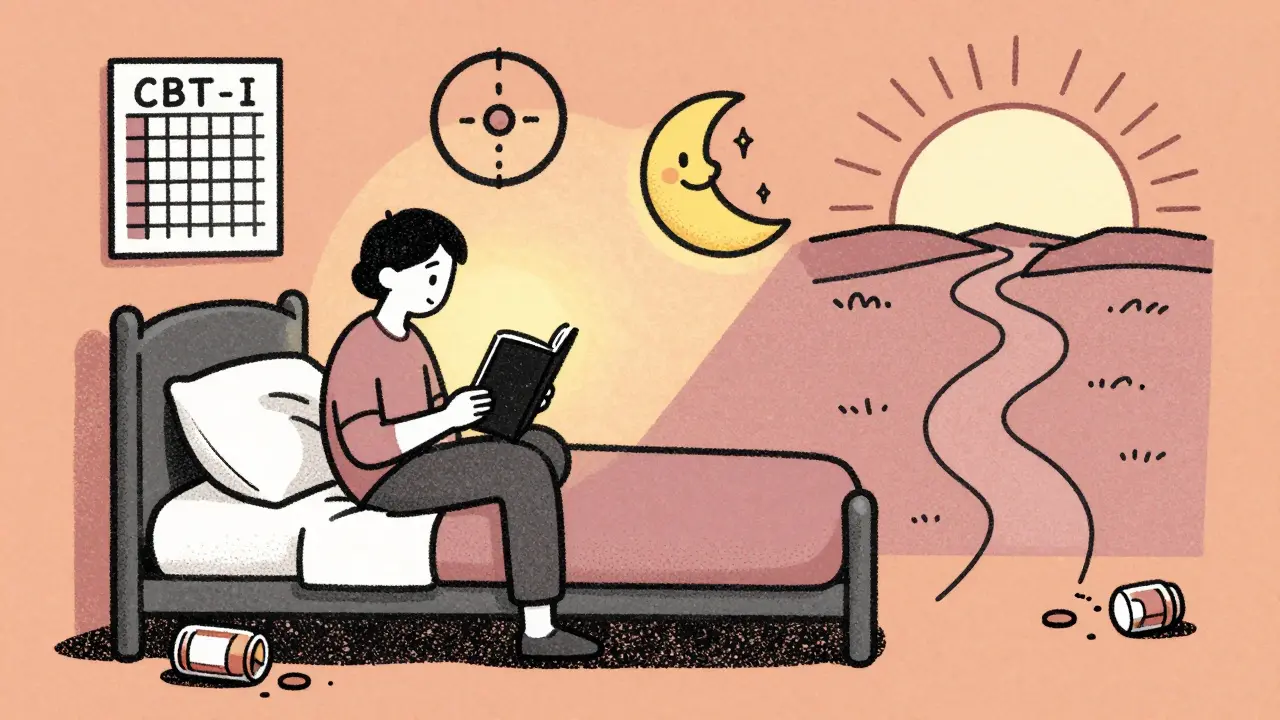
The American Academy of Sleep Medicine now says cognitive behavioral therapy for insomnia (CBT-I) should be the first-line treatment. Not pills. Not supplements. Therapy.
CBT-I works by changing how you think about sleep. It teaches you to break the cycle of anxiety around bedtime, improve sleep habits, and reset your body clock. Studies show it works better than pills - and the benefits last years after treatment ends.
There are also newer drugs on the horizon. Suvorexant (Belsomra) and lemborexant (Dayvigo) target orexin, a brain chemical that keeps you awake. They don’t affect GABA. Early results show 30-40% less next-day drowsiness than Z-drugs.
But even these aren’t magic. They still carry risks. And they’re expensive. CBT-I remains the gold standard - and it’s often covered by insurance.
What If You’re Already Taking One?
If you’ve been on a sleeping pill for more than a few weeks, don’t quit cold turkey. Withdrawal can be dangerous.
For benzodiazepines: taper slowly. Reduce your dose by 10% every 1-2 weeks. Work with your doctor. Some people need months to get off safely.
For Z-drugs: a 2-4 week taper is often enough. But if you’ve been using them for months or years, go slower. Your brain needs time to readjust.
Start CBT-I while you taper. It helps you manage the anxiety that comes with stopping. Sleep hygiene matters too - no screens before bed, consistent wake-up time, avoid caffeine after 2 p.m.
And if you’ve had a sleep-driving episode, or woke up doing something you don’t remember? Tell your doctor. Immediately. That’s not a side effect - that’s a red flag.
The Bottom Line
Sedative-hypnotics - whether benzodiazepines or Z-drugs - are not long-term solutions. They’re temporary crutches with heavy costs. Memory loss. Falls. Addiction. Driving while asleep. These aren’t rare accidents. They’re expected outcomes.
The VA now says: “It is no longer recommended to take a sedative-hypnotic drug to treat insomnia or anxiety.” That’s not a suggestion. That’s a policy change based on hard evidence.
If you’re struggling with sleep, you’re not alone. But the answer isn’t another pill. It’s a better approach - one that heals your sleep, not just masks it.
Ask your doctor about CBT-I. Look into sleep clinics. Try a structured program. You don’t need a drug to sleep well. You need a better routine - and the right support.
Michael Burgess
January 4, 2026 AT 07:44
Man, I’ve been on zolpidem for 18 months and just realized I’ve been making peanut butter sandwiches at 3 a.m. with no memory of it. 😳 My wife caught me once-standing in the kitchen in my underwear, humming the theme to ‘The Office.’ I thought I was dreaming. Turns out, I wasn’t. This post? Spot on. Time to quit. CBT-I is next.
Neela Sharma
January 5, 2026 AT 23:35
Sleep isn’t a problem to fix-it’s a rhythm to restore. We’ve been sold pills like they’re magic keys when the real door was always within us. Your body knows how to sleep. It just needs silence, routine, and permission to rest. No chemicals needed. Just patience. And maybe a warm cup of chamomile. 🌿
erica yabut
January 7, 2026 AT 00:21
It’s embarrassing how easily we surrender our autonomy to Big Pharma’s glossy brochures. ‘Z-drugs are safer’? Please. They’re just the new Prozac-designed to keep you docile while the system ignores root causes like chronic stress, blue light, and existential dread. I’d rather lie awake than chemically mute my humanity.
Vincent Sunio
January 7, 2026 AT 11:57
It is imperative to note that the FDA’s 2013 dosage adjustment for zolpidem in women was predicated upon pharmacokinetic disparities in hepatic metabolism-not gender per se. Furthermore, the VA’s 2024 policy update, while well-intentioned, lacks longitudinal data on alternative outcomes. CBT-I is efficacious, yes-but not universally accessible. One must interrogate structural barriers before prescribing behavioral solutions.
Shruti Badhwar
January 7, 2026 AT 12:44
I’ve been a sleep specialist in Mumbai for 17 years. Benzodiazepines? We rarely prescribe them anymore. In India, we see too many elderly patients with falls, confusion, and fractured hips from these drugs. We use light therapy, strict sleep hygiene, and Ayurvedic routines-like warm milk with nutmeg and meditation before bed. Simple. Safe. Effective. The West needs to stop outsourcing sleep to pills.
Tiffany Channell
January 9, 2026 AT 11:38
Did you know the FDA has been quietly suppressing data on Z-drug-induced amnesia since 2011? The pharmaceutical companies funded the ‘safe’ studies. The real reports? Buried. I’ve seen 3 patients who woke up in hotel rooms with no ID, no clothes, and no memory. One was in Canada. Another in Ohio. They’re not accidents. They’re cover-ups. Wake up.
Angela Goree
January 11, 2026 AT 03:39
America is weak. We don’t want to sit with discomfort. We don’t want to learn discipline. We just want a pill to shut our brains off. Meanwhile, people in Japan, Germany, Sweden-they meditate. They walk. They sleep when tired. Not because they’re saints. Because they’re not addicted to chemical crutches. We need to stop treating sleep like a broken appliance.
Liam Tanner
January 11, 2026 AT 11:12
For anyone reading this and thinking, ‘I can’t quit’-you’re not alone. I was on temazepam for 5 years. My doctor helped me taper over 6 months. I started CBT-I. I cried a lot. I slept worse at first. But now? I’ve been drug-free for 14 months. I wake up tired sometimes. But I’m present. I remember my dreams. And I’m alive. You can do this.
Hank Pannell
January 12, 2026 AT 19:47
The GABAergic paradigm is fundamentally flawed-it treats symptom suppression as therapeutic success. The neuroplasticity required for restorative sleep is actively inhibited by chronic receptor modulation. The pharmacokinetic burden of long-half-life agents induces a pseudo-sedative state that mimics sleep architecture without its restorative components. CBT-I, conversely, reinstates homeostatic drive and circadian entrainment via cognitive restructuring and stimulus control. The data is unequivocal: neurochemical sedation ≠ sleep. We must reframe insomnia as a dysregulation of the autonomic nervous system-not a deficiency of pharmacological intervention.
Angela Fisher
January 14, 2026 AT 06:46
They’re watching us. Every time you take a sleeping pill, they’re logging it. The NSA, the pharma lobby, the sleep tech companies-they all want you dependent. Why? Because if you’re sleeping, you’re not organizing. You’re not protesting. You’re not thinking. The government doesn’t want you awake at 3 a.m. thinking about the cost of insulin or the war. They want you drugged and quiet. This isn’t medicine. It’s social control. And they’re selling it as ‘help.’