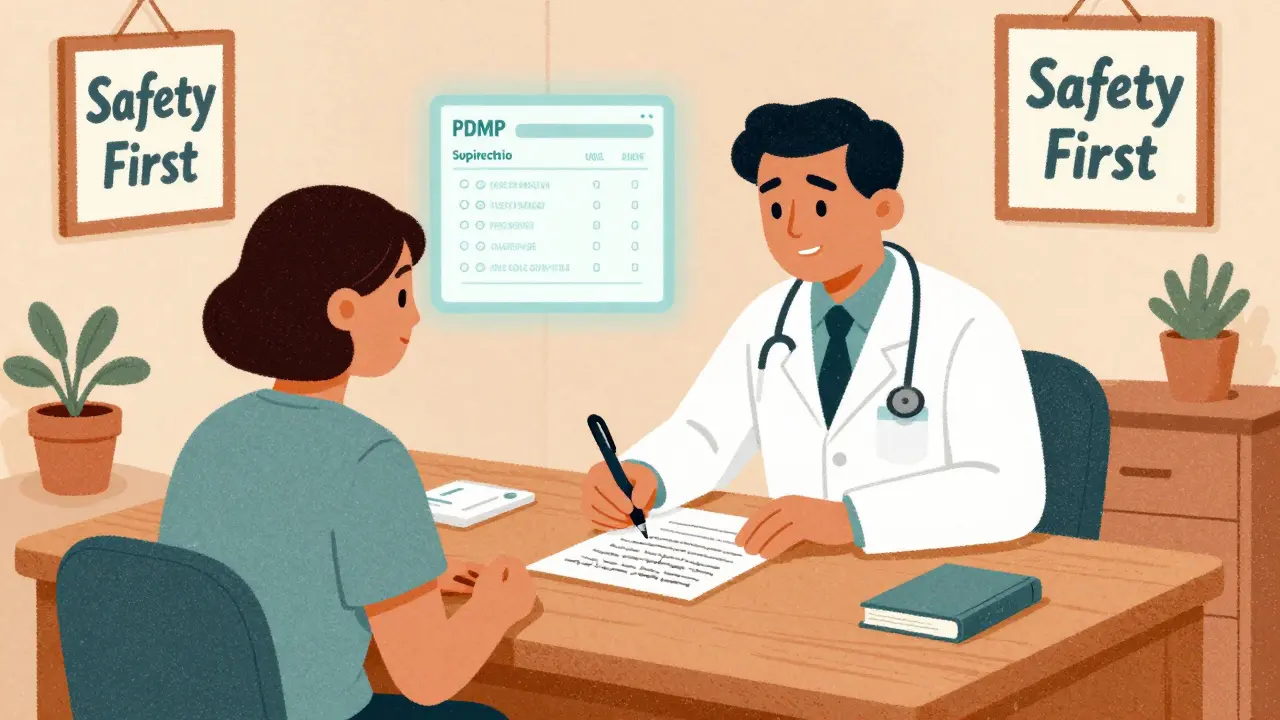
When a doctor prescribes opioids for chronic pain, it’s not just a signature on a script. It’s a decision that involves trust, risk, and responsibility. That’s where opioid agreements come in. These aren’t legal contracts you sign at a courthouse-they’re clinical tools used by doctors to help keep patients safe while managing pain. Think of them as a shared plan between you and your provider: one that lays out what’s expected, what’s monitored, and what happens if things go off track.
What Exactly Is an Opioid Agreement?
An opioid agreement, also called a Pain Management Agreement or Opioid Treatment Agreement, is a written document that both the patient and provider sign. It doesn’t replace your right to pain relief. Instead, it helps ensure that opioids are used safely, especially when they’re needed long-term. These agreements typically cover:
- Only getting opioids from one prescriber and one pharmacy
- Not sharing or selling medication
- Accepting random urine drug tests
- Allowing your doctor to check prescription monitoring databases
- Attending regular follow-up visits
- Not using alcohol or other sedatives with opioids
Signing one doesn’t mean you’re suspected of misuse. It’s standard practice for anyone starting long-term opioid therapy-just like getting a blood pressure check before starting a new heart medication. The goal? Prevent overdose, addiction, and dangerous interactions before they happen.
The Backbone of Safe Prescribing: PDMPs
Opioid agreements don’t work alone. They’re tied to something called a Prescription Drug Monitoring Program, or PDMP. Every U.S. state has one. These are electronic databases that track every controlled substance prescription filled at pharmacies. When you get an opioid, the pharmacy sends details-what drug, how much, when, and who prescribed it-into the state system, usually within 24 hours.
Doctors are now expected to check the PDMP before writing any opioid prescription-and again every three months if you’re on long-term therapy. Some states even require it before every single refill. The CDC says this simple step cuts down on dangerous practices like "doctor shopping"-when someone visits multiple providers to get multiple prescriptions. Studies show PDMP use reduces this behavior by over 12%.
But here’s the catch: PDMPs are only as good as how they’re used. A 2021 study found that when PDMPs are built right into the electronic health record (EHR), doctors check them 6 times more often. Why? Because they don’t have to log into a separate website, hunt for your name, and wait 5 minutes. With integration, it takes less than a minute. That’s the difference between checking it once a week… or forgetting it entirely.
How Integration Changes Everything
Imagine this: You walk into your doctor’s office. They open your chart in Epic or Cerner. Right there, in the same screen, a pop-up says: "Patient received 120 MME/day from 3 providers in the last 30 days." No extra clicks. No login. No delay. That’s what integrated PDMPs do. And it’s making a real difference.
Before integration, only about 12% of clinicians routinely checked PDMPs. Now, in places where it’s built into workflow, that number jumped to 78%. That’s not just convenience-it’s a lifesaver. One primary care doctor in Ohio told a survey that PDMP data stopped them from prescribing hydrocodone to a patient already getting 200 morphine milligram equivalents (MME) per day from another provider. That’s the kind of safety net you can’t afford to skip.
States are catching on. By 2025, 45 states plan to improve PDMP-EHR integration using opioid settlement funds. The goal? Real-time data-within 2 hours of a prescription being filled, not 24. Right now, delays mean a patient could get a dangerous new prescription before the last one shows up in the system. That’s a gap that costs lives.
What Happens If You Don’t Follow the Agreement?
Signing the agreement isn’t a one-time formality. It’s an ongoing commitment. If you miss appointments, fail a drug test, or get prescriptions from multiple doctors, your provider will talk to you. They might adjust your dose, refer you to addiction counseling, or stop prescribing opioids altogether. This isn’t punishment. It’s harm reduction.
For example, if your urine test shows benzos but you never reported taking them, your doctor needs to know. Mixing opioids and benzodiazepines increases overdose risk by over 400%. That’s not a guess-it’s data from the CDC. The agreement gives your provider the tools to protect you, even when you don’t realize you’re at risk.
Some patients worry these agreements feel controlling. But think of it like this: If you had diabetes, your doctor wouldn’t just give you insulin and say "good luck." They’d check your blood sugar, adjust your diet, and watch for complications. Opioids are just as powerful-and just as risky. The agreement is part of that care.
Who Uses These Agreements? And Who Doesn’t?
Most patients on long-term opioids for conditions like severe arthritis, back pain, or cancer-related pain are asked to sign one. But not everyone is. In states without mandatory PDMP use, some providers skip the agreement entirely. That’s risky. A 2022 survey found that 44% of doctors who rarely checked PDMPs felt worried about legal liability. Meanwhile, 82% of those who checked regularly felt confident in their decisions.
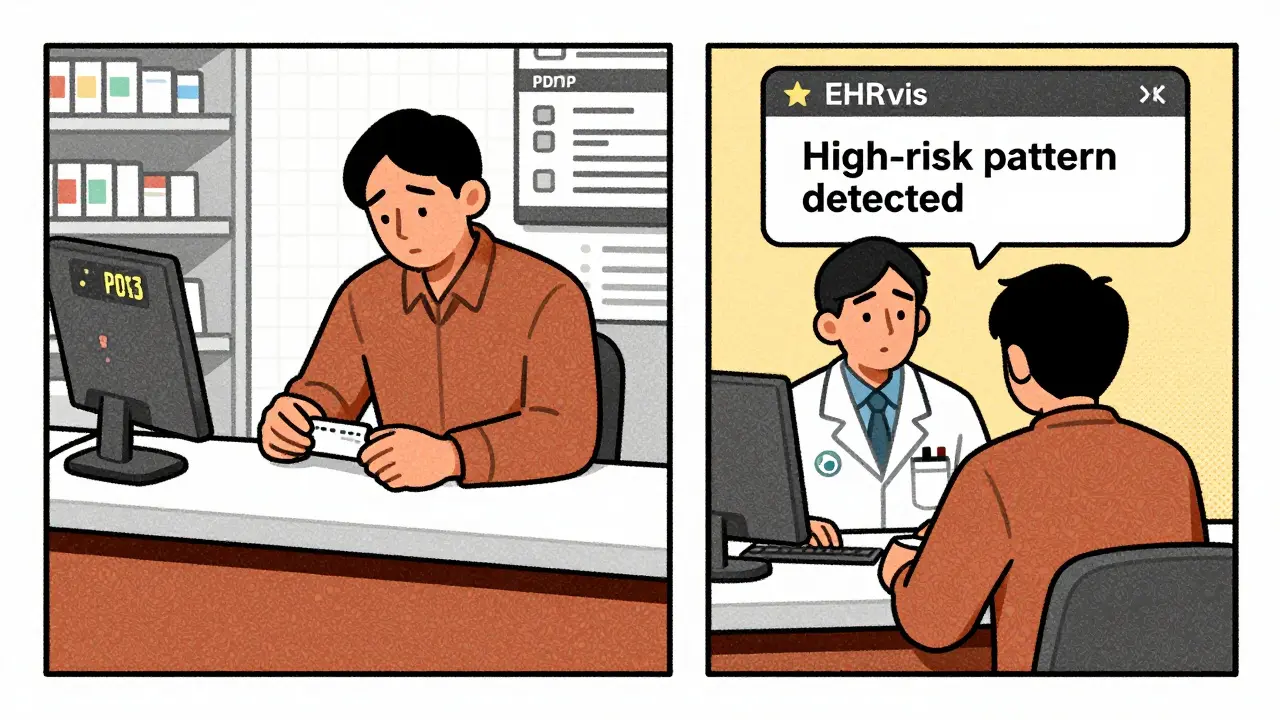
Advanced practitioners-nurse practitioners and physician assistants-can also access PDMPs in 37 states. That’s important because they manage nearly half of all chronic pain cases. But training matters. One study found only 38% of primary care providers felt confident interpreting PDMP data. That’s why many clinics now use automated alerts: "High-risk pattern detected. Review before prescribing."
Limitations and Gaps
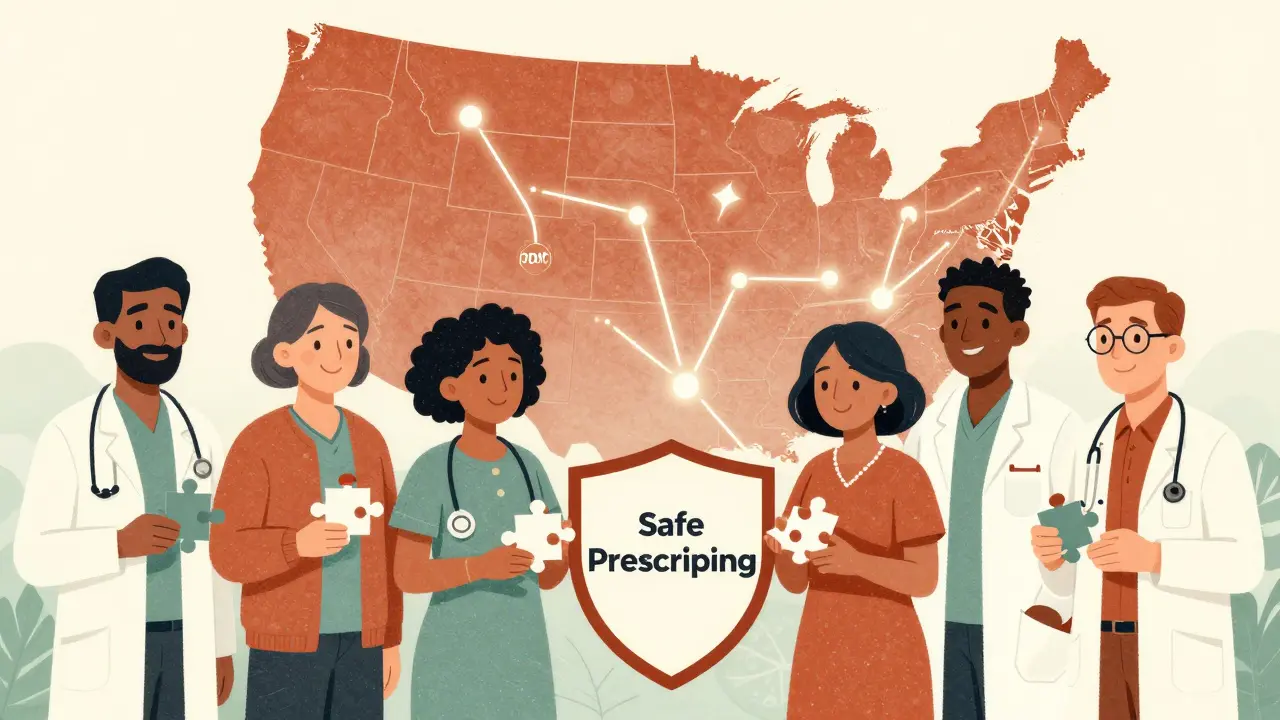
PDMPs and agreements aren’t perfect. They can’t detect if someone is buying fentanyl off the street. They won’t catch someone who gets pills from a friend. They can be slow-sometimes by days. And not all states share data. If you live near a border, like New Hampshire or Florida, your doctor might have to check 3 or 4 different systems. That’s why programs like PMIX exist: a network that lets states exchange data. 42 states use it now, cutting cross-border query time by over 60%.
Also, PDMPs don’t track hospital inpatient doses or pain clinic visits in real time. That’s why urine drug testing still matters. If you’re on long-term opioids, expect occasional tests. It’s not about distrust-it’s about safety. A positive test for a drug you didn’t take? That’s a red flag your provider needs to address.
What’s Changing in 2025 and Beyond
The opioid crisis isn’t over. But the tools to fight it are getting smarter. By 2025, the 21st Century Cures Act will require all health IT systems to use the same data standards. That means PDMPs will talk to each other better. Real-time alerts will become standard. Machine learning will flag risky prescribing patterns before they lead to overdose.
Federal funding is locked in until at least 2030. And more states are making PDMP checks mandatory-not optional. In 26 states, you can’t get an opioid prescription unless the provider checks the database first. That’s not bureaucracy. It’s a safety protocol, like seatbelts in cars.
The future isn’t about stopping opioids. It’s about using them wisely. When agreements are paired with smart monitoring, overdose rates drop. Patient outcomes improve. And trust between doctors and patients grows-not because they’re being watched, but because they’re being protected.
Do I have to sign an opioid agreement if I’m only taking opioids for a few weeks?
Usually not. Opioid agreements are primarily for long-term use-typically more than 90 days. For short-term pain after surgery or injury, most providers skip the formal agreement but still check the PDMP before prescribing. Always ask your doctor what their policy is.
Can my doctor refuse to prescribe opioids if I won’t sign the agreement?
Yes. While it may feel like a demand, signing the agreement is part of the standard of care for chronic opioid therapy. If you refuse, your provider may offer alternative pain treatments, refer you to a pain specialist, or stop prescribing opioids altogether. This isn’t about control-it’s about safety and legal responsibility.
Are urine drug tests invasive or humiliating?
They can feel that way, but they’re not meant to shame you. These tests help your provider see what’s really in your system. Maybe you’re taking a medication you forgot to mention. Maybe you’re using something that’s dangerous with opioids. Either way, the test gives your doctor the full picture so they can keep you safe. It’s a routine part of care, like a cholesterol check.
What if I move to a different state? Do I need a new agreement?
You’ll likely need to sign a new agreement with your new provider, since state rules vary. But your PDMP history will still be accessible if the new state shares data with your old one. Most states now participate in interstate data sharing, so your prescription history follows you. Just make sure your new doctor checks the system before prescribing.
Is my PDMP data private? Can it be used against me?
Yes, it’s protected under HIPAA. PDMP data can’t be shared with law enforcement unless there’s a court order or you’re suspected of illegal activity. It’s used solely for clinical safety. In 2022-2023, 18 states faced lawsuits over data breaches, but those were rare and involved system failures-not intentional misuse. Your data is meant to protect you, not punish you.
What Comes Next?
If you’re on long-term opioids, ask your provider: "Do you check the PDMP before every prescription?" and "Is it integrated into your electronic chart?" If the answer is no, it’s worth discussing why. You deserve care that’s both effective and safe. These tools exist because too many people have lost their lives to preventable overdoses. The goal isn’t to make your life harder. It’s to make sure you can keep living it-without the risk of addiction or overdose.
Jacob Carthy
February 23, 2026 AT 04:20
Look I get why we need these agreements but lets be real here - this is just another way the system controls us. I’ve been on pain meds for 12 years after my back went out and they treat me like a junkie every time I walk in. No trust. Just rules. And now they wanna check my urine like I’m some kind of criminal? I didn’t sign up for this when I got hurt on the job.
Lisandra Lautert
February 24, 2026 AT 11:43
This system works. Period.
Cory L
February 26, 2026 AT 03:52
Man I love how this whole thing is basically like a Netflix show called ‘Opioids: The Safety Saga’ - except it’s real life and people are actually surviving because of it. Doctors checking PDMPs like they’re scrolling TikTok? YES. Real-time alerts popping up like ‘DANGER: 200 MME FROM THREE DOCTORS’? ICONIC. This isn’t punishment - it’s a lifesaving upgrade. We upgraded from dial-up to 5G in pain management and I’m here for it.
Bhaskar Anand
February 27, 2026 AT 20:56
This is what happens when you let people get lazy about their health. You think you deserve pain meds without consequences? No. You think you can take opioids and not be monitored? That’s not freedom - that’s negligence. And now you want the government to protect you from yourself? We need structure. We need rules. We need accountability. This is not a suggestion. This is survival.
William James
February 27, 2026 AT 22:55
Hey I just wanna say - I used to be really scared of these agreements too. Felt like they were judging me. But then my doc sat down and said ‘we’re not trying to catch you - we’re trying to keep you alive.’ And that changed everything. I started seeing the tests not as suspicion but as care. Like getting your tires checked before a road trip. You don’t hate the mechanic for asking - you thank them. That’s what this is. A little checkup so you can keep walking.
David McKie
February 28, 2026 AT 04:59
Let me tell you what’s really happening here - this isn’t about safety. It’s about control. They don’t trust you. They don’t trust anyone. They’ve turned medicine into a prison system with white coats. Every urine test is a slap in the face. Every signature is a surrender. And now they’re using federal money to build more surveillance? This isn’t healthcare. This is institutionalized humiliation dressed up in clinical jargon. Wake up.
Southern Indiana Paleontology Institute
March 1, 2026 AT 09:48
I dont care if its a agreement or not. If you on opioids you get checked. No excuses. You think you are special? You think you are the one person who wont abuse it? Everyone thinks that. Then they end up dead. Or their kid finds the pills. Or they mix it with benzos and never wake up. This is not optional. Its basic. If you cant handle it go see a therapist or get a cane. Pain is not a right. Survival is.
Anil bhardwaj
March 3, 2026 AT 04:02
My uncle in Mumbai takes morphine for cancer. He never signed anything. His doctor just asks him how he’s feeling. No tests. No databases. Just conversation. Maybe we’re overcomplicating this? Not everyone needs a spreadsheet to be treated with dignity.
lela izzani
March 4, 2026 AT 16:01
I’ve been a nurse for 18 years and I’ve seen both sides. I’ve seen people die because no one checked the PDMP. I’ve also seen people cry because they felt like criminals for needing help. These agreements? They’re not perfect. But they’re the best tool we have right now. And when they’re integrated into the EHR? That’s when magic happens. Doctors catch dangerous patterns before they become tragedies. Patients feel safer. Providers feel less guilty. It’s not about control. It’s about connection. And yeah - sometimes it feels invasive. But so does a mammogram. And we don’t refuse those. We do them because we care.