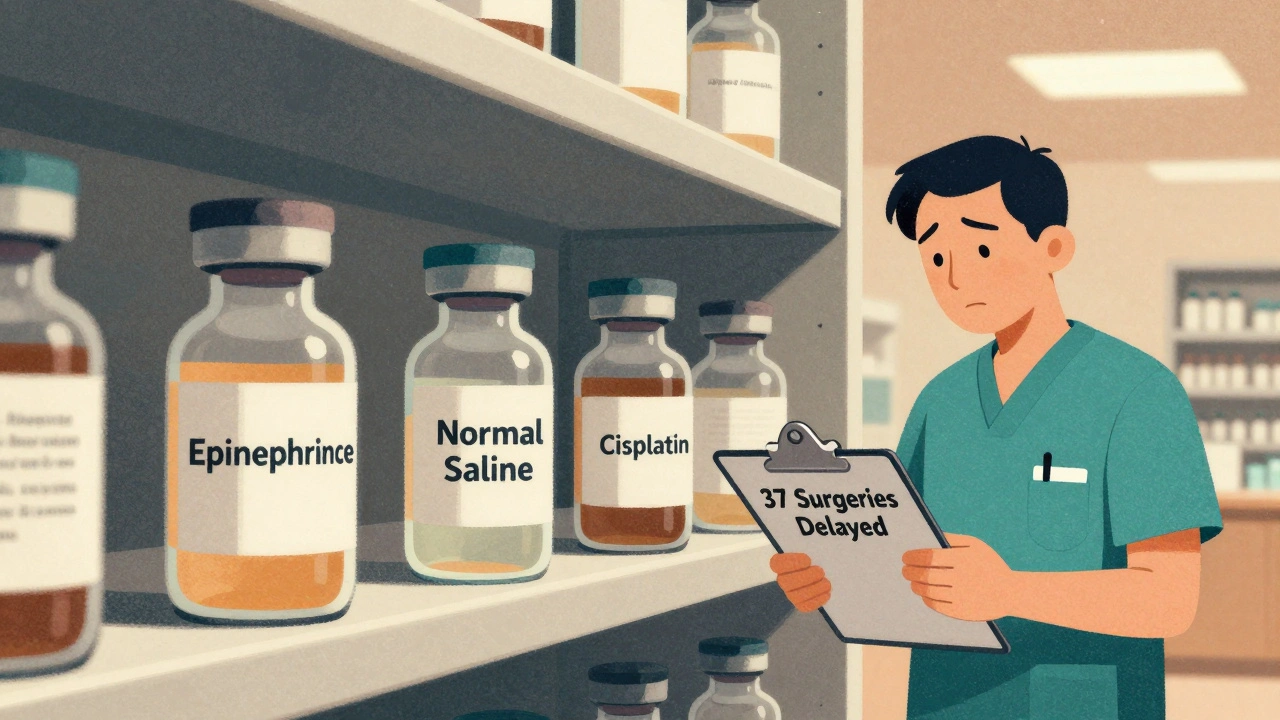
When a patient in intensive care needs a life-saving injection, and the vial is empty, it’s not a glitch-it’s a system failure. As of July 2025, injectable medication shortages are affecting over 220 drugs in the U.S., and hospital pharmacies are feeling the worst of it. While community pharmacies might run low on a few pills now and then, hospitals are dealing with critical drugs that can’t be swapped out like over-the-counter painkillers. These aren’t just inconveniences. They’re delays in surgery, postponed chemotherapy, and nurses scrambling to find alternatives that may not work as well.
Why Injectables Are the Weakest Link
Not all drugs are made the same. Oral pills can be made in bulk, stored for years, and shipped easily. Injectable medications? They’re a different beast. They have to be sterile. No dust. No bacteria. No contamination. That means manufacturing happens in clean rooms under strict controls, often by hand, with every step monitored. It’s slow. It’s expensive. And it’s fragile. About 60% of all drug shortages involve injectables. Why? Because the profit margins are razor-thin. Most of these drugs are generics-like normal saline, epinephrine, or cisplatin-that cost pennies per dose. Manufacturers don’t make much money off them, so they don’t invest in backup equipment or extra staff. One machine breaks down? One factory shuts down? The whole supply collapses. And it’s not just one factory. Eighty percent of the raw ingredients for these injectables come from just two countries: China and India. A tornado hits a plant in North Carolina, or the FDA finds a quality issue at a facility in Mumbai, and suddenly, the entire country runs out of a drug used in 80% of emergency rooms.Hospital Pharmacies Are Ground Zero
Retail pharmacies might see 15-20% of their inventory affected by shortages. Hospital pharmacies? They’re dealing with 35-40%. And 60-65% of those are injectables. That’s not a minor hiccup. That’s a crisis in the core of patient care. Anesthetics? 87% are in shortage. Chemotherapy drugs? 76%. Cardiovascular injectables? 68%. These aren’t optional meds. They’re the difference between life and death in the OR, the ICU, or the cancer ward. A nurse at Massachusetts General Hospital reported postponing 37 surgeries in just one quarter because they couldn’t get the right anesthetic. That’s not a backlog-it’s a human cost. And there’s no easy fix. You can’t just swap in a different drug. Injectables have exact dosing, bioavailability, and delivery requirements. A substitute might work in theory, but in practice? It could cause a drop in blood pressure, a bad reaction, or even death. Hospitals have to get approval from pharmacy and therapeutics committees just to switch to a different brand or formulation. That takes time. Time patients don’t have.Who’s Affected the Most?
It’s not just the hospitals. It’s the people inside them. The Department of Health and Human Services estimates each drug shortage impacts about 500,000 people. Over 30% of them are between 65 and 85. Elderly patients. Cancer patients. Those on dialysis. People with heart failure. They’re the ones getting IV fluids, antibiotics, and chemo-exactly the drugs that are vanishing. One hospital pharmacist in Ohio told a colleague, “We had to use oral rehydration for post-op patients because we ran out of normal saline for three weeks straight.” That’s not standard care. That’s improvisation under pressure. And it’s happening everywhere.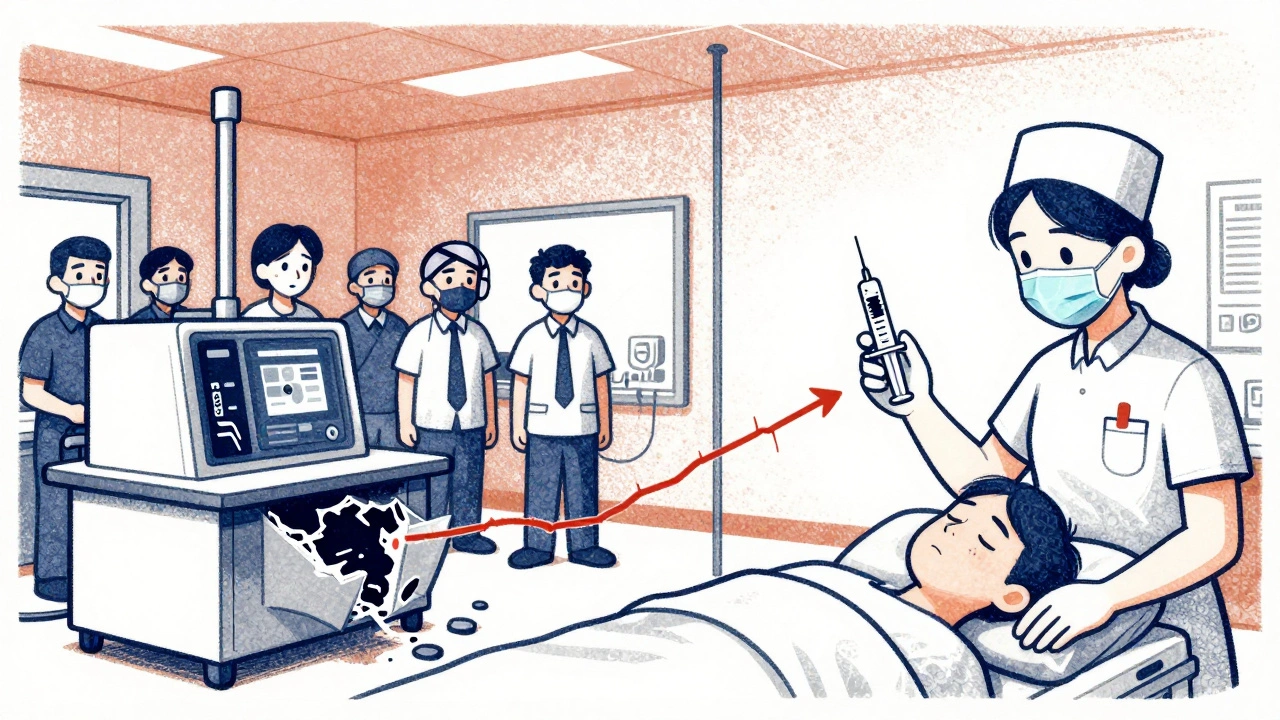
Why the System Keeps Failing
The FDA knows about this. The government knows about this. But the tools they have are weak. The Drug Supply Chain Security Act requires tracking, but doesn’t stop shortages. The Consolidated Appropriations Act of 2023 asked manufacturers to notify the FDA earlier-but only 7% of shortages got resolved faster because of it. Manufacturers operate on 3-5% profit margins. If a machine breaks, they can’t afford to fix it fast. If demand spikes, they can’t ramp up production. There’s no incentive to build redundancy. No penalty for letting a shortage linger. Even the FDA’s own data shows only 14% of shortage notifications lead to timely fixes. That means 86% of the time, hospitals are left in the dark, waiting for a drug that might never come back. And now, climate change is making it worse. Tornadoes, floods, and heatwaves are hitting manufacturing hubs harder and more often. In 2023, a single storm knocked out 15 critical drugs from one Pfizer plant. That’s not an outlier. It’s the new normal.What Hospitals Are Doing to Survive
No one’s waiting for Washington to fix this. Hospitals are building their own lifelines. Most now have shortage management committees. But only 32% of them feel properly funded. Pharmacists are spending over 11 hours a week just finding alternatives, calling distributors, and coordinating with doctors. That’s 11 hours they’re not spending counseling patients, checking doses, or preventing errors. Some hospitals are consolidating stock-keeping all the scarce drugs in one central location so they can ration them better. Others are rewriting standing orders to include approved alternatives. A few have built relationships with smaller, niche suppliers who can fill gaps when the big players can’t. One hospital in Minnesota started using oral fluids for non-critical patients when saline ran out. It worked. But it wasn’t ideal. It meant more monitoring, more paperwork, and more stress for nurses. The learning curve is steep. New pharmacy directors take an average of six months to get good at managing shortages. And even then, they’re just managing-not solving.
Isabelle Bujold
December 3, 2025 AT 21:31
It's not just about manufacturing-it's about the entire economic architecture of generic pharmaceuticals. These injectables are priced like commodities, but they're produced like bespoke medical devices. The market structure incentivizes underinvestment: why build redundant capacity when you can outsource to a factory in Mumbai and pocket 3% profit? The tragedy is that the system works perfectly for shareholders-it's just catastrophically broken for patients. We've outsourced resilience to the lowest bidder, and now we're paying in ICU beds and canceled surgeries.
Rachel Bonaparte
December 4, 2025 AT 22:18
Oh, so now it's climate change? Classic. Let me guess-the real culprit is Big Pharma colluding with the FDA to keep prices high while manufacturing abroad. They’ve been doing this for decades. Remember the heparin crisis? Or the saline shortage in 2012? Same script. The government lets them off the hook with ‘voluntary’ notifications, and the media eats it up like it’s news. Meanwhile, the same CEOs who profit from this chaos are donating to your favorite charities. Wake up.
Yasmine Hajar
December 5, 2025 AT 19:45
My aunt got her chemo delayed for 11 days because they ran out of cisplatin. She’s 72, had two rounds already, and the oncologist had to scramble for a substitute that gave her three days of nausea and zero tumor shrinkage. This isn’t policy. This is people. Real people. Waiting. Suffering. Dying because a factory in India had a power outage. We treat antibiotics like toilet paper and wonder why people die. Fix the incentives. Pay pharmacists to be heroes, not janitors.
Jake Deeds
December 6, 2025 AT 21:03
It’s fascinating how we’ve allowed the commodification of human survival. We’ve turned life-saving injectables into a cost-center optimization problem, as if biology were a spreadsheet. The real failure isn’t the broken supply chain-it’s the moral bankruptcy of a system that values quarterly earnings over the dignity of a patient’s last breath. We’ve become so numb to suffering we call it ‘systemic inefficiency.’
Carolyn Ford
December 7, 2025 AT 17:52
Wait-so you’re saying hospitals are ‘managing’ shortages? That’s not managing-that’s triage by spreadsheet. And let’s not forget: the FDA’s ‘new plan’? It’s a press release with bullet points. Meanwhile, nurses are using oral rehydration for post-op patients because saline’s gone. That’s not innovation-that’s desperation dressed up as policy. And don’t even get me started on the ‘niche suppliers’-half of them are unlicensed, unregulated, and shipping vials without sterility certs. Who’s auditing them? No one.
George Graham
December 7, 2025 AT 21:42
I’ve worked in three different hospital pharmacies over the last decade. Every time a shortage hits, it’s the same ritual: the pharmacy director calls the regional rep, the rep says ‘we’re expecting a shipment next week,’ and then nothing. We start rationing. We start calling every distributor in a 300-mile radius. We start begging doctors to accept alternatives. And then? We do it again. Three weeks later. And again. The staff is exhausted. The patients don’t know. But we do. And we carry it. Quietly.
John Filby
December 8, 2025 AT 02:33
Just had a nurse tell me they had to use oral antibiotics for a septic patient because the IV vancomycin was gone. She said, ‘It’s like trying to put out a house fire with a water bottle.’ 😔 I didn’t know it was this bad. We keep hearing ‘drug shortages’ like it’s a news ticker, but no one talks about the human weight behind it. How do we fix this without bankrupting hospitals? Any ideas?
Karl Barrett
December 9, 2025 AT 05:44
The structural fragility of the sterile injectable supply chain is a textbook case of path dependency in complex adaptive systems. The confluence of low-margin commodity pricing, concentrated global sourcing, and regulatory arbitrage has created a Nash equilibrium where no actor has incentive to deviate-despite Pareto inefficiency. The FDA’s current framework operates on a notification model, not a resilience model. What’s needed is a mandated minimum inventory buffer, subsidized capital investment in continuous manufacturing, and a tiered reimbursement structure that internalizes the social cost of shortage-induced morbidity. Without these, we’re merely rearranging deck chairs on the Titanic.
Jenny Rogers
December 10, 2025 AT 18:30
Let’s be clear: this is not an accident. It is the inevitable consequence of a society that has surrendered the moral imperative of public health to the logic of capital. The fact that we tolerate a system where a child’s life depends on the profitability of a single vial of epinephrine is not just a policy failure-it is a spiritual collapse. We have become a civilization that measures value in profit margins, not in breaths taken, in pulses felt, in lives saved. And for that, we have no excuse.