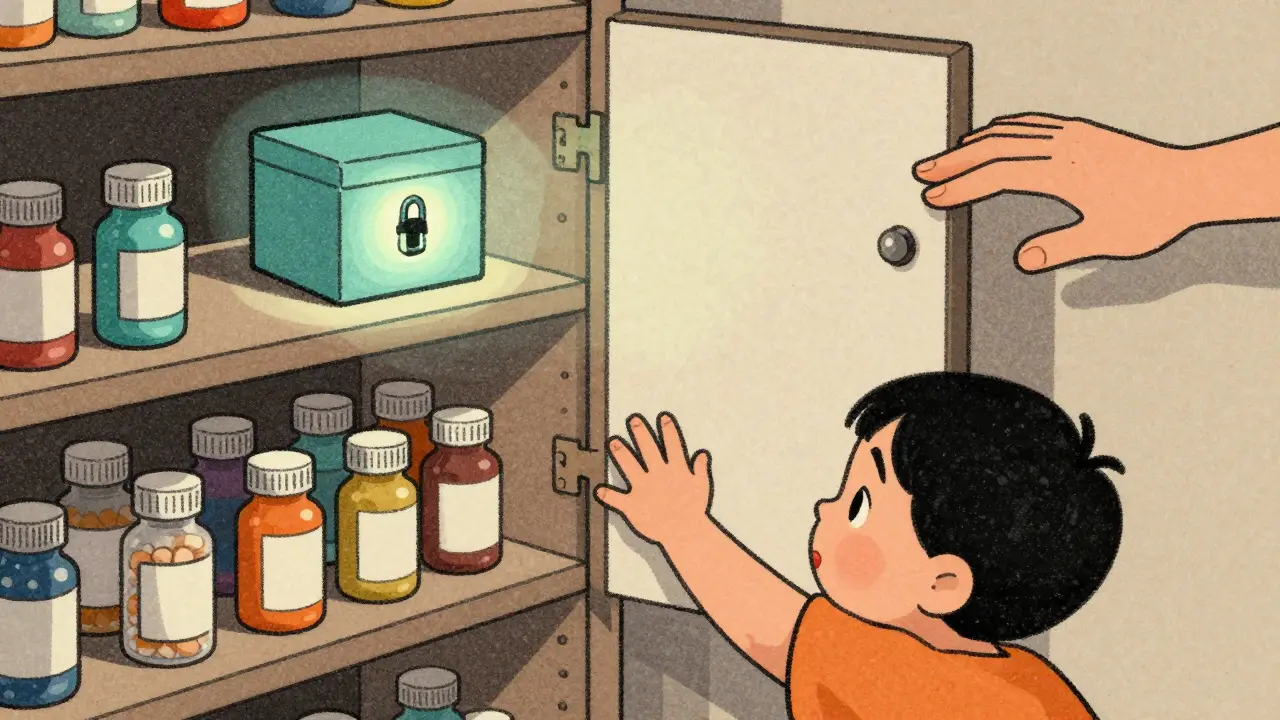
Every year, around 60,000 children end up in emergency rooms because they found and swallowed pills they weren’t supposed to touch. Most of those pills weren’t candy-they were prescription medications kept in open medicine cabinets, on nightstands, or hidden in drawers that kids figured out within minutes. If you keep opioids, benzodiazepines, or stimulants at home, a lockbox isn’t just a good idea-it’s a necessary safety step. And it’s not as complicated as you might think.
Why Lockboxes Matter More Than You Realize
Child-resistant caps sound like they should be enough. But here’s the truth: half of all kids aged 4 to 5 can open them in under a minute. Hidden spots? A 2023 study found that 72% of children can find hidden medications in under 30 minutes. Even high shelves don’t work-kids climb, pull things down, or wait until you’re not looking. Lockboxes are the only solution that creates a physical barrier no child, teen, or visitor can easily bypass. The CDC, the American Academy of Pediatrics, and SAMHSA all agree: if you have high-risk medications like hydrocodone, oxycodone, Xanax, or Adderall, you need a locked container. These aren’t just strong painkillers or anxiety meds-they’re highly addictive and deadly in small doses. In 2021, over 16,700 deaths in the U.S. involved prescription opioids. Most of those weren’t from users-they were from someone else in the household who got into the medicine.What Counts as a High-Risk Medication?
Not every pill needs a lockbox. But these do:- Opioids: Hydrocodone (Vicodin, Norco), Oxycodone (Percocet, OxyContin), Fentanyl patches
- Benzodiazepines: Alprazolam (Xanax), Diazepam (Valium), Clonazepam (Klonopin)
- Stimulants: Dextroamphetamine-amphetamine (Adderall), Methylphenidate (Ritalin)
Choosing the Right Lockbox
Not all lockboxes are the same. Here’s what to look for:- Size: For one person’s medications, a 6x4x3 inch box is enough. For a family with multiple prescriptions, go for 12x8x6 inches.
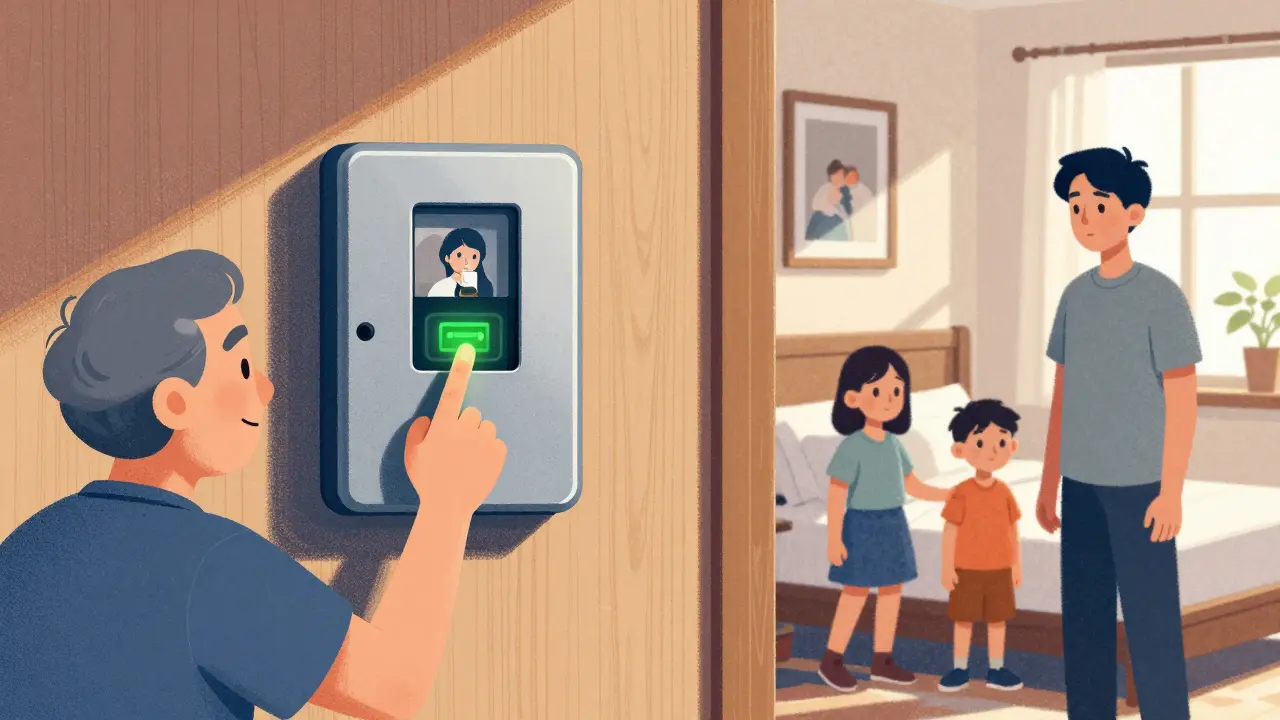
- Lock type: Key locks are simple but risk losing the key. Combination locks (3-4 digits) are common and affordable. Biometric fingerprint locks cost more but are ideal for elderly users or households with multiple people who need access.
- Material: Look for steel or reinforced ABS plastic. Many are rated to withstand 30 minutes at 1,700°F-useful if you’re worried about fire.
- Climate control: If you store insulin or other temperature-sensitive meds, get a model with a cooling feature. Otherwise, keep it in a dry, cool spot like a bedroom closet.
- Mounting: Wall-mountable boxes prevent kids from moving or tipping them over.
Where to Put It (And Where Not To)
Location matters more than you’d expect. Avoid these spots:- Bathroom: Humidity ruins pills and can damage the lockbox.
- Bedroom nightstand: Too easy for teens or guests to access.
- Kitchen counter: Too many distractions and access points.
- Inside a bedroom closet, on a high shelf
- Mounted on the wall behind a door
- In a drawer that’s locked or blocked by other items
Setting Up Your Lockbox: A Simple 5-Step Plan
1. List every high-risk medication in your home. Check your medicine cabinet, drawers, and purse. Don’t forget old prescriptions or samples from doctors. 2. Choose your lockbox based on size, lock type, and whether anyone in the house has trouble with dexterity or memory. 3. Install it in your chosen spot. If it’s wall-mounted, use screws-not adhesive strips. Test it to make sure it won’t come loose. 4. Limit access. Only give the key, code, or fingerprint access to one or two responsible adults. Never tell children or teens the combination. Even if they’re “responsible,” they’re still at risk of misuse or accidental overdose. 5. Check it monthly. Make sure no one’s tampered with it. If someone moves out or a new person moves in, update your access list. Most people get the hang of it in 2-3 days. The hardest part? Remembering to use it every time. Make it part of your routine-like locking the front door.What About Elderly Users?
If you or a family member is over 75, combination locks or keys can be a problem. Arthritis, shaky hands, or memory issues make them frustrating or even dangerous. A 2022 JAMA study found that 15% of older adults struggle with traditional locks. Solution: go biometric. Fingerprint lockboxes cost about $35 more but eliminate the need to remember codes or fumble with keys. Some models even have voice prompts or backlighting for low-light use. If cost is an issue, ask your pharmacist or local aging services-some nonprofits offer discounts or free models for seniors.Real Stories, Real Results
One parent on Reddit shared that after her 3-year-old nearly got into a fentanyl patch, she bought a Master Lock medication box. Eight months later, she says: “Zero incidents. I sleep better now.” Another user, caring for her 80-year-old father, switched from a combination lock to a fingerprint model after he forgot the code three times in one week. “It was a hassle,” she wrote, “but now he takes his meds on time and I don’t panic every time he walks past the cabinet.” Consumer Reports surveyed 1,200 households in 2023. Of those using lockboxes, 78% said they felt more at ease. Only 22% mentioned inconvenience-and most of those said it was worth it.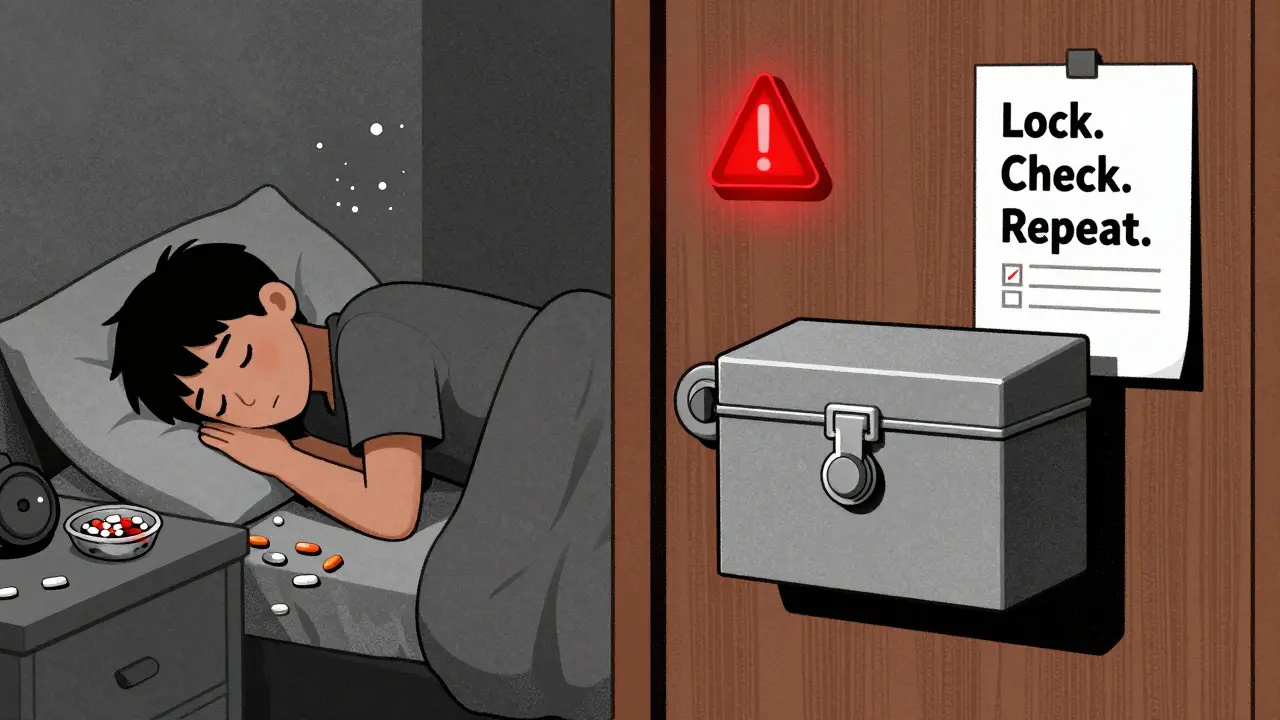
What Not to Do
Avoid these common mistakes:- Storing the lockbox in a place kids can reach. 62% of failed setups were because the box was too accessible.
- Leaving the key or code with teens. Even if they’re trustworthy, peer pressure or curiosity can lead to misuse.
- Forgetting to update access when the household changes. A new roommate? A grandchild visiting? Update your rules.
- Assuming “I only have one pill left” means it’s safe. Even a single opioid tablet can be lethal to a child.
What’s Next for Medication Safety?
The field is evolving fast. In May 2023, the FDA approved the first smart lockbox-MediVault Pro-that logs every time someone opens it and sends alerts to a phone if an unauthorized attempt happens. The National Institute on Drug Abuse just funded $2.5 million to build fingerprint-verified dispensers that only release the exact dose prescribed. Starting in January 2024, new home builds in the U.S. can earn a “Healthy Home” certification only if they include a designated spot for a medication lockbox. That’s how seriously this is being taken now.You Don’t Need to Be Perfect-Just Consistent
You don’t need to buy the fanciest model or lock up every pill in the house. Start small. Lock the opioids. Lock the Xanax. Lock the Adderall. Do it today. The next time you walk past your medicine cabinet, ask yourself: if my child opened it right now, what would they find? If the answer scares you, you already know what to do.Can I just use a locked drawer instead of a lockbox?
Yes, a locked drawer or cabinet works if it’s sturdy and out of children’s reach. But most standard furniture drawers aren’t designed to resist tampering. A dedicated medication lockbox is built with thicker materials and tamper-proof latches, making it more reliable. If you use a drawer, make sure it has a real lock-not just a latch-and that the key or code is kept away from kids.
What if I need to take my medication on the go?
Travel-sized lockboxes (4x3x2 inches, under 2 pounds) are designed for this. Keep your daily dose in one, and store the rest at home. Never leave medication unattended in a car, purse, or hotel room. If you’re traveling with opioids or other high-risk drugs, carry them in your carry-on, not checked luggage, and keep the original prescription label with you.
Are lockboxes covered by insurance?
Most insurance plans don’t cover lockboxes directly. But some state programs, especially those funded by opioid settlement money, provide them for free. Check with your pharmacy, local health department, or SAMHSA’s website. Some hospitals and clinics also give them out during discharge for opioid prescriptions.
How do I dispose of unused high-risk medications?
Never flush them or throw them in the trash. Use a drug take-back program-pharmacies, hospitals, or police stations often have drop boxes. If none are available, mix pills with coffee grounds or cat litter in a sealed container before throwing them away. For patches, fold them in half with the sticky sides together before disposal. Always check the FDA’s guidelines for your specific medication.
Is it really necessary if I don’t have kids?
Yes. Teens, houseguests, visitors, or even relatives with substance use issues can access unlocked meds. Over half of opioid misuse starts with pills taken from a family member’s medicine cabinet. Locking them up protects everyone in the home-not just children. It’s about preventing misuse before it starts.
Jasmine Yule
December 29, 2025 AT 02:16
My cousin’s 4-year-old found his dad’s oxycodone and swallowed three pills. He’s fine now, but we had to rush him to the ER. I didn’t even know he had them. After that, I bought a lockbox for every prescription in the house. No more excuses. This post saved my sanity.
Also, I put mine behind the bathroom mirror. Kids don’t think to look there. Genius.
PS: Fingerprint one. My grandma can’t remember codes but she can still get her meds. Perfect.
Manan Pandya
December 30, 2025 AT 09:37
The data presented here is statistically significant and aligns with WHO guidelines on pharmaceutical safety in domestic environments. I particularly appreciate the emphasis on biometric access for elderly users, as cognitive decline and motor impairment are frequently underestimated in home medication management.
Additionally, the reference to the 2023 Consumer Reports survey is commendable-78% reduction in anxiety among users is a powerful metric. I would only suggest supplementing this with data on compliance rates over 12-month periods, as behavioral adherence remains the most persistent challenge.
Aliza Efraimov
December 30, 2025 AT 19:14
OMG I CRIED READING THIS. My sister’s kid almost died last year because they found her Xanax in a drawer labeled ‘jewelry.’ She didn’t even think it was a big deal-‘it’s just for anxiety!’
Now she has a lockbox. And she’s crying every time she opens it because she realizes how close she came to losing her child.
Also-why aren’t pharmacies giving these out for free? Like, we give out free condoms and naloxone, but not a $20 box that saves lives? This is a public health emergency and we’re treating it like a home organization trend.
Also also-biometric ones are worth every penny. My mom has arthritis. She used to leave her meds on the counter because she couldn’t open the stupid key lock. Now she just taps her thumb. I sleep again.
Duncan Careless
January 1, 2026 AT 14:52
Bit of a late one, but i just wanted to say this is the most useful thing i’ve read all year. i’ve got my dad’s pain meds in a locked drawer now. didn’t think it mattered since he’s 82 and i live with him. turns out, his friend came over last week and ‘borrowed’ one pill for his back. one. pill.
now it’s in a wall-mounted box. no more ‘borrowing.’
Samar Khan
January 3, 2026 AT 01:03
Wow. So you’re telling me we should lock up medicine like it’s a weapon? 😏
Let me guess-you also lock your toothpaste and your kids’ vitamins? Next you’ll be putting a lock on the sugar jar because ‘kids might overdose on gummy bears.’ 😂
Also, I know someone who used a lockbox and then forgot the code. Took 3 days to get the meds. Her grandpa had a heart attack. Who’s the real danger here? 🤔
Nicole K.
January 3, 2026 AT 02:55
You people are so dramatic. My kids know not to touch pills. They’re not animals. Why do you treat them like they’re going to eat everything in sight? I’ve never had a problem. My medicine cabinet is right next to the cereal. If they want it, they’ll ask. Teach them respect, not fear.
Also, lockboxes are for paranoid people. I don’t need to lock up my Tylenol. It’s not a gun.
Amy Cannon
January 3, 2026 AT 18:49
It is with profound reverence for the sanctity of human life and the solemn responsibility of pharmaceutical stewardship that I offer this reflection upon the imperative of secure medication containment within domestic environments.
While the utilitarian logic of lockbox deployment is undeniably sound, one must not overlook the epistemological underpinnings of trust within familial structures. To institutionalize suspicion through mechanical means may inadvertently erode the affective bonds that constitute the very fabric of caregiving relationships. One might ask: Is the prevention of harm best achieved through physical barriers, or through the cultivation of ethical awareness? The answer, I submit, lies not in steel and biometrics, but in dialogue, education, and the quiet, daily reinforcement of boundaries.
That said, I did buy a lockbox. It’s on the top shelf. I just forgot to lock it. Oops.
Himanshu Singh
January 4, 2026 AT 13:44
Bro this is so good! I just got one for my Adderall after my roommate tried to ‘borrow’ it. Now I feel safe. Also, I put mine in my closet next to my shoes. Kids don’t look there. And my mom loves the voice thing. She says it sounds like Siri. 😊
Lisa Dore
January 5, 2026 AT 03:06
Hey everyone-just wanted to say thank you for this thread. I’m a nurse and I’ve seen too many kids come in with opioid overdoses. Most of them? Took it from their own grandparents’ cabinet.
My mom had arthritis and used to leave her meds on the counter. We got her a fingerprint lockbox for Christmas. She cried. Said she felt like a criminal. I told her: ‘No, Mom. You’re a hero.’
Lock it. It’s not about distrust. It’s about love.
Also-free ones exist. Just ask your local pharmacy. They’re usually sitting in the back.
Sharleen Luciano
January 5, 2026 AT 14:40
How quaint. A lockbox. As if mere containment solves the deeper pathology of pharmaceutical overprescription and societal desensitization to controlled substances. One might argue that the real issue lies not in the box, but in the medical-industrial complex that floods homes with opioids under the guise of ‘pain management.’
And yet, you all treat this like a lifestyle hack. ‘Oh, I got a biometric one!’ How darling. You’re not solving the crisis-you’re just outsourcing your moral responsibility to a $40 plastic box with a fingerprint reader. How very American.
Meanwhile, in Sweden, they’ve eliminated opioid prescriptions for chronic pain entirely. But no, let’s keep locking up our sins instead of questioning why they were prescribed in the first place.
Jim Rice
January 7, 2026 AT 12:23
So you’re saying I can’t keep my pain meds on my nightstand? What if I need them at 3 a.m.? What if I’m having a panic attack? This is just more government overreach wrapped in ‘parenting advice.’
Also, I’ve never had a kid touch my pills. But I’ve had three friends die from heroin. Guess what? They didn’t get it from a lockbox. They got it off the street. So why are we punishing responsible adults because of criminals?
Lockboxes are for people who don’t trust their own kids. And that’s sad.
Henriette Barrows
January 8, 2026 AT 13:21
I’m a single mom of two. I used to leave my Xanax on the dresser because I was tired all the time. One day, my 6-year-old asked me why the little white pills were ‘tasting like chalk.’
I cried. Then I bought a lockbox. It’s $22. I sleep now.
Also, my kid knows it’s ‘grown-up medicine’ and never touches it. We talk about it. But I still lock it. Because I’m not taking chances.
Alex Ronald
January 9, 2026 AT 18:35
For anyone considering a lockbox: get one with a backup key and store it with a trusted neighbor. My aunt had a stroke and couldn’t access her meds for 12 hours because she forgot the code. The biometric didn’t work because her fingers were cold. A neighbor had the key. She’s fine now.
Also-don’t forget to update access when someone moves out. I found my ex’s old Adderall in the box after our breakup. That was… awkward.
Teresa Rodriguez leon
January 10, 2026 AT 19:34
I’m not locking anything. My kids are smart. My husband is responsible. My guests are polite. This whole thing feels like fearmongering dressed up as safety. I’ll take my chances. And I’m not buying a $50 box to prove I’m a good parent.