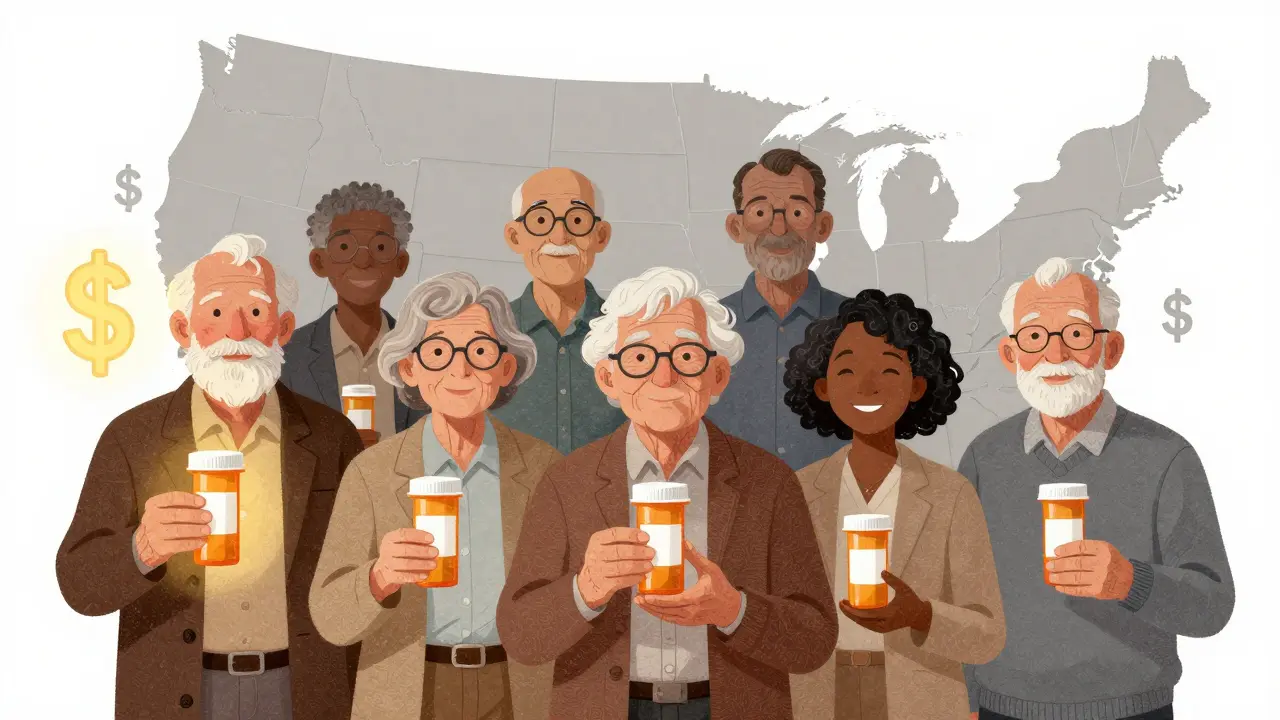
When prescription drugs cost hundreds of dollars a month, even a small copay can be too much. For millions of Americans, government medication assistance programs are the only thing standing between them and skipping doses or going without. These aren’t just nice-to-have benefits-they’re lifelines. And they vary wildly depending on where you live.
What Are State Pharmaceutical Assistance Programs (SPAPs)?
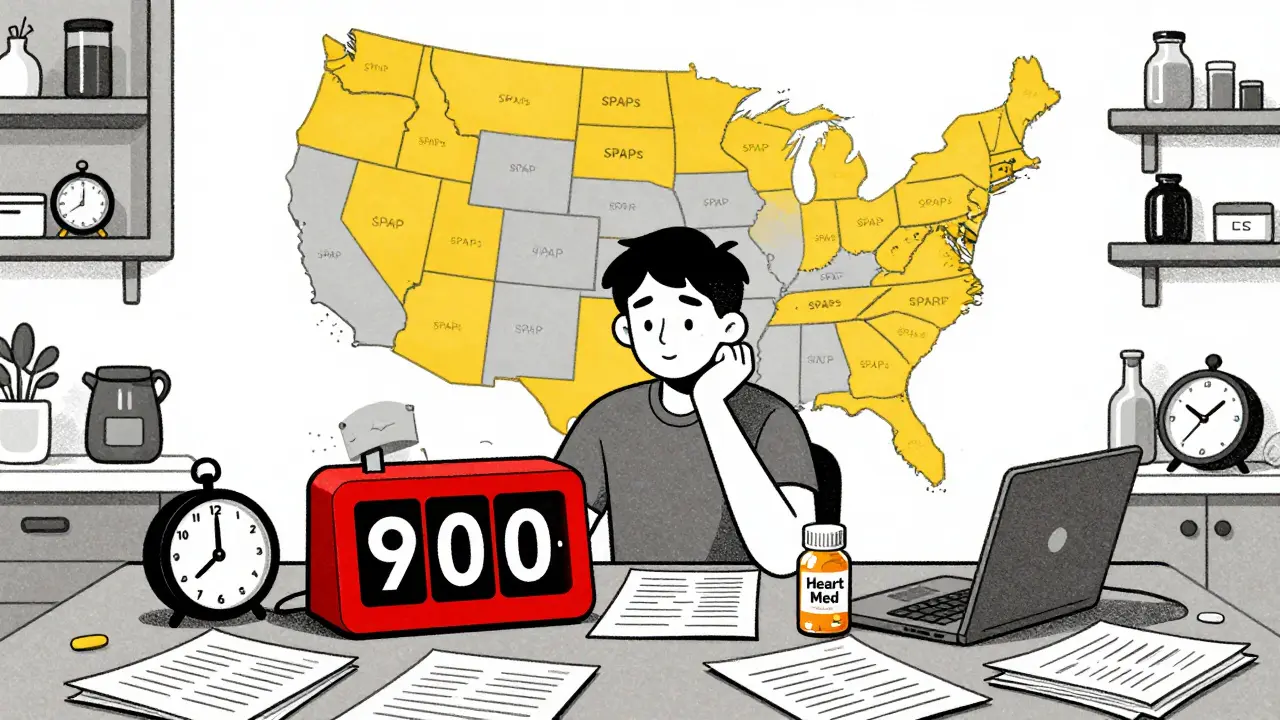
State Pharmaceutical Assistance Programs, or SPAPs, are run by individual states to help people pay for prescription drugs. They’re not the same across the country. Some states offer broad help to low-income residents. Others focus only on seniors or people with certain diseases. In 2025, 32 states had active SPAPs, with budgets ranging from $15 million in Wyoming to $215 million in Pennsylvania.These programs often work alongside Medicare Part D. For example, in New Jersey, the PAAD program pays for Part D premiums and caps copays at $5 for generics and $7 for brand-name drugs. That means someone on insulin or blood pressure meds could save over $400 a month. But if you move from New Jersey to Texas, you lose that benefit. Texas doesn’t have a statewide SPAP at all.
Medicare Extra Help: The Federal Safety Net
While states run their own programs, the federal government offers Extra Help-a program that reduces costs for Medicare Part D. In 2025, the income limits are $23,475 for individuals and $31,725 for couples. Resource limits are $17,600 and $35,130 respectively. If you qualify, you pay $0 for premiums and deductibles. Generics cost $4.90 per prescription. Brand-name drugs cost $12.15.Extra Help is automatic for people on Medicaid, SSI, or Medicare Savings Programs. But for others, you have to apply. The process can take up to 90 days. During that time, you pay full price. One Reddit user in Ohio said they had to pay $872 out of pocket for a heart medication while waiting. That’s not rare.
How States Compare: Real Numbers, Real Impact
Here’s how some top programs stack up in 2025:
| State | Program Name | Income Limit (Individual) | Co-pays | Extra Benefits |
|---|---|---|---|---|
| New Jersey | PAAD | $38,400 | $5 generic, $7 brand | Pays Part D premiums up to $34.70/month |
| Pennsylvania | PACE | $27,470 | $5 generic, $15 brand | Covers drugs not in Medicare Part D formulary |
| California | Medi-Cal Rx | $1,500/month (Medicaid income) | $0-$4 per script | 127 additional specialty drugs not covered by Medicare |
| Florida | None (statewide) | N/A | N/A | Relies solely on Medicare Extra Help |
| Wyoming | SPAP | $20,000 | $10 generic, $15 brand | Only covers 40 medications |
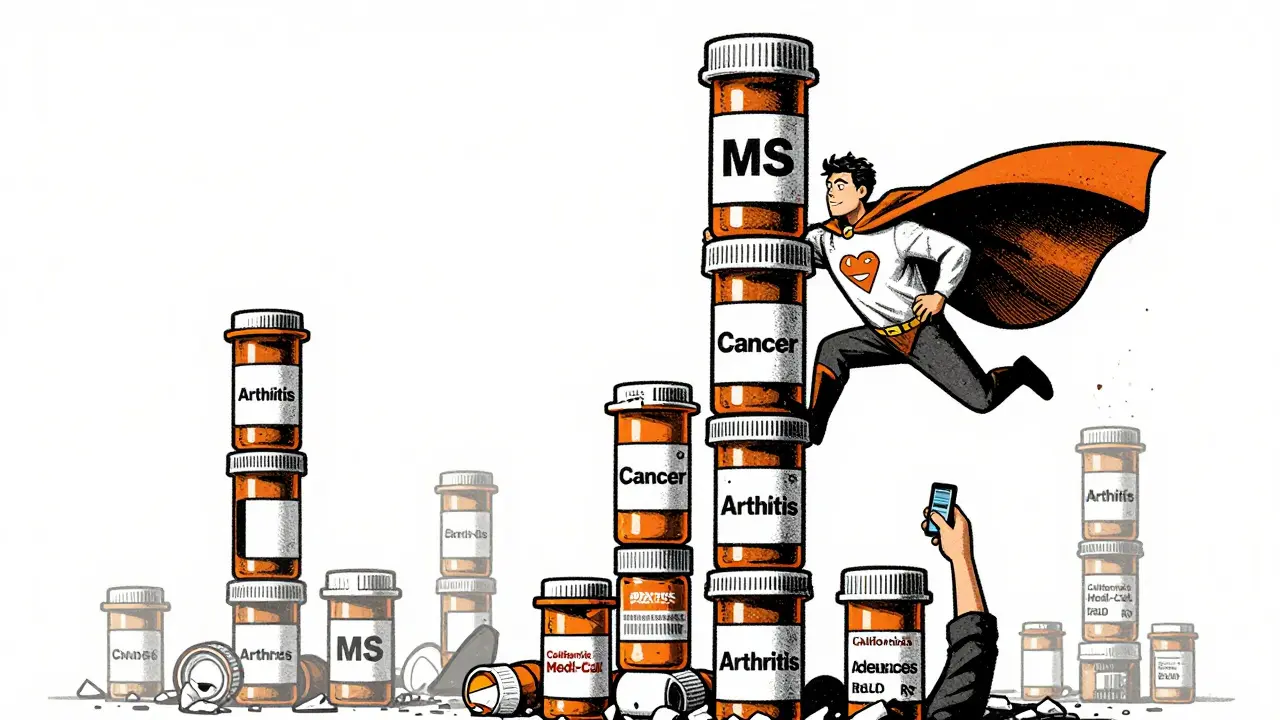
California’s Medi-Cal Rx stands out because it covers 127 specialty drugs that Medicare Part D doesn’t. That’s critical for people with MS, rheumatoid arthritis, or rare cancers. Pennsylvania’s PACE program lets you keep your Medicare Part D plan and then covers what’s left-sometimes even drugs not on the formulary. But in states like Florida and Wyoming, options are thin. If you’re not on Medicaid or Extra Help, you’re mostly on your own.
Why So Many People Still Can’t Afford Their Meds
Even with these programs, 28% of Medicare beneficiaries say they still struggle to afford prescriptions, according to KFF’s 2024 survey. Why? Three big reasons:
- Complex applications. The average person spends 8.5 hours filling out forms. Many give up.
- Delayed approvals. Extra Help takes 90 days on average. During that time, people pay full price.
- Formulary gaps. If your drug isn’t on the program’s list, you’re stuck. One PAAD user in New Jersey said she went without her MS medication for 7 weeks because the new drug wasn’t approved.
Only 42% of eligible people actually enroll. That’s not because they don’t need help. It’s because the system is confusing. Dr. Aaron Kesselheim from Harvard calls it a "barrier for the very people it’s meant to help."
New Changes in 2025 and Beyond
2025 brought major shifts. The Inflation Reduction Act capped out-of-pocket drug costs at $2,000 per year for Medicare Part D users. That’s a huge win. But it doesn’t help everyone. Only people with Extra Help or Medicaid get the full benefit right away. Others still face high costs until they hit the cap.
Also, starting in 2025, people with Extra Help can change their drug plan once a month instead of once a year. That’s huge for people whose meds change often.
By 2027, 12 more states plan to launch or expand SPAPs. California, Texas, and Florida are leading the push. But funding is tight. Seven states could run out of money by 2026. Specialty drugs-like those for cancer or rare diseases-are rising 12.3% a year. State budgets are growing at 4-6%. That gap won’t close on its own.
What You Should Do Right Now
If you’re on Medicare and pay for prescriptions, here’s what to do:
- Check if you qualify for Extra Help. Go to medicare.gov and use their online tool. It takes 10 minutes.
- Call your State Health Insurance Assistance Program (SHIP). Every state has free counselors. They’ve helped 4.2 million people in 2024. Find yours at shiptacenter.org.
- Ask about your state’s SPAP. Some states require you to apply for Extra Help first. Others don’t. Don’t assume you’re not eligible.
- Don’t wait. If you’re paying over $50 a month for one drug, you’re likely eligible. The average savings? $4,000-$5,000 a year.
And if you’re helping a parent or relative? Sit with them. Fill out the forms together. The process is easier with help. And don’t let a 90-day wait stop you. Apply now. Even if you pay full price for a few months, you’ll get reimbursed retroactively once approved.
Final Reality Check
There’s no national standard. No one-size-fits-all solution. What works in New Jersey doesn’t work in Texas. What saves you $400 a month in Pennsylvania might not exist where you live.
But the system isn’t broken. It’s just uneven. And it’s changing. More states are stepping up. More people are getting help. But you have to take action. Don’t wait for someone to tell you about it. Don’t assume you don’t qualify. Call SHIP. Apply for Extra Help. Ask about your state’s program. Your health-and your wallet-depend on it.
Sean Bechtelheimer
March 22, 2026 AT 15:28
lol so now the gov is gonna pay for our pills? 🤡 next they'll be delivering them via drone with a free lollipop. i've seen the forms. they ask for your zodiac sign, your dog's name, and your first kiss. they'll approve you... when pigs fly. 💀
Seth Eugenne
March 24, 2026 AT 04:04
I know this sounds crazy, but applying for Extra Help actually saved my mom's life. She was skipping her heart meds because of the cost. We sat down together, filled out the forms, and called SHIP. They walked us through everything. Six weeks later, her copays dropped to $0. It’s not perfect, but it’s real help. Don’t give up. 🙏
rebecca klady
March 25, 2026 AT 08:32
I just applied for PAAD last month. Took me 3 days because I kept second-guessing myself. But when I got the approval letter, I cried. I’ve been paying $380/month for my insulin. Now it’s $7. I didn’t even know this existed until my neighbor told me. If you’re scared to apply-just do it. One form, one call. You’ve got nothing to lose.
Namrata Goyal
March 25, 2026 AT 15:15
Honestly? This whole system is a capitalist fantasy dressed up as compassion. Who even *thinks* these programs are sustainable? The state budgets? Please. They’re just delaying the inevitable collapse. And don’t get me started on 'Medicare Extra Help'-it’s just a placebo for the poor. Real healthcare is a human right, not a spreadsheet. 🤦♀️
Alex Arcilla
March 26, 2026 AT 10:10
Y’all are overcomplicating this. I’m from Texas and my aunt got on Medi-Cal Rx last year. She’s got lupus. The program covered 127 drugs Medicare wouldn’t touch. She’s alive. That’s it. No drama. No conspiracy. Just a state program that works. If you’re in a state with no SPAP? Call SHIP. They’ll connect you to federal aid. It’s not glamorous, but it’s not magic either. Just do the damn paperwork.
Grace Kusta Nasralla
March 27, 2026 AT 18:19
I’ve been silent for years… but I think about it every night. The cost. The fear. The silence. Sometimes I wonder if I’m being punished for needing help. Like my body is a sin and my meds are the penance. I don’t speak of it. I just… swallow. And wait. And hope. And pray. No one sees. No one hears. Not even the forms.
Aaron Sims
March 29, 2026 AT 12:29
Wait… so you’re telling me the government is gonna pay for pills… but only if you fill out 17 forms, prove you’re poor, wait 90 days, and then pray your drug isn’t on the 'excluded list'??!?! This isn't assistance-it's a psychological torture chamber designed to make the sick feel guilty for existing. And don’t even get me started on the '12 more states joining'-that’s just the PR team trying to distract us while the real drug companies laugh all the way to the bank. 🤫💣
Stephen Alabi
March 30, 2026 AT 22:58
It is imperative to underscore that the structural inefficiencies inherent within the State Pharmaceutical Assistance Programs are not merely bureaucratic inconveniences-they are systemic failures of distributive justice. The variance in eligibility thresholds across jurisdictions constitutes a de facto class-based healthcare hierarchy, wherein socioeconomic status, not medical necessity, determines access. Furthermore, the reliance on voluntary application processes-rather than universal, automated enrollment-violates the fundamental ethical principle of beneficence. One must question the moral legitimacy of a system that demands the infirm navigate labyrinthine paperwork while their condition deteriorates. This is not policy. This is negligence dressed in bureaucratic garb.