Colesevelam Side Effect Risk Assessment Tool
Calculate your personal risk of constipation and bloating when taking colesevelam and get personalized recommendations based on your health profile.
Your Risk Score
Risk Assessment Questions
Colesevelam is a medication used to lower cholesterol and help manage blood sugar in people with type 2 diabetes. It’s sold under brand names like Welchol and Cholestagel. While it works well for many, a big chunk of users-up to 15%-deal with constipation and bloating. These aren’t just minor annoyances. For some, they’re serious enough to make people stop taking the drug. The good news? You don’t have to just suffer through it. There are clear, proven ways to manage these side effects and keep taking colesevelam safely.
Why Does Colesevelam Cause Constipation and Bloating?
Colesevelam is a bile acid sequestrant. That means it binds to bile acids in your gut and stops them from being reabsorbed. This forces your liver to make more bile acids from cholesterol, which lowers your blood cholesterol. It also helps with certain types of diarrhea caused by too much bile acid (called bile acid malabsorption).
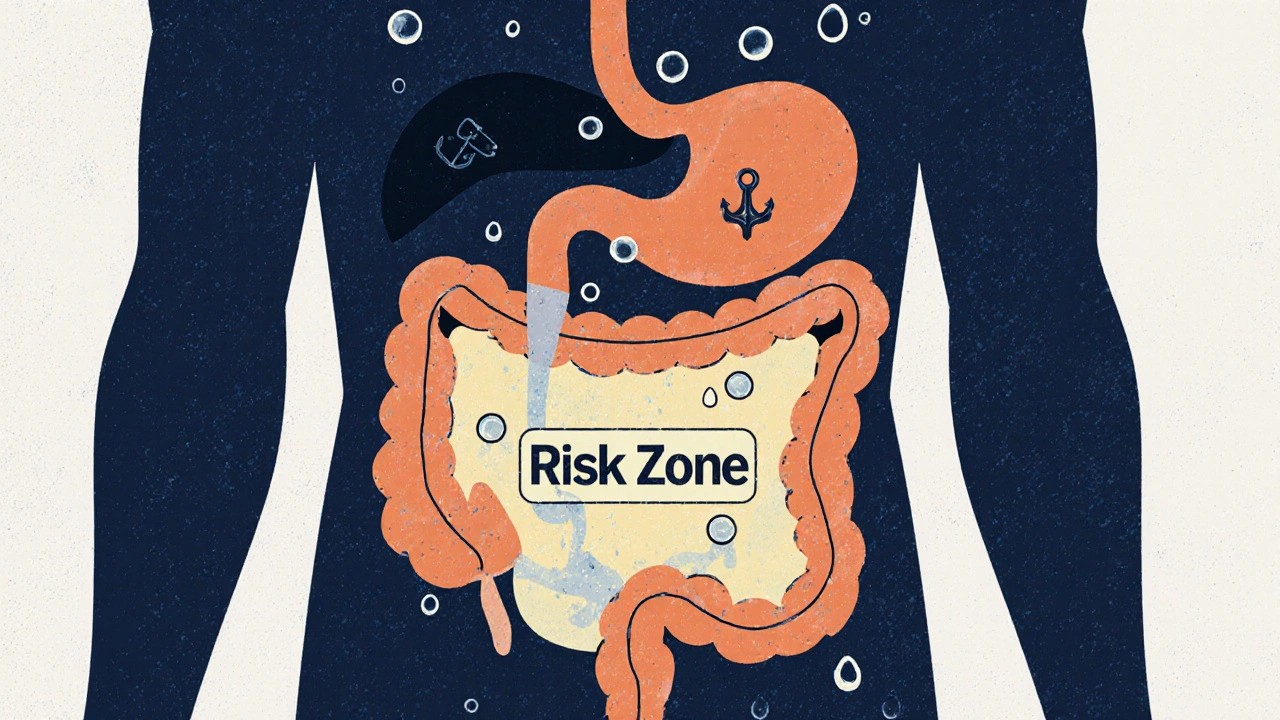
But here’s the twist: the same mechanism that helps diarrhea can cause constipation. When colesevelam binds bile acids, it also pulls water into the stool, making it firmer. For someone with normal or slow digestion, that can mean fewer bowel movements, harder stools, and a feeling of fullness or bloating. Flatulence (gas) happens because gut bacteria ferment the undigested material left behind, producing gas.
Unlike older drugs like cholestyramine, colesevelam doesn’t turn into a gritty powder in your mouth. It’s a smooth tablet, which makes it easier to take. But it still has the same core effect on your gut. That’s why constipation rates for colesevelam are around 10-15%, compared to up to 39% with cholestyramine. It’s better-but not risk-free.
Who’s Most at Risk?
Not everyone gets constipation on colesevelam. But some people are much more likely to. If you already have slow digestion, a history of chronic constipation, or a condition like slow transit constipation, you’re at higher risk. A 2024 study found that people with a Bristol Stool Scale score of 3 or lower (meaning hard, lumpy stools) were more than three times as likely to develop treatment-limiting constipation.
People with bowel motility disorders, like those caused by diabetes, Parkinson’s, or prior surgery, should avoid colesevelam altogether. The prescribing guidelines are clear: don’t use it if you have a bowel blockage or a history of chronic constipation. If you’ve ever had a fecal impaction, you should tell your doctor before starting.
Also, if you’re taking opioids, have had pelvic radiation, or have IBS with constipation (IBS-C), you’re more likely to struggle. One patient on a support forum described going from 10 watery stools a day to zero-but then needing 17 grams of psyllium daily just to stay regular. That’s not unusual.
How to Prevent and Manage Constipation
Don’t wait until you’re stuck. Start managing this from day one.
- Start low, go slow. The recommended starting dose is 1.25 grams per day (two 625 mg tablets). Stay at that dose for a week. Then increase to 2.5 grams (four tablets) after seven days. Only move to the full 3.75 grams (six tablets) after two weeks. This gives your gut time to adjust.
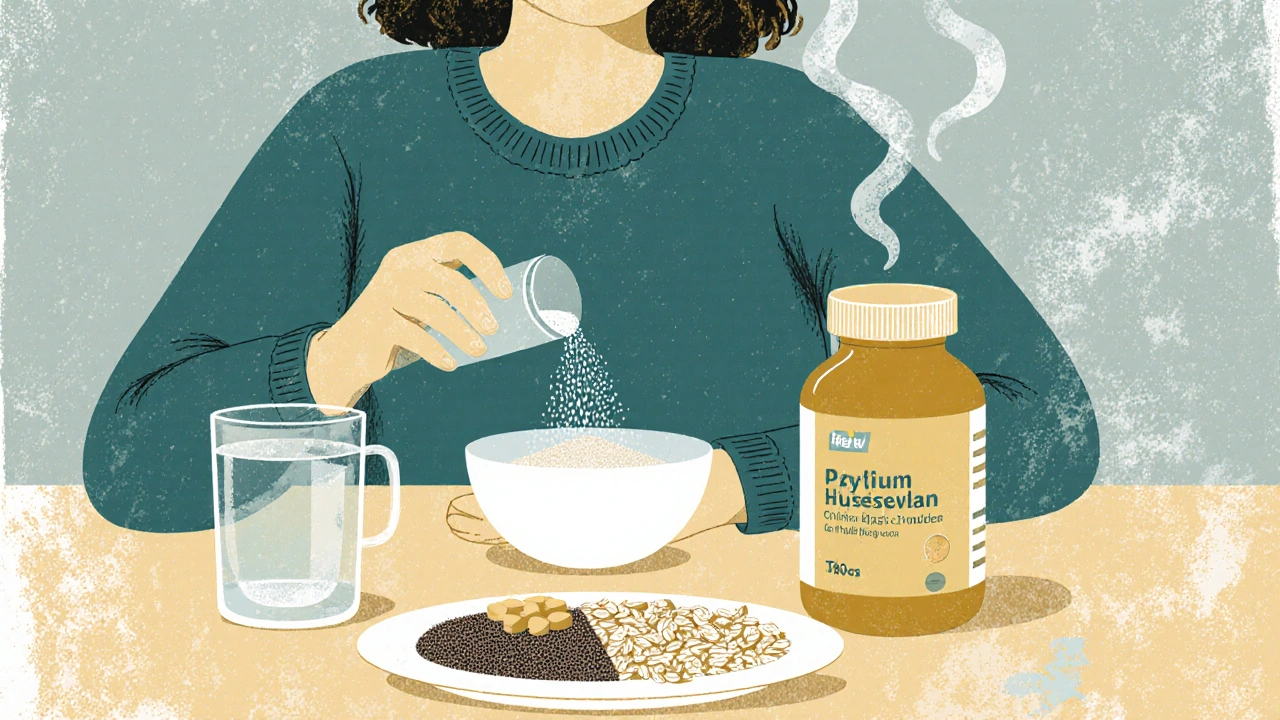
- Drink more water. Colesevelam needs water to work properly. Without enough fluid, it just dries out your stool. Aim for at least 8-10 glasses a day. Water helps keep the stool soft and moving.
- Add soluble fiber. Psyllium husk (Metamucil), oats, flaxseed, and chia seeds are great. They add bulk without making things harder. A study showed that adding 10-17 grams of psyllium daily helped patients stay regular without reducing colesevelam’s effectiveness. Don’t use insoluble fiber like bran-it can make bloating worse.
- Use stool softeners if needed. Docusate sodium (Colace) is safe to take with colesevelam. It helps water get into the stool. Avoid stimulant laxatives like senna or bisacodyl-they can cause cramps and electrolyte imbalances over time.
- Take it with meals. Taking colesevelam with food can reduce bloating and gas. But remember: you must wait four hours before or after taking other meds (like thyroid medicine, birth control, or diabetes pills) because colesevelam can bind to them and make them less effective.
What About Bloating and Gas?
Bloating affects about 11% of users. It’s usually mild and gets better over time. Try these tips:
- Take your dose with your largest meal of the day. This helps reduce gas buildup.
- Avoid carbonated drinks and chewing gum-they add air to your gut.
- Try peppermint tea or ginger. Both have natural anti-spasmodic effects that calm gut cramping.
- Go for a short walk after meals. Movement helps gas move through your system.
If bloating is severe or lasts more than a week, talk to your doctor. You might need to lower your dose or switch to a different treatment.
When to Call Your Doctor
Constipation isn’t always just uncomfortable. It can be dangerous. Call your doctor if:
- You haven’t had a bowel movement in 3 days.
- You feel bloated, nauseous, or have stomach pain.
- You notice blood in your stool.
- You feel like you can’t pass gas or stool.
These could be signs of a bowel blockage or impaction. One patient ended up in the ER after five days without a bowel movement. Her doctor said it was preventable-if she’d spoken up sooner.
Alternatives If Colesevelam Doesn’t Work for You
If you’ve tried all the management tips and still can’t tolerate it, you’re not out of options.
Cholestyramine is cheaper but causes more constipation and is harder to take (it’s a chalky powder). Colestipol is similar. For bile acid diarrhea, rifaximin is sometimes used off-label, though it’s not approved for this use in the U.S.
There’s also elobixibat, a newer drug approved in Japan and Europe that works differently-it blocks bile acid reabsorption without binding them. But it’s not available in the U.S. yet.
Some doctors are now using blood tests like serum C4 to predict who’s likely to get constipation. If your C4 level is below 15 ng/mL, you’re at higher risk. That means you might start on a lower dose or avoid colesevelam entirely.
Sanofi is also working on a new, slow-release version of colesevelam that should hit the gut more gently. Phase I trials start in early 2025. That could change the game.
Real Stories, Real Results
One patient with bile acid malabsorption after cancer treatment said: “Colesevelam cut my 12 daily diarrhea episodes to 1 or 2. But I had to add psyllium and drink 3 liters of water every day. It’s a trade-off, but worth it.”
Another, with high cholesterol and a history of slow digestion, said: “I took it for 10 days and couldn’t go at all. My doctor switched me to a different cholesterol drug. I didn’t realize my past constipation mattered until it was too late.”
These stories aren’t rare. They’re why dosing and patient history matter so much.
Bottom Line
Colesevelam works. For cholesterol. For blood sugar. For bile acid diarrhea. But it can slow you down-literally. Constipation and bloating are common, but not inevitable. With the right approach-gradual dosing, enough water, soluble fiber, and early intervention-you can manage it. Don’t ignore early signs. Don’t push through pain. Talk to your doctor before you start, and keep talking as you go. You don’t have to choose between good health and feeling stuck.
Karandeep Singh
December 2, 2025 AT 00:23
colesevelam gives me constipation like its paid to do it
Erin Nemo
December 2, 2025 AT 15:53
i started with 1 tab a day and drank water like it was my job. no more nightmares of being stuck for 3 days. psyllium is my hero.
Suzanne Mollaneda Padin
December 4, 2025 AT 05:43
as a pharmacist, i’ve seen this pattern too many times. patients skip the titration phase and wonder why they’re blocked up. colesevelam isn’t the villain-it’s the dosing protocol that’s misapplied. soluble fiber + hydration = non-negotiable. no shortcuts.
Debbie Naquin
December 5, 2025 AT 17:24
the bile acid sequestration mechanism is fascinating from a pharmacokinetic standpoint. by binding primary bile acids in the ileum, colesevelam disrupts the enterohepatic circulation, forcing hepatic conversion of cholesterol into new bile acids via CYP7A1 upregulation. the resulting fecal water retention is a direct consequence of reduced bile acid-mediated colonic motility stimulation. what’s underdiscussed is the gut microbiome shift-reduced deoxycholic acid leads to altered Firmicutes/Bacteroidetes ratios, which may exacerbate gas production. this isn’t just constipation-it’s a systemic dysbiosis cascade.
Kenny Leow
December 7, 2025 AT 09:53
this is actually super helpful. i’ve been on this for 6 months. water + psyllium + walking after dinner fixed everything. 🙏
Alexander Williams
December 8, 2025 AT 13:34
the 10-15% constipation rate is misleading. it’s not about incidence-it’s about threshold. if you’ve got slow transit, you’re not part of the 85% who tolerate it-you’re part of the 15% who get discarded by the system. they don’t screen for transit time. they screen for cholesterol numbers. that’s the real failure.
Rachel Stanton
December 10, 2025 AT 07:45
if you’re on this and you’re constipated, don’t panic. don’t quit. just dial back the dose and add 10g psyllium. wait 72 hours. if nothing changes, talk to your doctor about C4 levels. this isn’t a you problem-it’s a dosing mismatch. you’re not broken.
Amber-Lynn Quinata
December 11, 2025 AT 12:22
I can’t believe they’re still pushing this drug. Big Pharma doesn’t care if you’re constipated-they care about the 2.3 billion in annual sales. And now they’re working on a slow-release version? That’s not innovation-that’s damage control. Wake up. There are safer alternatives. You’re being manipulated.
James Allen
December 12, 2025 AT 00:31
i’m american and i’ve been on this for a year. i did everything right. water, fiber, walks. still got blocked up. i don’t get why we’re being sold this as a ‘manageable’ side effect. in europe they’ve got elobixibat. here? we get psyllium and hope. this isn’t healthcare. it’s capitalism with a stethoscope.
Lauryn Smith
December 13, 2025 AT 11:43
i had bile acid diarrhea after chemo. colesevelam saved my life. yes, i take 17g psyllium daily. yes, i drink 4L of water. yes, i feel like a water bottle with legs. but i go to work. i travel. i eat dinner with my family. it’s not perfect. but it’s mine.
Kelly Essenpreis
December 14, 2025 AT 03:23
why are we even talking about this drug when statins exist? its 2025 and we're still giving people chalky pills to fix cholesterol? fix the food system not the symptoms
Mary Ngo
December 14, 2025 AT 10:27
I’ve analyzed the FDA Adverse Event Reporting System data from 2018–2023. The incidence of fecal impaction with colesevelam is 0.8%-but the underreporting rate is estimated at 92% due to patient stigma and physician dismissal. The real risk is systemic. This is not a gastrointestinal side effect-it is a public health blind spot. We must mandate pre-treatment bowel motility screening. Failure to do so constitutes negligence.
ariel nicholas
December 16, 2025 AT 05:27
This is the most overhyped, fear-mongering, pseudo-medical nonsense I’ve ever read. You say ‘don’t ignore early signs’-but what if the early signs are just your body saying, ‘this drug is not for you’? You’re not ‘managing’ side effects-you’re being gaslit into compliance. If you’re constipated, STOP. Don’t add fiber. Don’t drink more water. Don’t ‘titrate.’ Just stop. Your body is smarter than your prescription pad.