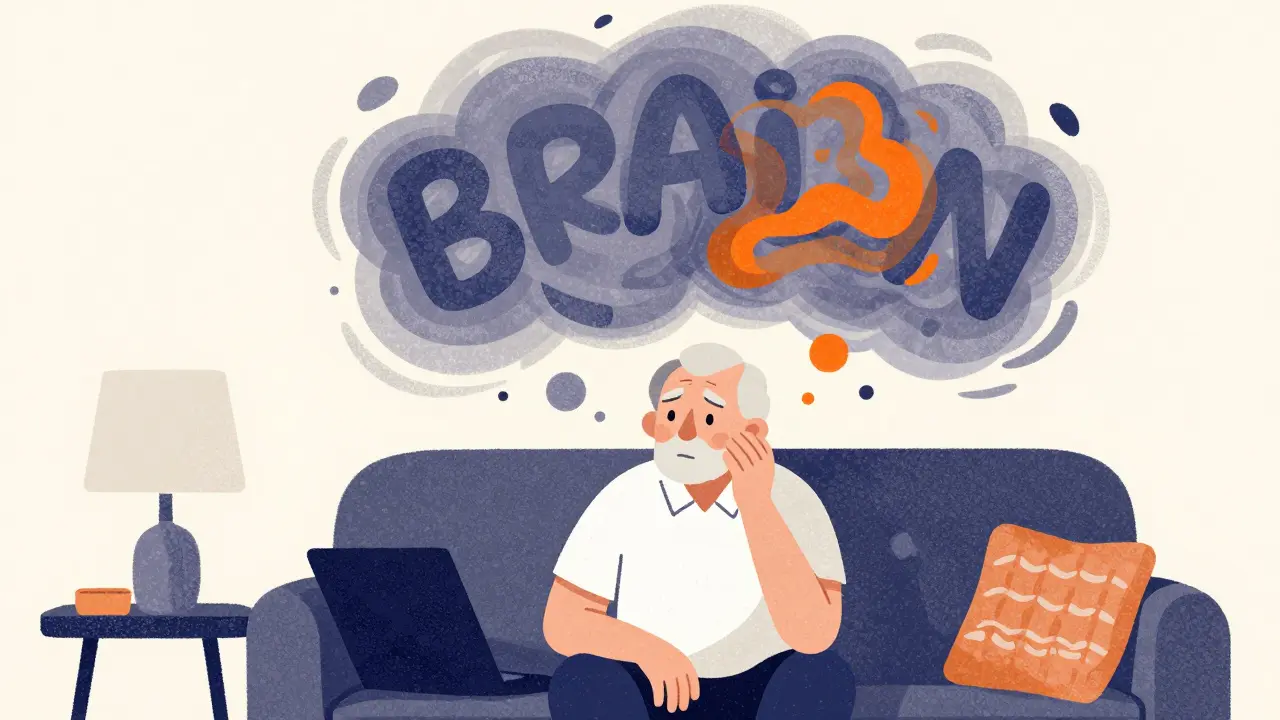
Imagine a grandparent who suddenly seems confused, forgets where they are, or struggles to follow a simple conversation. Many families assume this is just a natural part of aging or the early onset of dementia. But what if the cause isn't a disease, but the very medications meant to help them? This is the reality of anticholinergic burden is the cumulative effect of taking multiple medications that block acetylcholine, a vital chemical messenger in the brain. When several of these drugs pile up, they can create a "brain fog" that looks exactly like cognitive impairment, potentially accelerating the path toward permanent memory loss.
What Exactly is Anticholinergic Burden?
To understand this, we first need to look at acetylcholine. This neurotransmitter is essential for learning, memory, and muscle control. Some medications are designed to block these signals to treat specific issues-like a bladder that won't stop leaking or an allergy that won't go away. However, when a senior takes three or four different drugs with these properties, the brain's ability to communicate drops significantly.
The Anticholinergic Cognitive Burden (ACB) scale is a clinical tool used to quantify the risk of cognitive impairment by assigning levels of activity to specific medications. Developed by researchers like Dr. Malaz Boustani, this scale helps doctors see the big picture. Instead of looking at one pill, they look at the total load. Medications are categorized into three levels: Level 1 (mild), Level 2 (moderate), and Level 3 (strong). A high total score doesn't just mean a few side effects; it means a significantly higher risk of delirium and dementia.
How These Drugs Impact the Aging Brain
These medications primarily target M1 muscarinic receptors. These receptors are concentrated in the cerebral cortex and the hippocampus-the brain's "hard drive" for episodic memory and executive function. When these receptors are blocked, the brain literally struggles to process information.
The physical damage isn't just functional; it can be structural. Research published in JAMA Neurology showed that older adults with a high burden of these drugs had reduced glucose metabolism in the temporal lobe. This is the same area of the brain that shrinks during Alzheimer's disease. Even more concerning, MRI data from the Indiana Memory and Aging Study indicated that users experienced accelerated whole-brain atrophy, with the brain shrinking about 0.24% faster per year than those not taking these drugs. In short, these medications can make a brain look and act older than it actually is.
| Cognitive Domain | Measurement Tool | Observed Effect per 1-Point ACB Increase | Vulnerability Level |
|---|---|---|---|
| Executive Function | COWAT | 0.15 point annual decline | High |
| Episodic Memory | HVLT-R | 0.08 point annual decline | High |
| Processing Speed | Digit Symbol Substitution | 0.05 point annual decline | Low/Moderate |

Common Culprits in the Medicine Cabinet
The danger is that many of these drugs are common and sometimes available over-the-counter. You might not even realize you're increasing a loved one's cognitive risk. The Beers Criteria is a guideline created by the American Geriatrics Society to identify potentially inappropriate medications for older adults explicitly warns against several strong anticholinergics.
- First-generation antihistamines: Drugs like diphenhydramine (found in Benadryl and many sleep aids) are major contributors to high ACB scores.
- Overactive bladder medications: oxybutynin is a frequent offender, often prescribed for years without a review of its cognitive cost.
- Tricyclic antidepressants: Older antidepressants like amitriptyline have strong anticholinergic properties compared to newer SSRIs.
The risk is cumulative. Taking these drugs for three years or more is associated with a 54% higher risk of developing dementia compared to short-term use. This suggests that the longer the brain is deprived of acetylcholine, the harder it is to recover.

The Path to Recovery: Deprescribing
The good news is that for many seniors, this cognitive decline is reversible. This process is called "deprescribing"-the planned and supervised process of reducing or stopping medications that may be causing more harm than good. It is not about simply stopping a pill overnight, which can be dangerous, but tapering off under medical supervision.
Real-world evidence shows that the results can be striking. Caregivers have reported that a loved one's confusion cleared within just two weeks of stopping a bladder medication. In the DICE trial, participants who reduced their anticholinergic load saw measurable improvements in their MMSE (Mini-Mental State Examination) scores after 12 weeks. This proves that what looks like dementia is sometimes just a chemical imbalance caused by a pharmacy list.
Practical Steps for Families and Caregivers
If you are caring for an older adult, you can take a proactive role in managing their medication risk. Many seniors are not told about the cognitive risks of their prescriptions; in one survey, 63% of older adults said they weren't informed about these potential side effects.
Start by creating a master list of every single medication, including vitamins and over-the-counter sleep aids. When you visit the doctor, don't just ask if the medicine is "working" for the symptom-ask if there is a non-anticholinergic alternative. For example, some newer bladder medications like solifenacin have lower penetration into the central nervous system, making them a safer bet for the brain.
You can also use tools like the ACB Calculator mobile app developed by the American Geriatrics Society to get an instant score of the current medication regimen. This gives you a concrete number to discuss with a physician, shifting the conversation from "I think they're confused" to "Their ACB score is high; can we lower it?"
Can stopping these medications actually reverse memory loss?
Yes, in many cases. While they cannot cure Alzheimer's, they can remove the "chemical cloud" that mimics dementia. Many patients experience a clearing of confusion and improved alertness within a few weeks to a few months after tapering off high-burden medications, as seen in the DICE trial.
Are over-the-counter sleep aids dangerous for seniors?
Many OTC sleep aids contain diphenhydramine, a strong anticholinergic. For an older adult, taking these regularly can significantly increase their anticholinergic burden, leading to daytime grogginess, increased fall risk, and cognitive impairment.
How do I know if my parent has a high anticholinergic burden?
Look for a combination of "dry" symptoms (dry mouth, constipation, urinary retention) and "confused' symptoms (memory gaps, disorientation). If they are taking multiple drugs from the Beers Criteria list, there is a high probability they have a significant burden.
What is the safest way to reduce these medications?
Never stop medications abruptly, as this can cause withdrawal or a rebound of the original symptom. The safest method is a physician-led taper, where the dose is gradually lowered over 4 to 8 weeks while monitoring cognitive and physical reactions.
Is there a difference between a single drug and a 'burden'?
Yes. While one medication might have a mild effect, the 'burden' refers to the additive effect. Three mild drugs can equal one strong drug. This cumulative impact is what typically triggers the severe cognitive decline in older populations.