
For millions of people with seasonal allergies, the idea of giving up daily antihistamines or nasal sprays sounds like a dream. But what if you could actually change how your body reacts to allergens-not just mask the symptoms? That’s where sublingual immunotherapy (SLIT) tablets come in. These small, dissolvable tablets are placed under the tongue daily to train your immune system to stop overreacting to pollen, dust mites, or other triggers. No needles. No weekly doctor visits. Just a simple daily habit that, over time, can reduce or even eliminate allergy symptoms.
Who Is a Good Candidate for SLIT Tablets?
Not everyone with allergies is a fit for SLIT. These tablets are only approved for specific allergens: grass pollen, ragweed, and dust mites. If your symptoms come from cat dander, mold, or multiple triggers, SLIT tablets won’t help unless you’re allergic to one of the three covered allergens. The first step? Allergy testing. Skin prick tests or blood tests for specific IgE antibodies confirm which allergens are really causing your problems. Ideal candidates are adults and children over age 5 with moderate allergic rhinitis-think sneezing, runny nose, itchy eyes-triggered by grass, ragweed, or dust mites. People who hate needles, have busy schedules, or struggle to keep up with weekly allergy shots often find SLIT easier to stick with. It’s also a solid choice if you’ve tried medications like nasal steroids or antihistamines but still feel miserable during allergy season. But SLIT isn’t for everyone. If you have uncontrolled asthma, eosinophilic esophagitis, or a mouth anatomy issue that makes it hard to hold a tablet under your tongue, you should avoid it. The FDA requires the first dose to be given in a doctor’s office because of the small but real risk of anaphylaxis-about 1 in 700 doses. After that, you can take it at home.How Do SLIT Tablets Actually Work?
Unlike allergy shots that inject allergens into your skin, SLIT tablets work through the mucous membrane under your tongue. When you place the tablet there, the allergen is absorbed within 15 to 30 minutes by special immune cells called Langerhans cells. These cells carry the allergen to nearby lymph nodes, where they start retraining your immune system. Instead of triggering the usual allergic response-release of histamine, swelling, sneezing-the body starts producing regulatory T cells and anti-inflammatory cytokines like IL-10 and TGF-β. These signals calm down the overactive immune reaction. Over months and years, your body learns to tolerate the allergen instead of fighting it. The process isn’t fast. There’s a build-up phase lasting about two months, where you start with a low dose and slowly increase. Then you move to a daily maintenance dose. Most people need to take the tablet every day for three to five years to see lasting results. Stopping early means you lose the benefit.How Effective Are SLIT Tablets?
Studies show SLIT tablets reduce allergy symptoms by 30% to 50% compared to placebo. That’s not a cure, but it’s enough to make a real difference. Many patients report needing fewer antihistamines, sleeping better during allergy season, and being able to spend more time outside. A 2020 review by the European Academy of Allergy and Clinical Immunology gave SLIT a top-grade recommendation for grass pollen allergies, based on over 30 clinical trials. For dust mites, the evidence is slightly weaker-rated as a Grade B recommendation-because results vary more between people. Compared to allergy shots (SCIT), SLIT is slightly less effective overall. Shots typically reduce symptoms by 40% to 60%. But SLIT wins on convenience and safety. There have been no reported deaths from SLIT in the U.S., while SCIT has been linked to 20-40 deaths annually between 1990 and 2004. For many, that trade-off is worth it.
What Are the Side Effects?
Most side effects are mild and localized. About 70% of users report itching, tingling, or swelling under the tongue during the first few weeks. These usually fade within a month. Some people get a sore throat, mouth swelling, or nausea. Rarely, more serious reactions like difficulty breathing or low blood pressure can happen-but they’re extremely uncommon. The key to minimizing side effects? Follow the instructions. Hold the tablet under your tongue for exactly one to two minutes. Don’t swallow it right away. Wait five minutes after swallowing before eating or drinking anything. If you chew or swallow too quickly, you won’t absorb enough allergen, and the treatment won’t work as well. One study found improper technique cuts effectiveness by up to 40%.Cost and Insurance Coverage
This is where SLIT gets tricky. The tablets are expensive. Out-of-pocket, you’re looking at $85 to $120 per month per allergen. That adds up to $1,200 to $1,800 a year. Insurance coverage varies wildly. Medicare covers 80% of approved SLIT treatments. But many private insurers require you to try and fail at least two types of allergy medications before they’ll pay for SLIT. Some won’t cover it at all. Compared to allergy shots, SLIT costs more annually when you factor in doctor visits. Shots might cost $800-$1,200 a year including office visits. But if you factor in lost work time, gas, and childcare, SLIT often ends up cheaper in real life. Plus, you don’t need to take time off work for weekly visits. A 2022 survey found 27% of patients stopped SLIT because of cost. Others dropped out because they didn’t see results fast enough. Most people don’t notice big improvements until after six to nine months. Patience is required.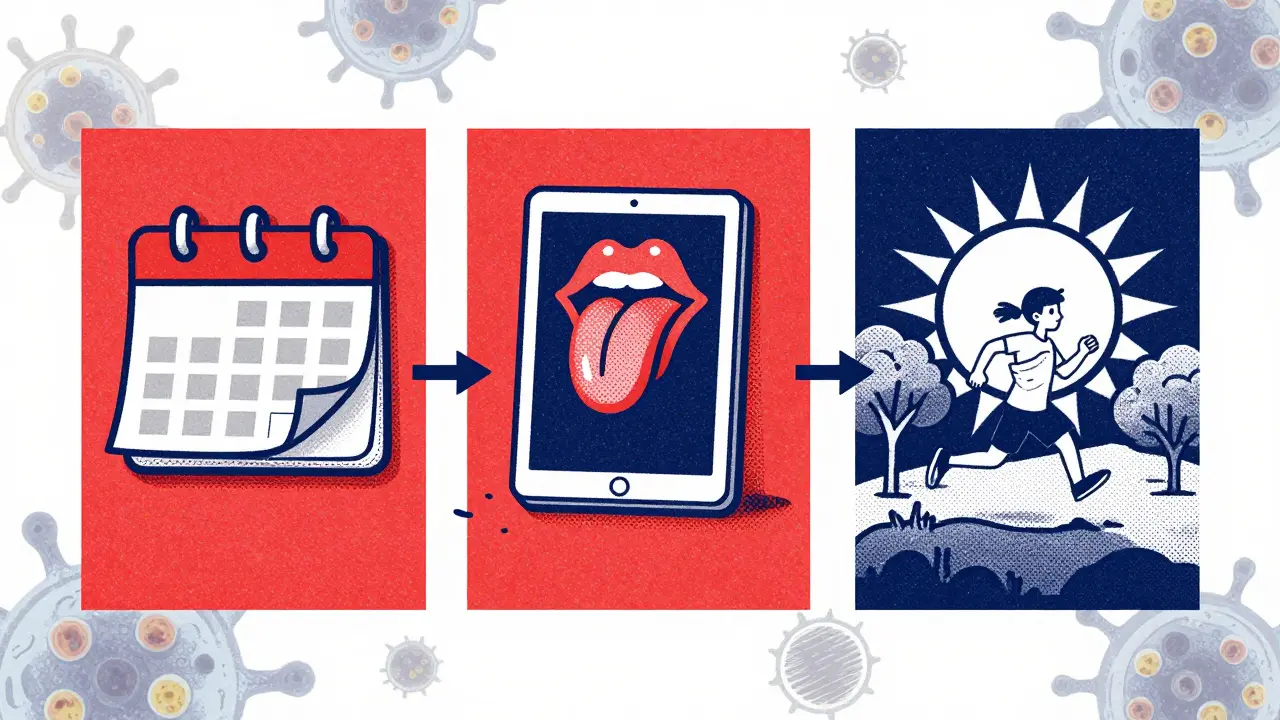
Adherence and Real-World Experience
The biggest advantage of SLIT? People stick with it. Studies show 68% of patients are still taking their tablets after one year. That’s much higher than the 52% adherence rate for allergy shots. Why? Because it’s simple. You can take it while brushing your teeth, watching TV, or on your morning commute. Patients on forums like Reddit and Healthgrades give SLIT an average 4.2 out of 5 stars. The top reason for satisfaction? “No more shots.” The most common complaint? “It took too long to work.” To help with adherence, some manufacturers offer mobile apps that send daily reminders and track your progress. One app used by 42% of patients even lets you sync with your doctor’s portal. There are also instructional videos on YouTube with tens of thousands of views-useful for first-timers who are nervous about the technique.What’s Next for SLIT?
The future looks promising. In 2023, the FDA approved a new tablet called Pollenguard for grass pollen, joining Grastek, Ragwitek, and Odactra. That’s four approved options now. Researchers are also testing multi-allergen tablets that combine grass, ragweed, and dust mite extracts. Europe already has one on the market. Biggest breakthroughs on the horizon? SLIT for food allergies. A 2022 trial in the New England Journal of Medicine showed a peanut SLIT tablet helped 67% of participants tolerate 600mg of peanut protein-enough to prevent reactions from accidental exposure. That’s huge. FDA approval could come by 2026. Scientists are also exploring biomarkers to predict who will respond best. Early data suggests that measuring IL-10 levels in the blood after eight weeks can predict long-term success with 82% accuracy. That could one day mean personalized dosing-no more guessing.Final Thoughts: Is SLIT Right for You?
If you have confirmed grass, ragweed, or dust mite allergies and you’re tired of masking symptoms, SLIT tablets are a legitimate, science-backed option. They won’t fix everything overnight, but they can change your relationship with allergies over time. Ask your allergist:- Is my allergy one of the three covered types?
- Do I have any contraindications like asthma or esophagitis?
- What’s my insurance coverage like?
- Am I willing to take a tablet every day for at least three years?
mukesh matav
December 20, 2025 AT 16:30
Been taking these for two years now. Grass pollen used to wreck me. Now I can mow the lawn without sneezing for an hour. Worth the daily hassle.
Hannah Taylor
December 22, 2025 AT 08:04
lol so the government approved this because they dont want us to buy hayfever meds anymore? i mean why would big pharma let us just swallow a pill instead of buying sprays every month? they prob got a deal with the pollen gods.
Peggy Adams
December 24, 2025 AT 01:52
they say it’s safe but what about the long term? what if your immune system just… forgets how to fight real viruses after this? i’m not risking it.
Jay lawch
December 25, 2025 AT 08:35
Let me tell you something about immunology. The human body is not a machine to be reprogrammed by tiny pills under the tongue. This is a Western illusion of control. In India, we have Ayurveda - turmeric, neem, honey - natural balance. You don’t tamper with the immune system like it’s a software update. You respect it. You honor it. You let nature heal. This tablet is colonial medicine dressed in science.
Christina Weber
December 26, 2025 AT 06:46
Actually, the FDA approval process for SLIT tablets is based on randomized, double-blind, placebo-controlled trials with over 3,000 participants across multiple sites. The efficacy data is robust. If you’re going to dismiss it, at least cite a peer-reviewed meta-analysis - not some Reddit anecdote about ‘pills being a plot.’
Grace Rehman
December 26, 2025 AT 17:27
so we’re paying $120 a month to train our body to ignore pollen… but we still have to pay rent and student loans and electric bills… i guess the real allergy is capitalism
Jerry Peterson
December 28, 2025 AT 05:15
I’m from Nigeria originally, moved to the US 5 years ago. My allergies went from mild to nightmare. Tried everything. SLIT was the only thing that didn’t make me feel like a zombie. I take mine after brushing my teeth. No big deal. My mom thinks it’s witchcraft. I just smile.
Adrian Thompson
December 29, 2025 AT 03:10
they’re testing this on kids now? next they’ll be putting fluoride in the water and calling it ‘immune training.’ you think this is science? it’s social engineering. they want you dependent on pills so you can’t think straight. they want you docile. and you’re just swallowing it. literally.
Southern NH Pagan Pride
December 29, 2025 AT 18:30
the Langerhans cells are just the tip of the iceberg. the real mechanism is the entropic resonance of dendritic cell migration along the submucosal lymphatic pathways, modulated by IL-10-mediated epigenetic silencing of Th2 cytokine expression. also i think the government is using this to track us through our saliva.
Cameron Hoover
December 31, 2025 AT 18:07
after 18 months of this, i finally went on a hike without an epi-pen. i cried. not because i was allergic. because i was free. thank you science. thank you patience. thank you my stubborn self for not quitting.
Theo Newbold
December 31, 2025 AT 23:47
68% adherence? that’s pathetic. if you need an app to remind you to take a pill, you’re not committed to your health. you’re just another consumer chasing the next quick fix. real healing takes discipline. not reminders.
Cara C
January 1, 2026 AT 16:05
if you’re thinking about trying this, start with the lowest dose and give it 6 months before deciding. and talk to your allergist about your insurance. some places will help you appeal. you’re not alone in this.
Michael Ochieng
January 2, 2026 AT 18:57
my cousin in Nairobi uses neem leaves and ginger tea. she says it works. i’m not saying SLIT is bad - just saying maybe we don’t need to throw out old wisdom just because it doesn’t come in a blister pack.
Dan Adkins
January 3, 2026 AT 16:21
It is my professional opinion, based on extensive review of the literature and clinical guidelines issued by the World Health Organization, that sublingual immunotherapy represents a statistically significant intervention for allergen-specific immunomodulation, particularly in populations exhibiting high IgE titers to perennial allergens. However, the socioeconomic burden of pharmaceutical dependency remains an under-addressed public health concern.
Erika Putri Aldana
January 4, 2026 AT 02:21
so i’ve been on this for 2 years and still sneeze when i look at a tree… but hey at least i didn’t have to get a needle 😭