Night Shift Medication Safety Checker
Enter your medication details to check if you are chemically cleared to drive or start your next task.
Select a medication and enter how many hours have passed since ingestion (or until you need to be awake/driving).
Recommended Actions
This tool is for educational purposes based on general pharmacokinetic data. Always consult your prescribing physician before making medical decisions.
The Reality of Night Shift Sleep
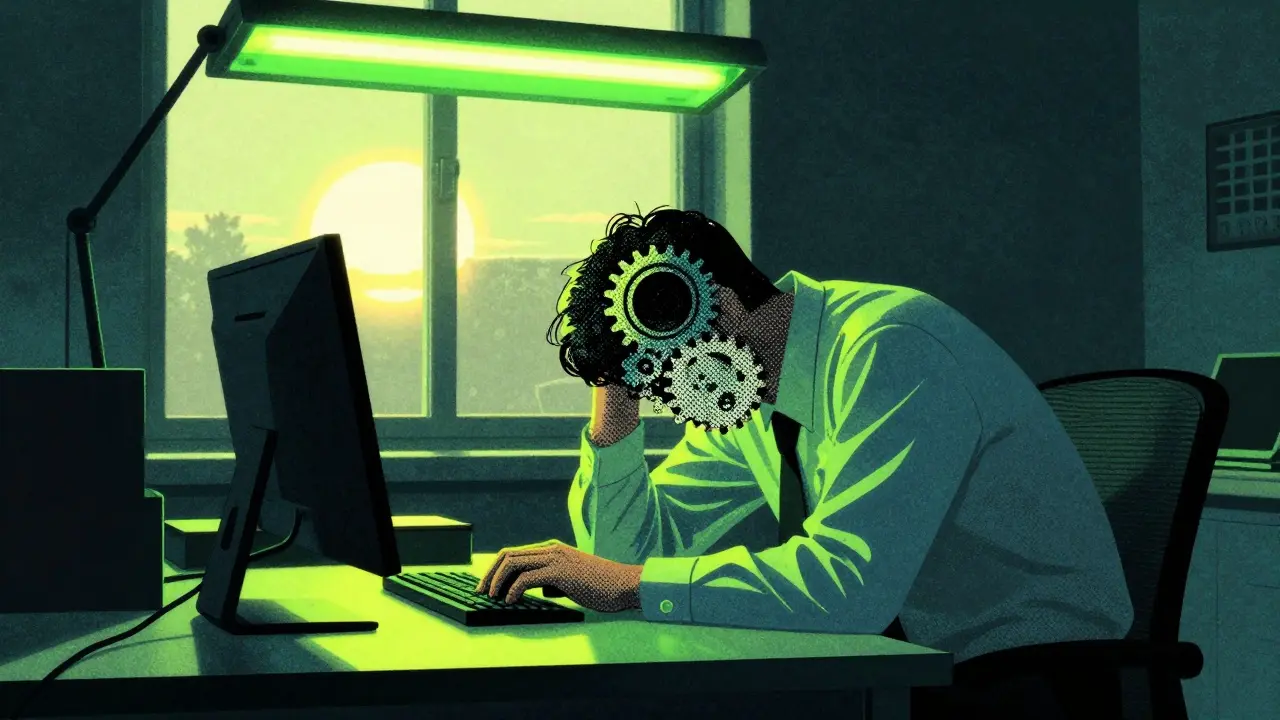
If you have ever worked the graveyard shift, you know the feeling of your body screaming "go to bed" while your boss says "stay awake." In 2024 alone, the U.S. Centers for Disease Control and Prevention estimated that around 10 million Americans work non-day shifts. But here is the uncomfortable truth: many of these workers try to force sleep during the day using sedating medications. While this sounds like a logical fix, mixing heavy work shifts with powerful sleep drugs creates a high-stakes game of biological roulette. It isn't just about being tired; it is about whether you can wake up, drive safely, and operate machinery without hurting yourself or someone else.
We often treat fatigue as a simple lack of hours, but for night-shift employees, it is a clash between our internal clock and our external schedule. This misalignment is medically known as Shift Work Disorder (SWD)a circadian rhythm sleep-wake disorder where the internal clock fails to sync with the work schedule. Without the sun rising and falling naturally, your brain does not know when to produce melatonin or cortisol properly. When we throw prescription pills into this mix, we aren't just treating symptoms; we are potentially masking a fundamental biological crisis. The stakes are incredibly high, with studies showing fatigued workers are 70% more likely to be involved in workplace accidents than those who are fully rested.
Understanding Your Biological Clock
Before you pop a pill, you need to understand what is happening inside your head. Your body operates on a cycle roughly 24 hours long, called the circadian rhythm. This isn't just a metaphor; it controls your body temperature, hormone release, and metabolic rate. When you work nights, you are essentially forcing your system to run on reverse gear.
This condition was formally recognized in the International Classification of Sleep Disorders (ICSD-3) back in 2014. However, awareness has lagged behind reality. Many people think they are "adjusting," but the data suggests otherwise. A 2022 review found that night shift workers experience the highest rates of sleep disruption because they are fighting against daylight exposure upon returning home. You might feel you slept six hours, but without deep, REM cycles, that sleep feels like standing still in mud. It is physically restorative but mentally confusing. Understanding that no pill can completely fix this biology is the first step toward safety.
Wakefulness Promoters vs. Sleep Aids
Medications fall into two distinct camps for shift workers: those meant to keep you awake (wakefulness agents) and those meant to help you sleep (sedative-hypnotics). Using them correctly depends entirely on which part of your cycle you are addressing.
For staying alert, the most common prescription is modafinil. Unlike standard amphetamines, Modafinil (Provigil)a wakefulness-promoting agent with a half-life of 12 to 15 hours, is designed to reduce the sensation of fatigue rather than stimulate the nervous system aggressively. Clinical trials show it can improve alertness by 34% compared to a placebo. It works best when taken about one hour before your shift starts. Its sister drug, armodafinil, lasts slightly longer. These are useful tools, but remember they do not replace actual sleep. They buy you time, but eventually, the bill comes due.
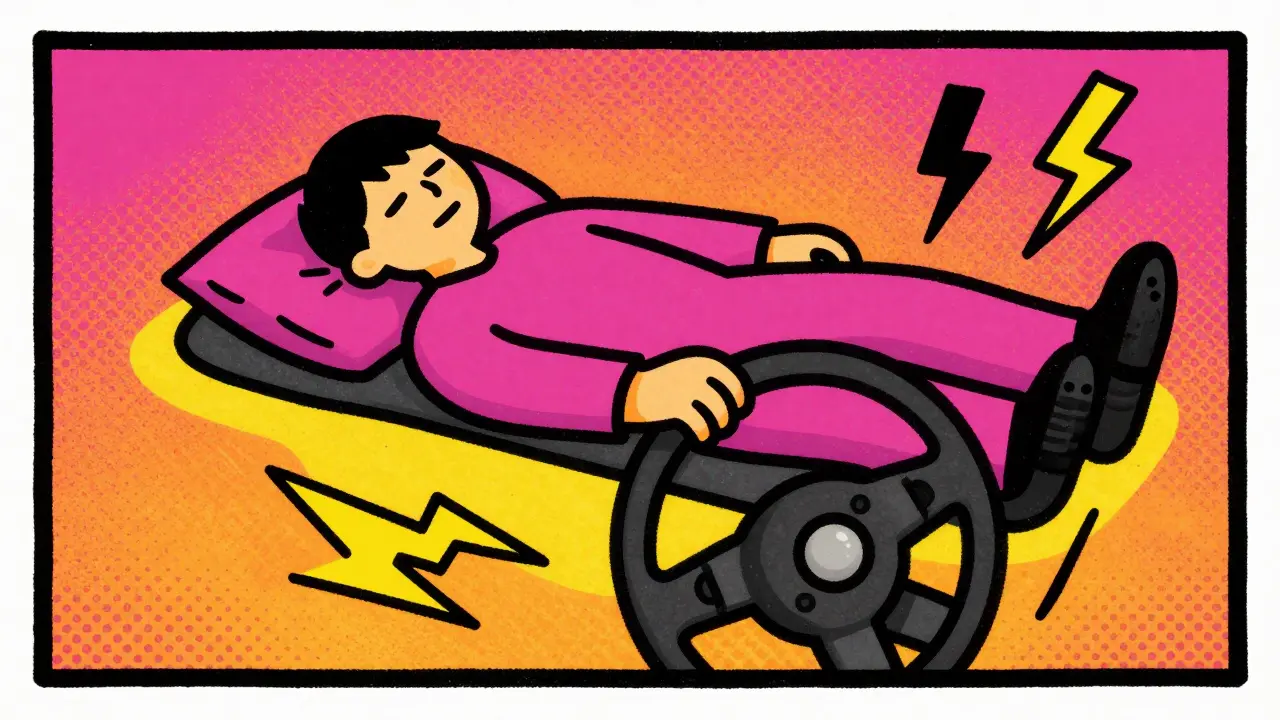
On the other side of the spectrum are the sleep aids. These are where the danger zones lie. Drugs like zolpidem and eszopiclone are effective, but they come with strict rules. The FDA updated its Boxed Warning in April 2023 specifically to highlight complex sleep behaviors. We aren't talking about just waking up groggy. We are talking about sleep-driving, sleep-eating, and sleep-making phone calls. These incidents occur even if you didn't realize you were doing them. That is why the timing is critical. If you take a Z-drug, you must have a guaranteed block of seven to eight uninterrupted hours to sleep. If your alarm goes off after five hours, you aren't just tired; you are chemically impaired.
The Golden Rules of Medication Timing
Many people fail with these prescriptions because they treat them like painkillers-take them when you feel like it. Sleep and wake-promoting meds require military-grade precision. Here is the breakdown of the pharmacological math you need to know:
| Medication Type | Common Examples | Ideal Timing | Required Sleep/Work Window | Risk Factor |
|---|---|---|---|---|
| Sleep Aid (Long Acting) | Eszopiclone (Lunesta) | Right before bed | 7-8 hours uninterrupted | High hangover effect |
| Sleep Aid (Short Acting) | Zaleplon (Sonata) | Right before bed | At least 4 hours | Moderate daytime drowsiness |
| Wakefulness Agent | Modafinil | 1 hour before shift start | Affects entire 12-hour shift | Can cause insomnia later |
| Natural Supplement | Melatonin | 3-4 hours before sleep | Flexible, but lower efficacy | Low dependency risk |
Notice the pattern? There is no "middle ground". Short-acting benzos or Z-drugs like Intermezzo are formulated to wear off faster, but you still need four solid hours. If your partner wakes up and you only had three hours before getting out of bed, your judgment is compromised. This is not paranoia; it is documented pharmacokinetics. Residual drowsiness affects 40% of users even eight hours after ingestion. For a nurse finishing a double shift, this means walking into the next hospital ward or driving a patient home while operating under the influence of a sleeping pill.
Circadian Misalignment and Dependency
One of the biggest myths among shift workers is that sleeping pills will eventually "fix" their schedule so they can stop using them. Unfortunately, the data suggests the opposite. The American Academy of Sleep Medicine warns that relying on these drugs chronically can lead to dependency. Studies from UCLA Health indicate that benzodiazepines become habit-forming in 25% of users within six weeks. Furthermore, the effectiveness drops over time-what works for one week might fail for the next.
This leads to a dangerous cycle where workers increase doses to get the same result, further prolonging the sedation period. Dr. Charles Czeisler from Harvard notes that medications address the symptoms, not the underlying circadian misalignment. You are essentially covering the smoke detector instead of putting out the fire. Your biology remains misaligned with society, leading to higher risks of cardiovascular issues, diabetes, and depression over years. While medications have their place, they should be viewed as emergency parachutes, not daily clothing.
Building a Real-World Safety Plan
If you decide to use medication, you need a safety protocol that protects your commute and your family. Since the National Highway Traffic Safety Administration found drivers using sleep meds are 4.5 times more likely to crash, you need rules.
- Designate a Safe Driver: If you have taken medication within the last eight hours, you cannot drive. Arrange for a ride-share service, a family member, or public transport. The "I'll just go home and nap" excuse gets lives ended on the highway.
- Lock Down Your Home Environment: Complex sleep behaviors can happen before you leave the house. Secure windows, lock firearms, and remove car keys from the kitchen counter. Treat your bedroom as a locked zone until you are fully sober.
- Monitor Alcohol Consumption: Never combine these meds with alcohol. The sedative effects are multiplicative, not additive. One drink can tip you into severe respiratory depression or unconsciousness.
- Schedule Follow-Up: Set a reminder to discuss with your doctor every month. If the medication stops helping, stop taking it. The goal is short-term management of a schedule change, not a permanent crutch.
Consider the case of a medical resident documented in PMC research: 78% admitted to prescribing mental shortcuts for themselves or patients. They knew the risks but ignored them due to workload pressure. Don't be like them. Your safety plan must override the pressure of the job. Light therapy is also part of the plan. Exposure to bright light at the start of your night shift mimics the sun, telling your body it is morning. Dark glasses on the commute home prevent sunlight from resetting your clock prematurely. This behavioral approach is safer than chemical ones.
Alternatives to Heavy Medication
Not everyone needs strong prescriptions to cope. Sometimes, simpler interventions work better for the long haul. Melatonin is the most popular supplement for this crowd. It is available over the counter, unlike prescription drugs, and has fewer severe side effects. Research from Emergency Medicine Cases suggests taking 0.5mg to 5mg three to four hours before intended sleep helps trigger the sleep signal without the "hangover" of zolpidem.
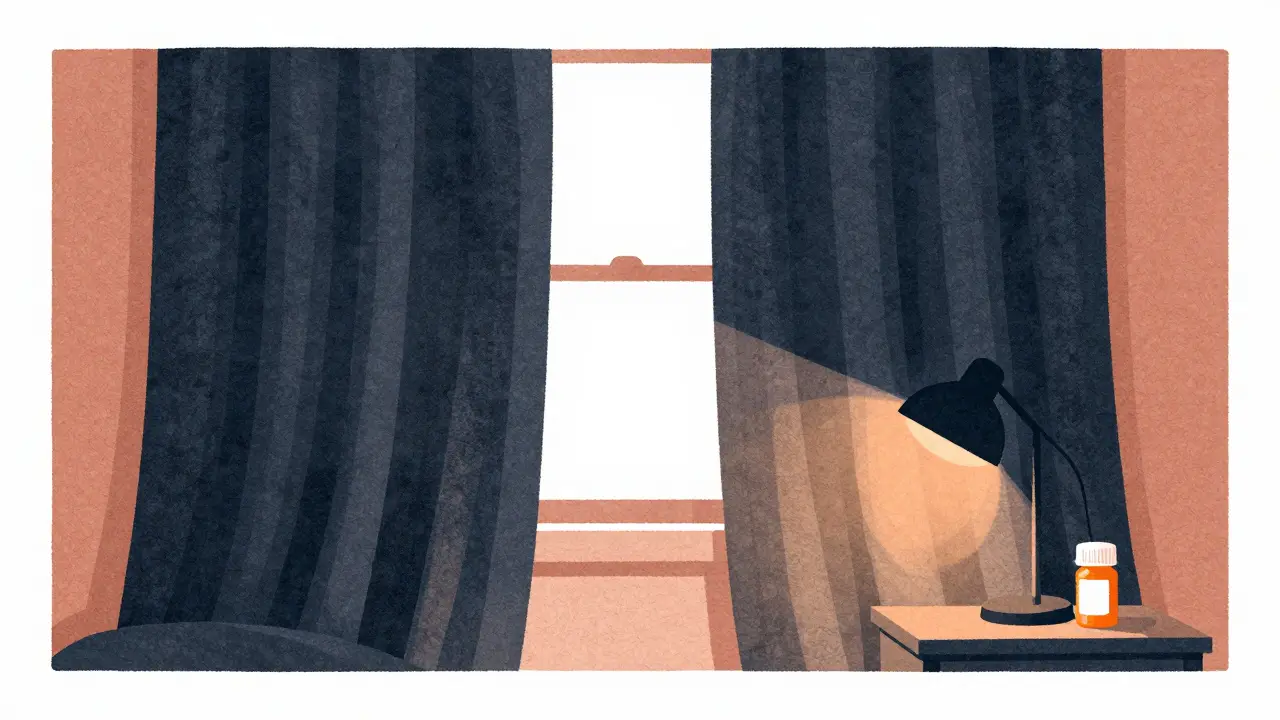
However, do not expect miracles. A 2022 Cochrane Review highlighted that evidence for melatonin's ability to fully restore alertness during the work shift is low quality. It helps you sleep, yes, but it won't keep you sharp at 3 AM. It is a gentle nudge, not a hammer. Some employers are shifting away from drugs entirely. A 2023 SHRM report noted 73% of large companies now offer light therapy devices to staff to regulate their circadian rhythms without chemicals. Investing in blackout curtains for your home and blue-light blocking glasses for your commute might save you from needing a prescription bottle in the first place.
Is it safe to take sleep medication before a night shift?
Generally, no. Taking sedating medication immediately before a work shift is highly dangerous. You need to be alert for safety-critical tasks. Sleep aids should only be taken after your shift is over, during your designated sleep time.
How long do I wait after taking Ambien before I can drive?
You should plan to have at least 7 to 8 hours of uninterrupted sleep. Driving sooner poses significant risks. Even 8 hours after ingestion, some users report residual drowsiness affecting reaction times.
Does melatonin work for shift work disorder?
Melatonin can help initiate daytime sleep, but it is less effective than prescription options. Take it 3-4 hours before sleep. It acts as a gentle signal to your brain rather than forcing sleep chemically.
Can I mix wakefulness agents with sleep medication?
You can use them on separate parts of your schedule (wakefulness before work, sedatives after work), but always consult your doctor. Combining them incorrectly causes heart palpitations, anxiety, and severe blood pressure spikes.
What happens if I take sleep meds too often?
Long-term use leads to dependency and reduced effectiveness. After 4-6 weeks, your body may tolerate the dose, requiring more to achieve the same sleep, increasing the risk of overdose and cognitive impairment.
Troubleshooting Your Plan
Even with a good plan, things go wrong. If you find yourself unable to sleep despite taking medication, do not immediately take another dose. Doubling up increases toxicity without guaranteeing results. If you haven't fallen asleep after 20 minutes, get up. Lie in the dark, read something boring, and return when tired. Lying there frustrated only reinforces the anxiety association with the bed.
Another common scenario is the sudden schedule change. Moving from rotating shifts to fixed days requires retraining your brain. During this transition, avoid all sleep medications unless prescribed strictly. Let your body reset naturally with natural darkness. Finally, listen to your colleagues. Often, a group of night workers shares specific hacks that fit your local environment, such as which coffee shop stays open or where the quiet parking spots are for power naps. Knowledge is just as protective as medicine.
Carolyn Kask
March 30, 2026 AT 23:11
Oh, another article treating human biology like a car engine that just needs oil changed.
I suppose they forgot to mention that corporations profit off our exhaustion anyway.
It is fascinating how they blame the worker for the schedule rather than the industry demanding it.
The pharmaceutical solution is always the most convenient for the bottom line.
We are told to fix the clock when the boss should just let us sleep.
I have read enough studies to know this doesn't actually work for everyone.
Pills are just sugar water with a higher price tag attached to the bottle.
People ignore the lifestyle changes because change is hard work.
This guide is nice but completely ignores the structural issue of shift work.
Safety protocols mean nothing if the company pressures you to skip breaks.
I am sure the FDA loves these warnings while they sell the same warnings.
Wake up and smell the capitalism instead of the melatonin capsules.
Most people will read this and immediately seek a chemical crutch anyway.
It is easier to feel sorry for yourself than fight for better hours.
I doubt anyone here actually reads past the bolded text anyway.
The entire concept relies on us being responsible agents in a broken system.
Katie Riston
April 1, 2026 AT 01:17
Sleep is not merely a pause button but a fundamental negotiation with the cosmos.
When we force the body against its natural rhythm we disrupt something far deeper than energy levels.
The mind seeks darkness even when the world demands light at odd hours.
There is a profound tragedy in fighting the sun itself for a paycheck.
Medications try to bridge a gap that was never meant to be crossed in the first place.
We lose the essence of rest which should be a sacred sanctuary of the night.
Biology tells a story older than any pharmacy shelf or prescription pad.
To override this instinct is to wage war on the self without ever seeing victory.
Perhaps the real cure lies in accepting limits rather than pushing boundaries endlessly.
Our ancestors slept when the moon rose and worked when the sun burned bright.
Now we chase artificial rhythms that leave us hollowed out and confused.
The science is sound but the soul remains restless amidst the clinical data.
We must consider what we sacrifice for productivity beyond mere physical fatigue.
Safety is paramount but mental degradation is a silent killer in the background.
I believe we need to rethink the value of rest in our modern economic framework.
Brian Yap
April 2, 2026 AT 19:03
You make good points mate.
It is bloody hard to fight the daylight when you finish work.
Just wish they gave us proper breaks instead of pills though.
Ruth Wambui
April 4, 2026 AT 00:18
Notice how they push chemicals before fixing the root cause?
Big Pharma certainly does not want healthy populations waking up naturally.
The narrative of personal responsibility is a smokescreen for systemic negligence.
They harvest our health data while selling us the antidote to their poison.
Circadian misalignment sounds suspiciously like manufactured obsolescence for our minds.
I have seen too many neighbors become dependent on the white powder.
Keep your distance from the corporate medical complex at all costs.
Their definitions of safety change depending on quarterly earnings reports.
Trust your own intuition over the glossy brochures from hospitals.
Real healing comes from community support not solitary pill bottles.
Waking up groggy is a designed feature not a bug in this economy.
Michael Kinkoph
April 4, 2026 AT 12:46
Your perspective is, unfortunately, clouded by conspiracy thinking; it lacks empirical rigor.
One must accept that medical intervention is sometimes the only viable path.
While systemic issues exist, individual agency remains a crucial component of survival.
It is irresponsible to dismiss clinical tools outright without nuance or context.
The alternative to medication is simply death by drowsy driving.
We cannot afford to romanticize poverty-stricken biological rhythms forever.
Practicality dictates that we manage risk wherever possible today.
Your theory sounds poetic but fails to address immediate liability concerns.
One must prioritize the lives of coworkers above abstract philosophical grievances.
Facts remain stubbornly resistant to ideological distortion attempts.
Stop pretending the answer is hidden somewhere outside the clinic.
Responsibility belongs to the individual using the substance correctly.
emma ruth rodriguez
April 5, 2026 AT 00:19
The pharmacological considerations presented herein are clinically accurate.
It is imperative that dosage timing aligns strictly with metabolic clearance rates.
Failure to adhere to recommended intervals results in significant safety liabilities.
Patients often underestimate the residual effects of sedative-hypnotics on cognitive function.
Zolpidem, for instance, maintains potency well into the subsequent morning cycle.
The interaction with alcohol presents a compounding hazard to public transport safety.
Medical literature consistently supports the necessity of behavioral modifications alongside drug therapy.
Circadian hygiene must take precedence over reliance on exogenous chemical agents.
Light exposure management is a critical non-pharmacological intervention strategy.
Adherence to these protocols ensures optimal operational readiness during nocturnal shifts.
Any deviation introduces unacceptable variance into risk assessment models.
Please consult a licensed professional regarding personalized treatment plans.
Rick Jackson
April 6, 2026 AT 12:49
That is good advice.
People forget the basics easily.
Balance is key for long term health.
Beccy Smart
April 7, 2026 AT 13:22
Why is life so hard 🤷♀️
Sometimes you just need the magic pill 💊
Sleep is boring anyway 😴
Just hope I don't crash the car 🚗💥
Thanks for the tips though 👍
Jonathan Sanders
April 7, 2026 AT 20:09
It is comforting to see someone embrace their inevitable dependency on substances with such enthusiasm.
sanatan kaushik
April 9, 2026 AT 15:53
This medicine is bad for young people.
You listen to doctor but also trust God.
If you take too much you get sick brain.
Don't trust big companies with your health.
Work hard but do not kill yourself with pills.
Many friends died this way in my village.
Stay awake by sitting up not drinking drugs.
Save money for family not hospital bills.
Debbie Fradin
April 10, 2026 AT 21:14
Everyone claims they are careful until they nod off behind the wheel.
Reading about risk means nothing when adrenaline keeps you going.
These guidelines are written by people who do not work twelve-hour nights.
They sit in offices dreaming up safety rules for the working class.
I know the feeling of staring at a wall for four hours.
Pills are better than dying slowly from exhaustion every single day.
Blame me all you want but I still need to eat tonight.
Safety manuals are just paper tigers in the real world.
I have been through three shifts without sleep and held it together.
Maybe the problem is the job not the chemistry.
Wake up and acknowledge reality before preaching morality again.
Jonathan Alexander
April 12, 2026 AT 02:03
Such conviction carries a certain tragic weight to it.
One hears the exhaustion in the lines written there.
Perhaps there is strength in the resistance described.
Yet the cost of such defiance remains high for all involved.
We witness the toll taken silently upon the weary spirit.
It is a struggle known by few who walk the dark path.
The silence after the shift ends speaks volumes truly.
Charles Rogers
April 12, 2026 AT 11:37
Truth rarely sits comfortable in the hands of the masses.
Knowledge demands discipline which most refuse to exert on themselves.
You speak of protocol as if it saves souls.
It is the will that sustains us not the compound in the vial.
Those who lack fortitude will always seek crutches to lean upon.
Moral failing disguised as medical necessity is common in this era.
Self-control is the true medicine of the ancients forgotten now.
Discipline is the bridge between desire and result in all things.
Do not mistake regulation for virtue in these times of ease.
Only those who master the mind survive the grind of existence.
Your focus is on mechanics ignoring the human element entirely.
Wisdom calls for restraint before consumption of external aid.
Be vigilant in guarding the sanctity of your own internal order.
True freedom comes from requiring no aid whatsoever eventually.
The journey inward is harder but yields the greatest reward always.