
Key Takeaways
- Never crush or open a pill without asking a pharmacist first.
- The "lean forward" technique can help capsules slide down easier.
- Liquid or dissolvable versions of many drugs exist.
- Consistent posture and lubricant liquids (like milk) can reduce choking risks.
- A team approach involving a speech therapist and doctor is the safest way to manage medication.
The Hidden Dangers of "DIY" Pill Modification
When a pill feels like a mountain, the instinct is to crush it into a powder or open a capsule to sprinkle the contents on applesauce. While this seems like a quick fix, it can be incredibly risky. Many medications are designed with a "slow-release" or "enteric coating." This means the pill is engineered to dissolve slowly over 12 hours or to wait until it hits the stomach to protect your esophagus from irritation. If you crush a slow-release tablet, you're essentially taking a 24-hour dose of medicine all at once. This can lead to toxicity or a sudden overdose. On the flip side, some drugs lose their effectiveness entirely if the coating is removed, meaning you're taking the medicine but getting zero benefit. A 2023 study found that nearly half of the medications modified by patients or caregivers were handled inappropriately, with some cases posing a direct threat to the patient's safety. If you're struggling, your first move should always be to check the official labeling or call your pharmacist to see if the drug is "crushable."Smart Techniques to Make Swallowing Easier
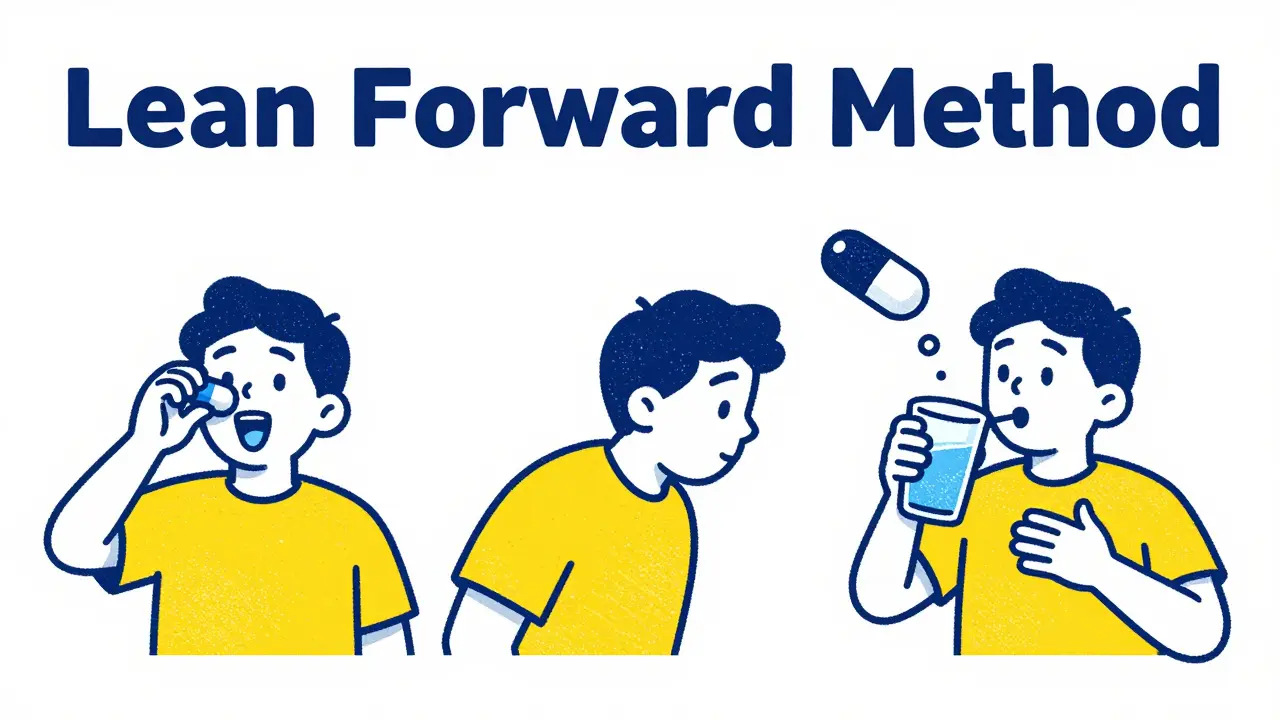
Not every swallowing problem requires a change in medication. Sometimes, a simple change in physics can do the trick. Depending on whether you're struggling with a heavy tablet or a light capsule, you might need a different head position.For those struggling with capsules-which often float-the Lean Forward Method is a game-changer. Because capsules are less dense than water, they float toward the back of the throat when you tilt your head forward. Try placing the capsule on your tongue, taking a medium sip of water, and bending your head forward toward your chest just as you swallow. Clinical observations suggest this can improve success rates by up to 75%.
If you're dealing with traditional tablets, try the opposite: a slight tilt of the head back. Additionally, using "slippery" liquids can help. For children or adults with sensitive throats, taking a sip of milk or water before the pill can lubricate the throat, making the transit smoother. If you feel a pill is "stuck," intermittent ice chips can help clear the oral cavity and stimulate the natural swallow response.
Finding Alternative Formulations
If techniques aren't working, it's time to look at the pharmacy options. You don't have to suffer through a pill that feels impossible to swallow. Many common medications come in different forms that bypass the need for a large tablet entirely.Ask your doctor about Alternative Formulations. These include:
- Liquid versions: Syrups or oral suspensions that can be swallowed or taken with a straw.
- Orodispersible tablets: Pills that dissolve on the tongue without needing water.
- Effervescent tablets: Tablets that dissolve in water to create a drinkable solution.
- Transdermal patches: Medicine absorbed through the skin, completely bypassing the throat.
- Dissolvable films: New technology, like VersaFilm, uses a thin strip that adheres to the oral mucosa, showing high adherence rates in patients with moderate swallowing issues.
| Formulation | Ease of Swallow | Risk Level | Best For |
|---|---|---|---|
| Standard Tablet | Low | High (Choking) | Patients without dysphagia |
| Liquid / Syrup | High | Moderate (Aspiration) | Those who can handle thin liquids |
| Orodispersible | Very High | Low | Patients with severe pill anxiety |
| Transdermal Patch | Maximum | Low | Chronic long-term medication |
The Role of Liquid Consistency
It sounds counterintuitive, but water isn't always the best liquid for taking medicine if you have swallowing problems. For some people, thin liquids like water move too quickly, which can lead to aspiration-where the liquid enters the lungs instead of the stomach. This can cause pneumonia.In these cases, a Speech-Language Pathologist might recommend thicker liquids. Thicker liquids hold together better and move more slowly, giving your throat more time to react and close the airway. Conversely, if your primary risk is choking (where the food blocks the airway) rather than aspirating, thinner liquids are usually preferred. This is why a professional assessment is crucial; the wrong liquid consistency can actually increase your risk of complications.
Building a Support Team for Medication Safety
Managing swallowing difficulties isn't a one-person job. To stay safe and consistent with your medicine, you need a coordinated effort. When the doctor prescribes a drug, they might not know you're struggling to swallow it, and the nurse administering it might not know the drug can't be crushed. This communication gap is where errors happen.A successful plan usually involves several key players:
- The Physician: Evaluates if the medication is still necessary and chooses the safest route.
- The Pharmacist: Identifies if a liquid alternative exists or confirms if a pill is safe to crush.
- The Speech-Language Pathologist: Performs a swallow study to determine the safest liquid consistency and posture.
- The Caregiver: Monitors for signs of choking or "pocketing" (where food/pills stay in the cheek).

Advanced Options and Future Outlook
For those whose condition is severe, oral administration may no longer be the safest bet. In such cases, doctors might suggest an enteral feeding tube. While this sounds intimidating, it allows for precise medication delivery. The key here is to use once-daily preparations whenever possible to minimize the number of times the tube is manipulated and to flush the tube with at least 10ml of water between different medications to prevent drug interactions inside the tube. Looking ahead, the medical world is moving toward more patient-friendly designs. The FDA is pushing for better labeling so you can see at a glance if a pill is crushable. We're also seeing a rise in mucosal-adherent films and more liquid options, recognizing that medication adherence shouldn't depend on how large your throat is. With the aging population growing, these innovations are becoming a necessity rather than a luxury.Can I just crush my pills and put them in yogurt?
Only if your pharmacist confirms the pill is not "extended-release" or "enteric-coated." Crushing these types of pills can cause the entire dose to hit your system at once, which can be toxic or make the drug stop working. Always check first.
Why does my doctor want me to use thickened liquids?
Thickened liquids move more slowly than water, which helps prevent the liquid from "slipping" into your windpipe (aspiration) and potentially causing lung infections or pneumonia.
What is the lean forward method?
It is a technique specifically for capsules. Since capsules float, you place the capsule on your tongue, take a sip of water, and tilt your head forward toward your chest. This moves the capsule to the back of the throat, making it easier to swallow.
What should I do if I feel like a pill is stuck in my throat?
Try taking small sips of water or sucking on ice chips to stimulate the swallow reflex and lubricate the area. If you experience sudden shortness of breath or a total inability to swallow saliva, seek medical help immediately.
Are there alternatives to swallowing pills entirely?
Yes. Depending on the drug, there may be liquid versions, orodispersible tablets (that melt on the tongue), skin patches, or even dissolvable films. Talk to your doctor about these options if pills are too difficult.
Next Steps for Different Situations
If you are a patient: Start a log of which pills are the hardest to swallow. Take this list to your next pharmacy visit and ask specifically, "Are there liquid or dissolvable versions of these?"
If you are a caregiver: Watch for "silent aspiration"-small coughs or a wet-sounding voice during or after medication. If you see this, request a swallow study from a speech-language pathologist immediately.
If you are a healthcare provider: Review the current medication list for any high-risk "do not crush" drugs and ensure that the administration route is clearly documented in the patient's electronic health record to prevent errors across shifts.