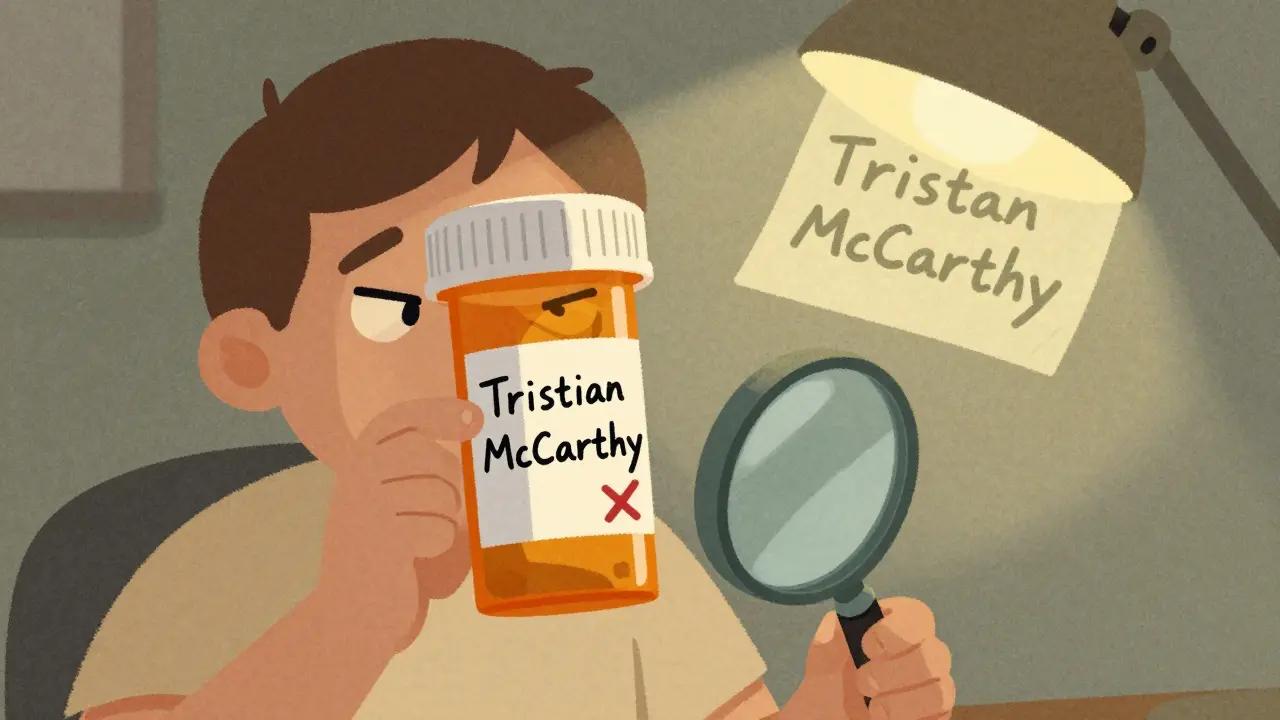
Every year, thousands of people take the wrong medicine-not because their doctor made a mistake, but because the label on the bottle didn’t match what they were told. It’s not rare. It’s not unusual. It’s happening right now, in pharmacies across the country. And the simplest way to stop it? Check your prescription label before you walk out the door.
Why Checking Your Prescription Label Matters
You might think, "My pharmacist knows what they’re doing." And they do. But even the best systems have gaps. A 2020 study in the Journal of the American Pharmacists Association found that when patients double-check their labels, the chance of taking the wrong medication drops by 67%. That’s not a small number. That’s life-changing. The Institute for Safe Medication Practices says about 25% of preventable medication errors come from labeling mistakes. That means one in four times someone takes the wrong pill, it’s because the label said something different than what the doctor ordered. Maybe the name was close-like "Lisinopril" instead of "Losartan." Maybe the strength was off-5 mg instead of 50 mg. Maybe your name was printed on someone else’s bottle. These aren’t hypotheticals. On Reddit, a user named NurseInTX shared how she caught her mom’s blood thinner dose was ten times higher than it should’ve been. She almost gave her a fatal overdose. All because she checked the label.What Every Prescription Label Must Include
By law, every prescription label in the U.S. must have six key pieces of information. If any are missing, the pharmacy is out of compliance. Here’s what you should see:- Your full legal name (first and last-sometimes middle initial too)
- The medication name (both brand and generic, like "Lipitor (atorvastatin)")
- The strength (e.g., "5 mg", "250 mg", "10 mL")
- The dosage form (tablet, capsule, liquid, patch)
- Directions for use (e.g., "Take one by mouth twice daily")
- The prescriber’s name and the pharmacy’s contact info
How to Verify Your Name and Medication: A 30-Second Checklist
You don’t need a medical degree. You don’t need to memorize drug names. You just need to slow down for a moment. Here’s how to check your label in under a minute:- Hold the bottle at eye level. Good lighting matters. If it’s dim, ask for a lamp or step near a window. The FDA recommends at least 500 lux of light-about as bright as an office desk lamp.
- Check your name. Is it spelled exactly how you gave it to them? If your name is "Tristan McCarthy," but the label says "Tristian McCarthy," stop. That’s a red flag.
- Match the medication name. Compare the label to what your doctor told you. If your doctor said "metformin," but the label says "glipizide," that’s wrong. Even if it looks similar, don’t assume. Ask.
- Confirm the strength. This is where most mistakes happen. "5 mg" is not the same as "50 mg." If your pill looks different than last time, check the strength. A 5 mg tablet might be white and small. A 50 mg tablet might be larger and yellow. Don’t go by appearance alone.
- Read the directions. "Take one tablet twice daily" is different from "Take one tablet every 12 hours." If it doesn’t match what your doctor said, ask why.
- Verify the pharmacy info. Is the phone number legible? If you need to call with a question, you should be able to read it without squinting.
Common Problems and How to Fix Them
Even when you’re careful, things can go wrong. Here are the top issues people run into-and how to handle them:- Small print. If you’re over 65, you’re not alone. About 37% of older adults struggle to read standard label fonts. Carry a small pocket magnifier (2x magnification works). Many CVS and Walgreens locations have magnifiers at the pickup counter-ask for one.
- Confusing names. "Hydrochlorothiazide" and "hydroxyzine" sound alike but do completely different things. If you’re unsure, ask the pharmacist to explain the difference. They’re trained to do this.
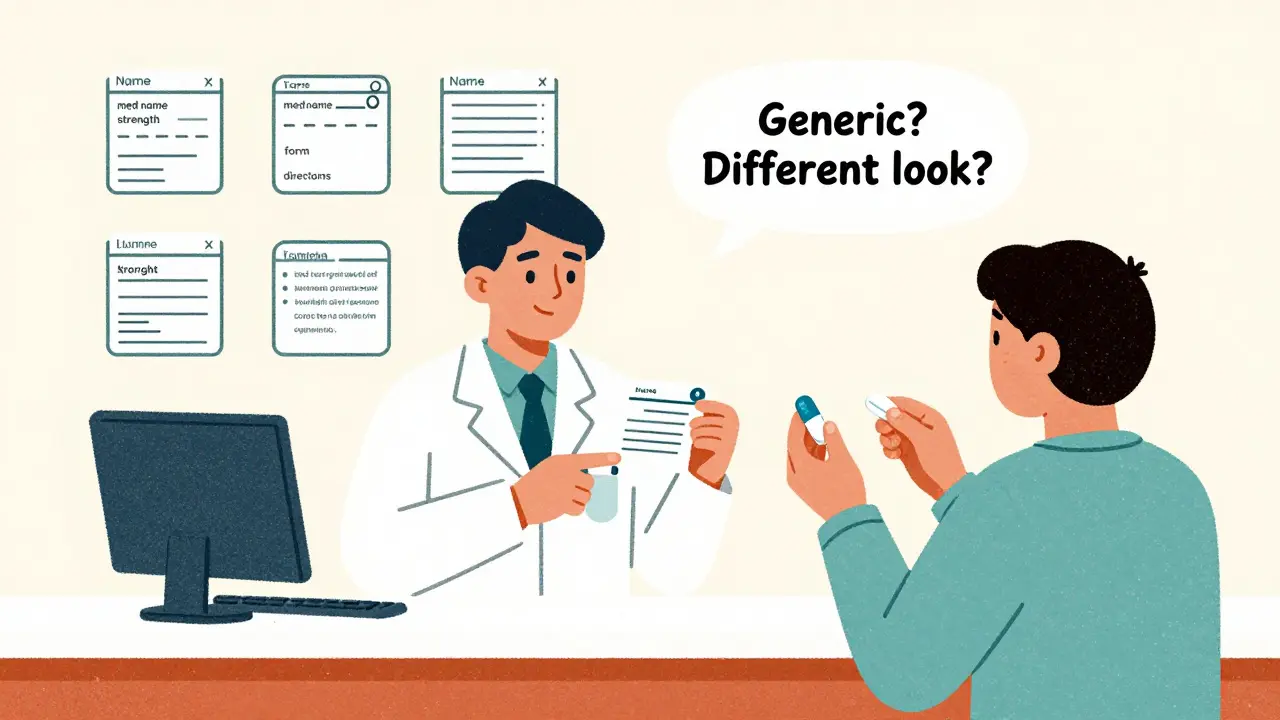
- Wrong pill shape or color. If your last refill was blue capsules and this one is white tablets, don’t assume it’s the same. Generic drugs can look different. But if the name or strength changed, that’s a problem. Call your doctor’s office to confirm.
- Labels for multiple medications. If you take five or more prescriptions, keep them in separate containers. Use pill organizers with clear labels. Don’t mix them in one bottle. It’s too easy to grab the wrong one.
Technology Can Help-But Not Replace Your Eyes
There are apps like Medisafe and GoodRx that let you scan your label and track your meds. They’re useful. But they’re not foolproof. A 2023 Pew Research study found only 28% of people over 65 regularly use smartphone apps for health. Many don’t own smartphones. Others find them confusing. Manual verification is still the most reliable method because it doesn’t need batteries, Wi-Fi, or a learning curve. It’s immediate. You’re holding the bottle. You’re seeing the words. You’re the last line of defense. The FDA’s 2023 Patient Medication Labeling Initiative says patient verification is the most underused safety tool in outpatient care. Dr. Beth Kollisch from Johns Hopkins put it plainly: "It could prevent 150,000 adverse events every year. Why aren’t we doing it?"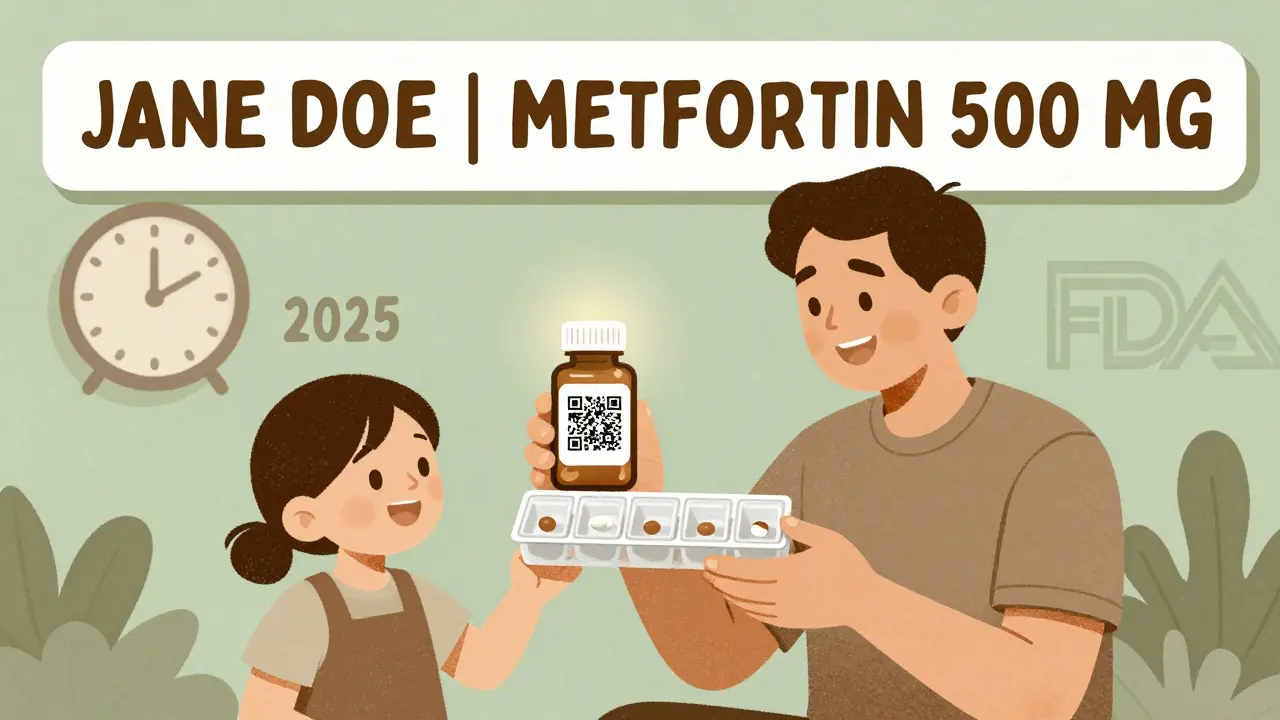
What to Do If You Find a Mistake
If something doesn’t match-your name, the drug, the dose-don’t take it. Don’t guess. Don’t assume it’s a typo. Go back to the pharmacy counter. Say: "I think there’s an error on this label. My doctor prescribed [medication name], [strength], and my name is [your full name]. This label says something different. Can you double-check?" Pharmacists expect this. They’re trained to handle it. In fact, the American Medical Association passed a resolution in 2021 urging doctors to tell patients to verify their labels-because it works. In pilot programs, medication errors dropped by 40%. If the pharmacy refuses to fix it, call your doctor’s office directly. Have them confirm the prescription. If you still feel unsafe, you can report the issue to the FDA’s MedWatch program or call the American Pharmacists Association’s Medication Safety Helpline at 1-800-987-7856.What’s Changing in 2025
By the end of 2025, all U.S. pharmacies will be required to use a new standard label format. The FDA is forcing a redesign. Your name will be printed in 24-point font-at the very top. Strength and directions will be larger, bolder, easier to read. QR codes will link to video instructions in multiple languages. This isn’t just about convenience. It’s about safety. The goal? To make it impossible to miss the most important details. Until then? Don’t wait for the new labels. Start checking now. Your life depends on it.What should I do if my name is misspelled on the prescription label?
Don’t take the medication. Return to the pharmacy and ask them to correct the label. Even a small spelling error-like "Tristian" instead of "Tristan"-can lead to mix-ups, especially if you share a name with someone else in the system. Pharmacies are required to correct labeling errors at no cost to you.
Can I rely on the pill’s color or shape to know it’s the right medicine?
No. Generic medications often look different from brand-name versions or even from previous refills. A pill’s appearance isn’t a reliable indicator. Always check the label for the medication name and strength. If you’re unsure, ask the pharmacist to explain why it looks different.
Why does my prescription label list both a brand name and a generic name?
It’s required by law. The brand name (like "Lipitor") helps you recognize the drug your doctor prescribed. The generic name (like "atorvastatin") tells you the active ingredient. This helps you avoid duplicates-if your doctor prescribes Lipitor and you already have atorvastatin at home, you’ll know they’re the same thing.
What if I can’t read the label because of poor eyesight?
Many pharmacies offer large-print labels or audio instructions upon request. You can also use your smartphone’s magnifier app-just point the camera at the label and zoom in. Some CVS and Walgreens locations have magnifiers at the pickup counter. Don’t hesitate to ask for help. Your safety matters more than pride.
Is it safe to take a prescription if the expiration date has passed?
No. Medications can lose potency or break down into harmful substances after their expiration date. Even if it looks fine, don’t take it. Return it to the pharmacy for proper disposal. Many pharmacies offer free take-back programs for expired or unused meds.
What if I’m picking up medication for someone else?
Always confirm the patient’s full name is on the label. If it’s your parent, spouse, or child, make sure their name-not yours-is printed correctly. Never assume the pharmacy knows who it’s for. Double-check the medication name, strength, and directions too. You’re responsible for making sure the right person gets the right medicine.
Tim Goodfellow
December 18, 2025 AT 16:06
This is the kind of post that makes me want to hug a pharmacist. Seriously, check your labels. I once grabbed my dad's blood pressure med by accident because I didn't look. Thought I was fine. Turned out I was nearly passed out on the couch. Don't be me.
Elaine Douglass
December 20, 2025 AT 03:17
i just checked my last script and my name was spelled right and the dose was correct i feel so much better now lol
Alex Curran
December 20, 2025 AT 15:29
in australia we've had the same checklist for years. pharmacists actually ask you to confirm. it's not a burden it's a habit. if you're not checking you're playing russian roulette with your liver
Sarah McQuillan
December 20, 2025 AT 17:42
this is why america is falling apart. we don't check labels because we're too busy scrolling. the government should force pharmacies to have a 5-minute mandatory safety spiel before you leave. no more lazy patients
Laura Hamill
December 22, 2025 AT 05:14
they're putting qr codes on labels now? next they'll be tracking your pills with gps. i swear the FDA just wants to know when you take your meds so they can raise your insurance rates. i'm not scanning anything
Connie Zehner
December 23, 2025 AT 10:46
I told my pharmacist last week that my name was spelled wrong and they said "oh we get that all the time" and didn't fix it. I had to wait 20 minutes and call my doctor. This isn't safety. This is negligence. 😔
mark shortus
December 24, 2025 AT 22:49
I read this like a thriller novel. One wrong letter. One decimal point. One second of distraction. And boom - your body turns against you. I used to think pharmacies were sacred. Now I know they're just… human. And humans forget. That’s why you have to be the last line of defense. Don’t be passive. Be vigilant. Your life isn’t a suggestion.
Jedidiah Massey
December 26, 2025 AT 08:42
The FDA’s 2023 Patient Medication Labeling Initiative is a textbook case of regulatory capture. The industry lobbied for QR codes because it reduces liability, not because it improves outcomes. Meanwhile, 78% of seniors still can’t operate a smartphone. This isn’t innovation - it’s performative compliance. 🤖
Takeysha Turnquest
December 28, 2025 AT 01:25
we are all just molecules waiting to be rearranged by a typo. the label is the only thing standing between you and chaos. your name on the bottle is your soul's signature. if it's wrong... you're not you anymore. you're a ghost in someone else's prescription
Alana Koerts
December 29, 2025 AT 13:01
This whole thing is performative safety. Most people don’t even know what their meds are for. They just swallow the little pills because the doctor said so. The label isn’t the problem. The problem is that we treat medicine like a vending machine. Stop pretending checking a label fixes systemic ignorance.
Aboobakar Muhammedali
December 30, 2025 AT 21:33
i took my grandma's pills once because i thought they were vitamins. she almost died. now i always check the name and the dose. even if i know the pill. even if i've taken it before. never assume
Dikshita Mehta
December 30, 2025 AT 23:07
in india we dont have perfect labels but we still check. my aunty reads the label out loud to me before she takes anything. we laugh about it but its saved us twice. simple things matter. dont be embarrassed to ask
anthony funes gomez
December 31, 2025 AT 06:41
The epistemological framework of pharmaceutical verification is predicated upon the ontological primacy of the human sensorium - yet we outsource cognition to institutionalized systems that are inherently fallible. The label is not merely a piece of paper - it is the hermeneutic interface between medical authority and embodied agency. To neglect it is to surrender autonomy to algorithmic negligence.
Lynsey Tyson
January 2, 2026 AT 06:29
i just wanted to say thank you for writing this. my mom is 79 and she’s scared to ask questions at the pharmacy. i printed this out and we go over it together every time. she says she feels less alone now. that means a lot
Edington Renwick
January 3, 2026 AT 23:20
I’ve worked in a pharmacy for 18 years. People don’t check labels because they’re lazy. Or they think the pharmacist is a robot. They’re wrong. We’re overworked. We’re underpaid. We’re human. And if you don’t check your own label, you’re not just risking your life - you’re making our job harder. Don’t be that person.