What Happens During an FDA Inspection of a Generic Drug Facility?
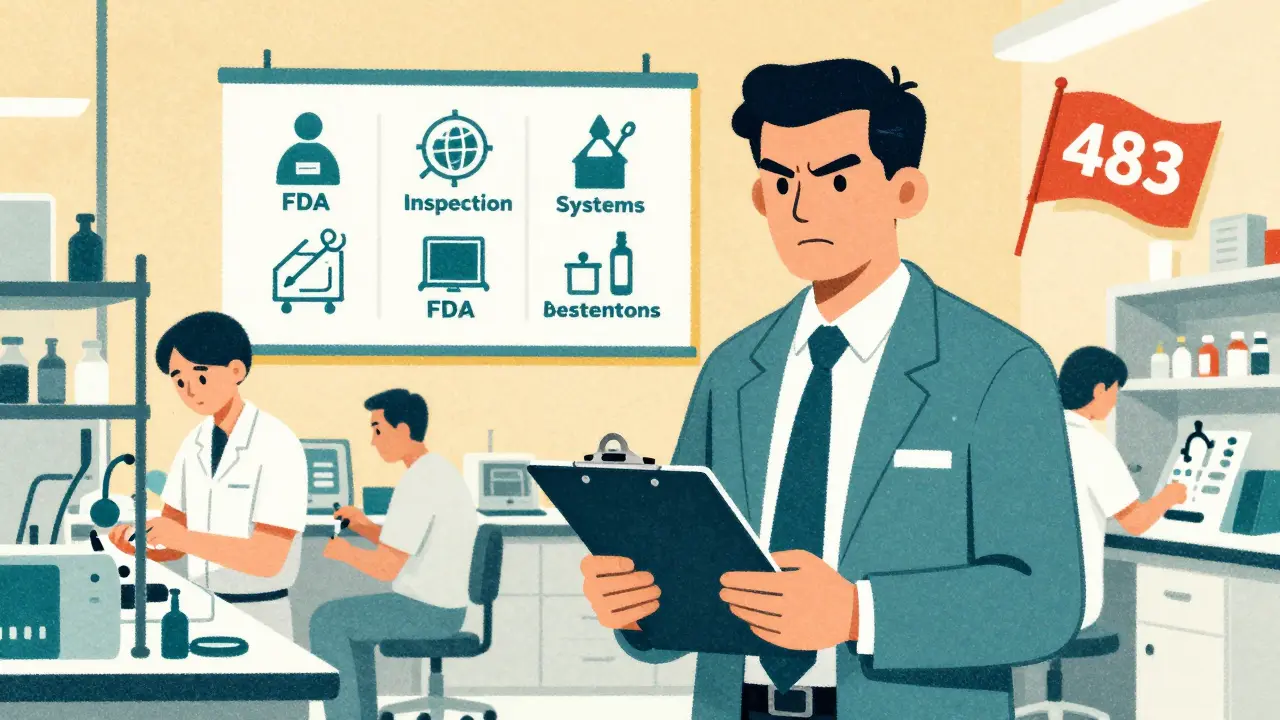
If you work at a generic drug manufacturing plant, you know the FDA doesn’t show up with a smile and a handshake. They show up to check if your facility is doing everything right - from how raw materials are stored to how data is recorded in the lab. And if something’s off, they’ll document it. No warnings. No second chances on the spot.
The FDA inspects generic drug facilities to make sure they follow Current Good Manufacturing Practices (CGMP), which are set out in 21 CFR Part 211. These aren’t suggestions. They’re legal requirements. And every facility making medicine for the U.S. market - whether it’s in India, China, or Ohio - must pass these inspections to sell their products.
Inspections aren’t random. The FDA uses a risk-based model to pick which sites get checked. Factors like past inspection results, complaints from patients or pharmacists, supplier history, and even tips from insiders can bump a facility to the top of the list. Facilities with high-risk products - like injectables or drugs with narrow therapeutic windows - get more attention. So do those with previous violations.
The Six Systems the FDA Checks
During every inspection, FDA investigators use a six-system approach. It’s not a checklist. It’s a deep dive into how your quality system works across the whole operation. The Quality System is always reviewed. Then, they pick two or three more to examine closely.
- Quality System: This is the backbone. They look at your quality unit’s independence, your deviation management, your CAPA process, and whether your team actually owns quality - or just files paperwork.
- Facilities & Equipment: Are your clean rooms maintained? Are your equipment logs complete? Is calibration up to date? They’ll walk through your plant, check HVAC logs, and verify that cleaning procedures are followed - not just written.
- Materials: They pull records for incoming raw materials. Do you test every batch? Do you validate your suppliers? Are storage conditions documented? One missing certificate of analysis can trigger a bigger probe.
- Production: Can you prove your process is consistent? They’ll ask for batch records, process validation data, and equipment qualification records. If your process isn’t validated, your product isn’t approved.
- Packaging & Labeling: Mislabeling is a major red flag. They check if labels match the approved application, if lot numbers are traceable, and if foreign language labels are accurate.
- Laboratory Control: This is where many facilities stumble. They’ll pull analytical method validation reports, stability data, and test records. They’ll ask: Are your instruments calibrated? Are your reference standards traceable? Are your results authentic?
What Is a Pre-Approval Inspection (PAI)?
If you’re submitting a new generic drug application to the FDA, you’ll get a Pre-Approval Inspection - or PAI. This isn’t a routine check. It’s your final gate before approval.
The inspection team will compare everything in your application to what’s happening on the floor. Did you say your mixing tank holds 500 liters? They’ll measure it. Did you say your analytical method uses HPLC with a specific column? They’ll check the actual column in use. Did you say stability samples are stored at 25°C/60% RH? They’ll check the chamber logs.
There are three questions they’re trying to answer:
- Is your facility ready for commercial manufacturing?
- Is what you submitted in your application the same as what’s happening here?
- Is your application complete and accurate?
If the answer to any of these is no, your application gets delayed - sometimes for months. Some companies lose a year because they assumed their paperwork was enough. It’s not. The FDA wants proof on-site.
What Happens When They Find Problems?
More than 90% of inspections result in acceptable compliance. That sounds good - until you realize that 10% still means hundreds of facilities each year get flagged.
If the FDA finds issues, they issue a Form FDA 483. This isn’t a fine. It’s a list of observations - written in order of severity. Each item references a specific regulation, like 21 CFR 211.22(a) for lack of quality unit authority, or 211.192 for incomplete batch records.
You have 15 business days to respond. Your response isn’t just an apology. It’s your chance to prove you understand the problem and have fixed it - with evidence. A good response includes:
- Root cause analysis
- Corrective actions taken
- Preventive actions to stop it from happening again
- Proof that the fix works (e.g., retested samples, updated SOPs, training records)
If your response is weak, the FDA may issue a warning letter. That’s a public document. It goes on their website. It can trigger import alerts. It scares off buyers and investors.
The New PreCheck Program: Get Feedback Before You Build
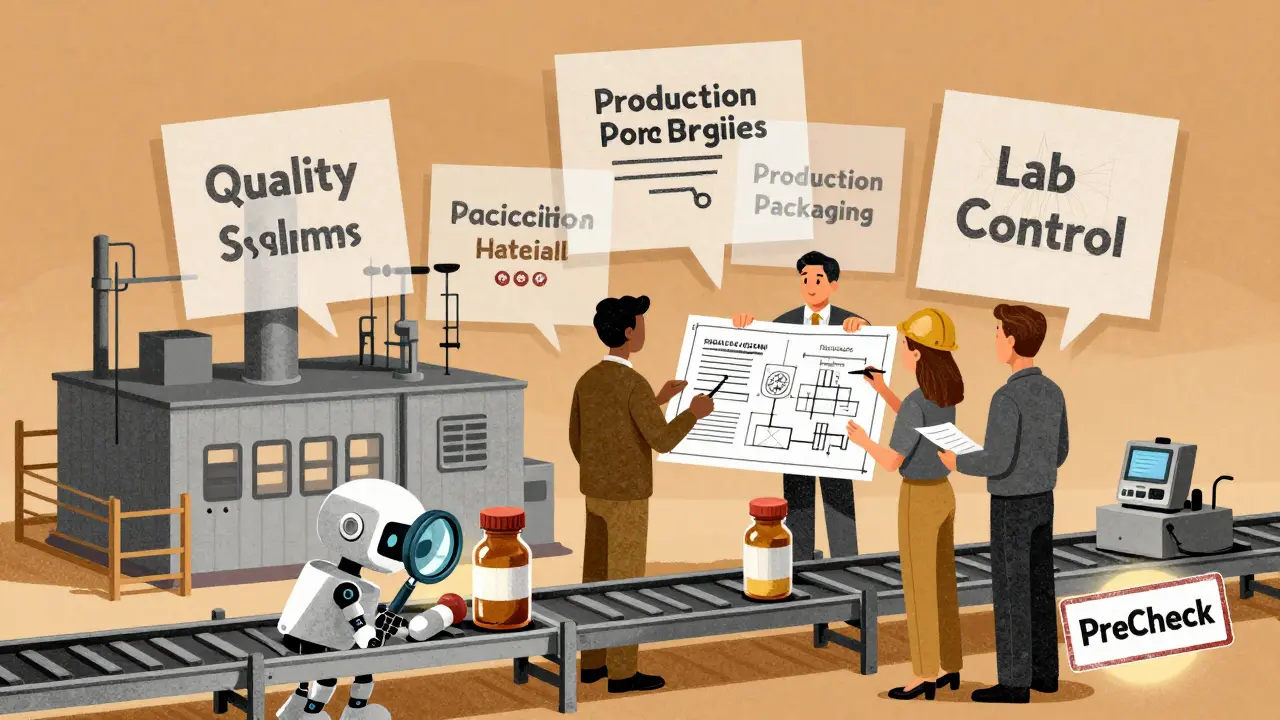
In 2024, the FDA launched PreCheck - a game-changer for companies building new facilities or upgrading old ones. This isn’t a shortcut. It’s a safety net.
PreCheck lets you submit detailed information early - during facility design, construction, and pre-production. You send a Type V Drug Master File (DMF) with your layout, quality system design, and process flow. The FDA reviews it and gives you feedback before you spend millions on equipment that might not meet standards.
Companies using PreCheck report fewer surprises during PAIs. One manufacturer in Texas reduced their inspection findings by 70% after using PreCheck’s Facility Readiness Phase. They didn’t skip compliance. They just built it right from the start.
How to Get Ready - Really Ready
Don’t wait until the FDA knocks. That’s like studying the night before your final exam.
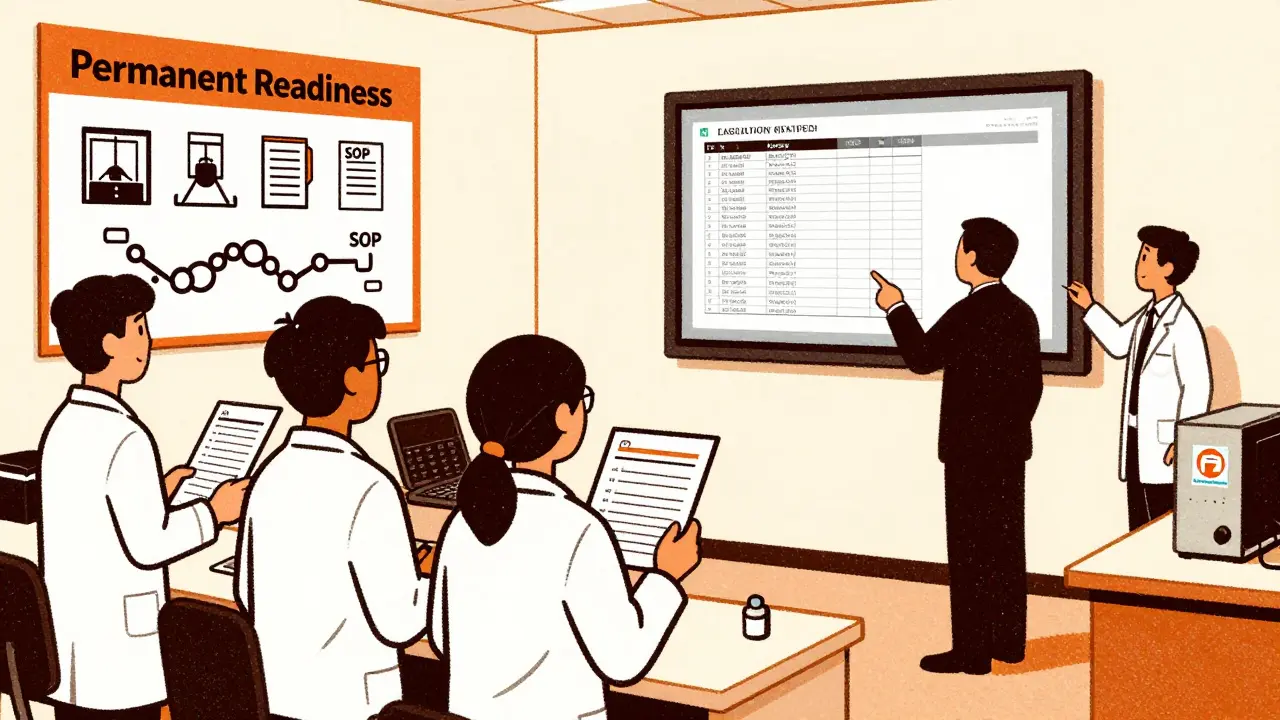
Top-performing facilities operate in a permanent state of inspection readiness. That means:
- Every room is clean and organized - even if no one’s coming for a year.
- All SOPs are current, signed, and followed - not just stored on a server.
- Employees know what to do when an inspector walks in. No one panics. No one hides data.
- Mock inspections happen quarterly. Someone plays FDA investigator. They ask hard questions. They pull random records.
- Data integrity is treated like a security issue. No backdating. No deleting. No manual overrides without approval.
One plant in New Jersey trains every new hire on what to say if an FDA investigator asks: “Can I see your last batch record?” If the answer is “I don’t know,” they’re retrained - immediately.
What Happens After the Inspection?
The inspection ends with an Establishment Inspection Report (EIR). This is the FDA’s official summary. It’s not public, but it’s reviewed internally for compliance status: acceptable or unacceptable.
If you’re found acceptable, you’re cleared to ship. If not, you’ll get a warning letter or, in severe cases, an import alert that blocks your products at the border.
Since June 2025, the FDA offers Post-Warning Letter Meetings (PWLMs). If you got a warning letter, you can request a meeting to discuss your corrective actions. It’s not a guarantee of approval, but it’s a chance to talk directly with the FDA instead of waiting months for a follow-up inspection.
Why This Matters - Beyond Compliance
Passing an FDA inspection isn’t just about avoiding fines. It’s about trust. Patients rely on generic drugs to be safe, effective, and consistent. When you pass an inspection, you’re not just meeting a regulation. You’re proving you care about the people who take your medicine.
Facilities with mature quality cultures don’t just survive inspections. They thrive. They attract partners. They win contracts. They become the go-to suppliers for major pharmacies and health systems.
The FDA isn’t trying to shut you down. They’re trying to make sure no one gets sick because a tablet was made wrong. If you’re building quality into your process - not just paperwork - you’re not just ready for the FDA. You’re ready for the future.
Are FDA inspections announced in advance?
Most inspections are unannounced, especially routine CGMP checks. However, Pre-Approval Inspections (PAIs) are scheduled in advance because they’re tied to a drug application. The FDA may also give notice for inspections related to serious complaints or recalls, but this is rare. Never assume you’ll get a heads-up.
What’s the biggest mistake companies make before an FDA inspection?
Trying to clean up only when they know the FDA is coming. Investigators are trained to spot temporary fixes - like freshly painted walls, hidden documents, or overworked staff. The FDA looks for consistent, daily practices. If your facility isn’t clean and organized every day, it won’t pass.
Can a facility be approved even if it gets an FDA 483?
Yes. Many facilities receive an FDA 483 and still get approved - especially if they respond quickly, thoroughly, and with evidence. The 483 is a starting point for discussion, not a rejection. What matters is how you fix the issue and prove it won’t happen again.
How long does an FDA inspection usually last?
Routine inspections typically last 3 to 7 days. Pre-Approval Inspections can take longer - up to 10 days or more - because they involve deeper review of documentation and process validation. The length depends on the size of the facility, complexity of products, and number of issues found.
What happens if a facility refuses to let the FDA in?
Refusing entry is a serious violation. The FDA can issue an import alert, blocking all products from that facility from entering the U.S. The facility may also be subject to legal action. The FDA has the legal authority to enter any registered manufacturing site without notice under the Federal Food, Drug, and Cosmetic Act.
Do inspectors check digital records and electronic signatures?
Yes. The FDA now routinely examines electronic records, including LIMS, MES, and ERP systems. They check for audit trails, user access controls, and whether electronic signatures meet 21 CFR Part 11 requirements. If your system allows deletion of records or lacks audit trails, it’s a major red flag.
saurabh singh
January 5, 2026 AT 18:03
Been through three FDA inspections in Pune. The key? Don't treat it like a test. Treat it like a coffee chat with a really sharp neighbor who knows your kitchen better than you do. Keep it clean, keep it real, and never let anyone say 'we'll fix it tomorrow' - because tomorrow, they're already here.
Dee Humprey
January 7, 2026 AT 00:00
The PreCheck program saved our startup. We spent $2M on equipment before hearing about it. Lesson learned: talk to the FDA before you buy the autoclave.
John Wilmerding
January 7, 2026 AT 08:44
The six-system approach is not merely a framework - it is a comprehensive, systematic methodology for ensuring adherence to 21 CFR Part 211. One must recognize that the Quality System serves as the foundational pillar upon which all other systems are validated and sustained. Failure to maintain structural integrity at this level inevitably results in cascading non-compliance.
Peyton Feuer
January 8, 2026 AT 11:55
i think a lot of ppl dont realize the FDA just wants you to not kill people. its not about perfection, its about not being a mess. if your lab looks like a tornado hit it and your records are scribbled on napkins… yeah, you’re gonna get flagged. but if you just keep it clean and honest? youll be fine.
Siobhan Goggin
January 10, 2026 AT 00:29
I’ve seen facilities turn things around after a warning letter. It’s not the end - it’s the start of doing it right. Proud of the teams who take the feedback and grow.
Vikram Sujay
January 11, 2026 AT 15:06
One must contemplate the ontological weight of compliance. Is the FDA’s presence an external imposition, or a mirror reflecting the internal state of an organization’s ethical commitment? The 483 is not a document of failure - it is a phenomenological invitation to authenticity in manufacturing.
Jay Tejada
January 12, 2026 AT 17:42
So let me get this straight - we spend millions to make pills, and the FDA checks if the coffee machine is in the right spot? Cool. Next they’ll be measuring how many times we say 'please' to the autoclave.
josh plum
January 13, 2026 AT 05:58
This is all a scam. The FDA doesn’t care about safety. They’re just protecting Big Pharma’s monopoly. Every time they shut down a cheap generic plant, insulin prices go up. You think this is about quality? It’s about profit. Wake up.
John Ross
January 13, 2026 AT 09:20
The 483 isn’t a list of violations - it’s a diagnostic report on your CAPA maturity. If your root cause analysis is surface-level, your entire QMS is a house of cards. GMP isn’t about paperwork - it’s about systemic resilience. If your team can’t articulate why they’re doing something, you’re already non-compliant.
Clint Moser
January 13, 2026 AT 23:25
they’re watching your servers. they’ve got backdoors into your lmis. i heard they can see your deleted files. even if you think you wiped it. they know. they always know. dont even think about editing that audit trail.
Ashley Viñas
January 15, 2026 AT 13:33
Honestly, if your facility needs a 'PreCheck' to get through basic compliance, you shouldn’t be making medicine. This isn’t a DIY home renovation. You’re handling human lives. If you need a hand-holding program to get your act together, maybe consider a different career.
Mandy Kowitz
January 16, 2026 AT 08:35
So… the FDA shows up unannounced. Cool. Meanwhile I’m still trying to get my boss to sign off on a new trash can. We’re not ready. We’re never ready.
Charlotte N
January 18, 2026 AT 05:38
I’m just wondering… if someone does a mock inspection and no one is around to see it… does it still count as readiness? Also, should we be using red pens for corrections? I’ve heard conflicting things.
bob bob
January 18, 2026 AT 17:01
My favorite part? When the inspector asks for a batch record and someone says 'I don’t know' - and then the whole room freezes like someone just said 'the boss is here'. Training people to just answer - no panic - is the real win.
Oluwapelumi Yakubu
January 19, 2026 AT 10:20
In the grand tapestry of human endeavor, the FDA inspection is but a mirror held to the soul of industry. When the inspector walks in, they do not seek perfection - they seek truth. And truth, my friends, is not found in polished walls or rehearsed answers. It is found in the quiet hum of a calibrated HPLC, in the unbroken chain of a digital audit trail, in the unspoken discipline of a worker who knows that tomorrow’s patient is counting on today’s integrity. We are not just making pills. We are weaving the fabric of trust.