Test Your Knowledge: FDA Black Box Warnings
How much do you know about these critical drug safety alerts? Answer the questions below to see your understanding.
What is the primary purpose of a black box warning?
When are black box warnings typically added to drugs?
Which of these risks would likely trigger a black box warning?
What is the key difference between a black box warning and other drug warnings?
What should you do if you're taking a drug with a black box warning?
What does REMS stand for in the context of FDA warnings?
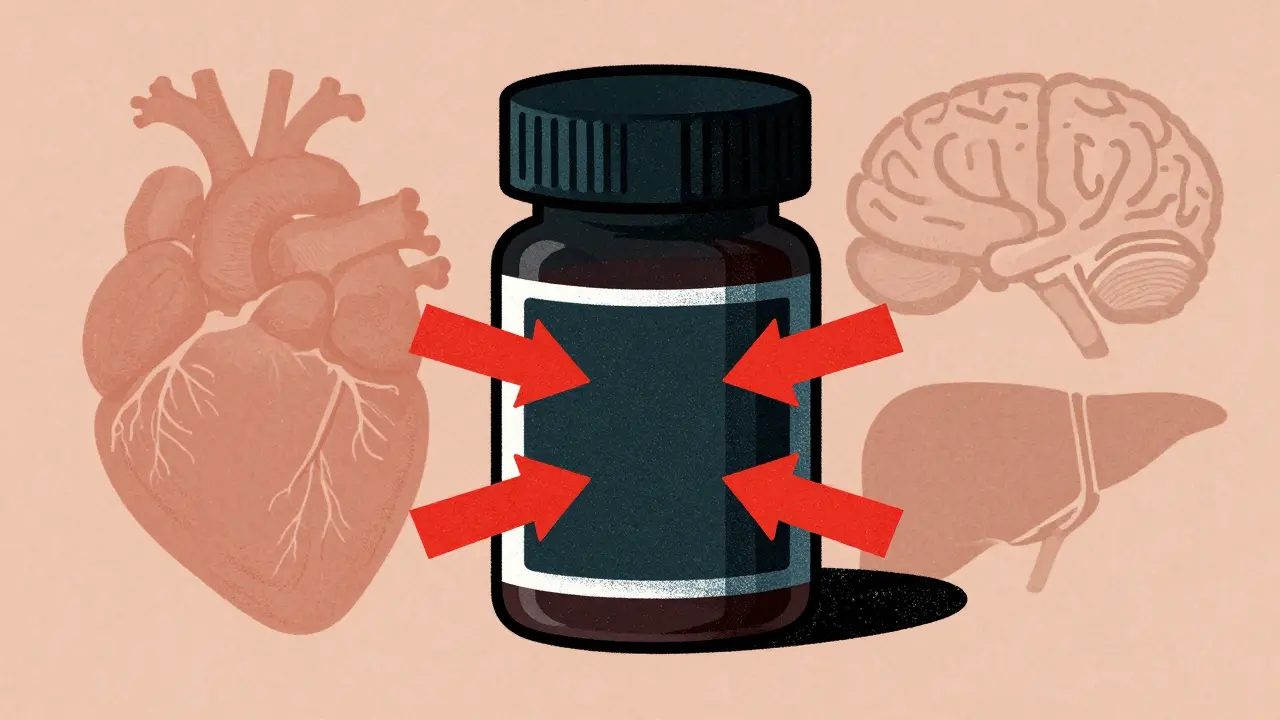
When you pick up a prescription, you might not notice the small black rectangle on the drug label. But that box isn’t just for decoration-it’s the FDA’s strongest warning you can get. A black box warning means the drug carries risks so serious they could kill you or cause permanent harm. It’s not a scare tactic. It’s a legal requirement.
What Exactly Is a Black Box Warning?
A black box warning is the highest level of safety alert the U.S. Food and Drug Administration (FDA) can issue for a prescription drug. It’s printed in bold black text inside a thick black border on the drug’s official prescribing information. You’ll find it right after the highlights section of the medication guide-where doctors and pharmacists look first.These warnings aren’t about mild side effects like headaches or nausea. They’re reserved for life-threatening reactions: sudden heart failure, liver damage, suicidal behavior, severe allergic reactions, or birth defects. The FDA only puts a black box on a drug when the risk is real, documented, and serious enough that the benefits might not outweigh the dangers for some people.
As of 2022, more than 400 medications in the U.S. carry this warning. That includes drugs for depression, diabetes, seizures, arthritis, and even some antibiotics. The warning doesn’t mean the drug is banned. It means you need to know exactly what you’re getting into.
Why Do These Warnings Exist?
The FDA doesn’t slap black boxes on drugs just because they’re dangerous. They’re added when evidence shows a pattern of harm that can be avoided-if people know about it.Most black box warnings come after a drug is already on the market. That’s because clinical trials, even large ones, can’t catch every rare side effect. Thousands of people take a drug in trials. But once millions are using it, rare problems show up. That’s where the FDA’s Adverse Event Reporting System (FAERS) steps in. Every year, the agency gets over 1.3 million reports from doctors, patients, and drug companies about side effects. When a pattern emerges-say, 50 cases of liver failure linked to a specific medication-the FDA investigates. If the link is strong, they require a black box warning.
For example, the diabetes drug rosiglitazone (Avandia) got a black box in 2007 after studies showed it doubled the risk of heart attacks. Prescriptions dropped by 70% within a year. But it didn’t disappear. Why? Because for some patients with no other options, the benefit still outweighed the risk.
What Kind of Risks Trigger a Black Box?
Not all black box warnings are the same. They fall into a few key categories:- Death or organ failure-like liver toxicity from certain antibiotics or heart damage from some cancer drugs.
- Severe mental health effects-antidepressants like fluoxetine and sertraline carry warnings about increased suicidal thoughts in young adults under 25.
- Birth defects-drugs like isotretinoin (Accutane) for acne can cause severe fetal abnormalities. Women must use two forms of birth control and sign paperwork before getting it.
- Drug interactions-some medications can’t be taken with others. For example, certain antibiotics and statins together can cause muscle breakdown that leads to kidney failure.
- Special populations-some drugs are banned for children, pregnant women, or elderly patients because the risks are too high.
These aren’t guesses. Each warning is backed by data from clinical studies, post-market surveillance, and sometimes autopsies or hospital records. The FDA doesn’t act on rumors. They act on evidence.
Black Box Warnings vs. Other Alerts
Not every warning is a black box. The FDA uses a hierarchy:- Black box - highest level. Life-threatening risk.
- Warnings and precautions - serious but less immediate. Like "may cause dizziness" or "monitor blood pressure."
- Contraindications - don’t use this drug if you have X condition. Often listed right after the black box.
- Adverse reactions - common side effects, like diarrhea or dry mouth.
Think of it like traffic lights. A black box is a red light. Warnings are yellow. Adverse reactions are green with a caution sign. You can still go through yellow, but you slow down. Red? Stop. Don’t proceed unless you’ve talked to your doctor.
How Do These Warnings Affect Prescribing?
Doctors don’t automatically avoid drugs with black boxes. They weigh the risk against the benefit. For someone with severe rheumatoid arthritis who hasn’t responded to anything else, a drug with a black box warning might still be the best option.But they have to talk about it. The FDA requires that prescribers review the warning with patients. That means your doctor should explain:
- What the specific danger is
- How likely it is to happen
- What symptoms to watch for
- What tests or monitoring you’ll need
- What alternatives exist
Some drugs with black boxes come with extra rules called REMS (Risk Evaluation and Mitigation Strategies). These might require you to:
- See a specialist before getting the drug
- Get monthly blood tests
- Sign a consent form
- Only get the drug from certified pharmacies
For example, the acne drug isotretinoin requires enrollment in a federal registry, monthly pregnancy tests, and two forms of birth control. It’s not just a warning-it’s a system designed to prevent harm.
What Should You Do If Your Drug Has a Black Box?
Don’t panic. Don’t stop cold turkey. Do this:- Read the warning-ask your pharmacist for the full prescribing information. Don’t rely on the patient leaflet. The black box is in the professional document.
- Ask your doctor-"What’s the specific risk? How often does it happen? What are the signs I should call you about?"
- Know your monitoring plan-if you need blood tests or EKGs, don’t skip them. These aren’t optional.
- Report side effects-if you feel something wrong, report it to the FDA through MedWatch. You can do it online. Your report helps others.
- Ask about alternatives-is there another drug with similar benefits but fewer risks? Sometimes there is.
Dr. Meghan Lehmann from the Cleveland Clinic puts it simply: "A black box doesn’t mean you can’t take the drug. It means you need to take it with your eyes wide open."
Are These Warnings Effective?
Yes-but not perfectly. Studies show that when a black box warning is issued, prescriptions for that drug often drop by 25-40%. But many patients still take them. Why? Because for serious conditions, there’s often no better option.Take the antidepressant fluoxetine. It carries a black box for suicidal thoughts in young people. Yet, it’s still one of the most prescribed antidepressants. Why? Because for many, the risk of untreated depression is worse than the risk of the drug.
Here’s the problem: many patients never hear about the black box. A 2011 study in Health Affairs found that even when a warning was issued, many doctors didn’t discuss it. Patients assumed the drug was safe because their doctor prescribed it. That’s dangerous.
The FDA has improved labeling since then. Now, black boxes are placed right after the "Highlights" section-so they’re harder to miss. Digital tools like Drugs@FDA let you search for any drug and see its current warnings in minutes.
What’s Next for Black Box Warnings?
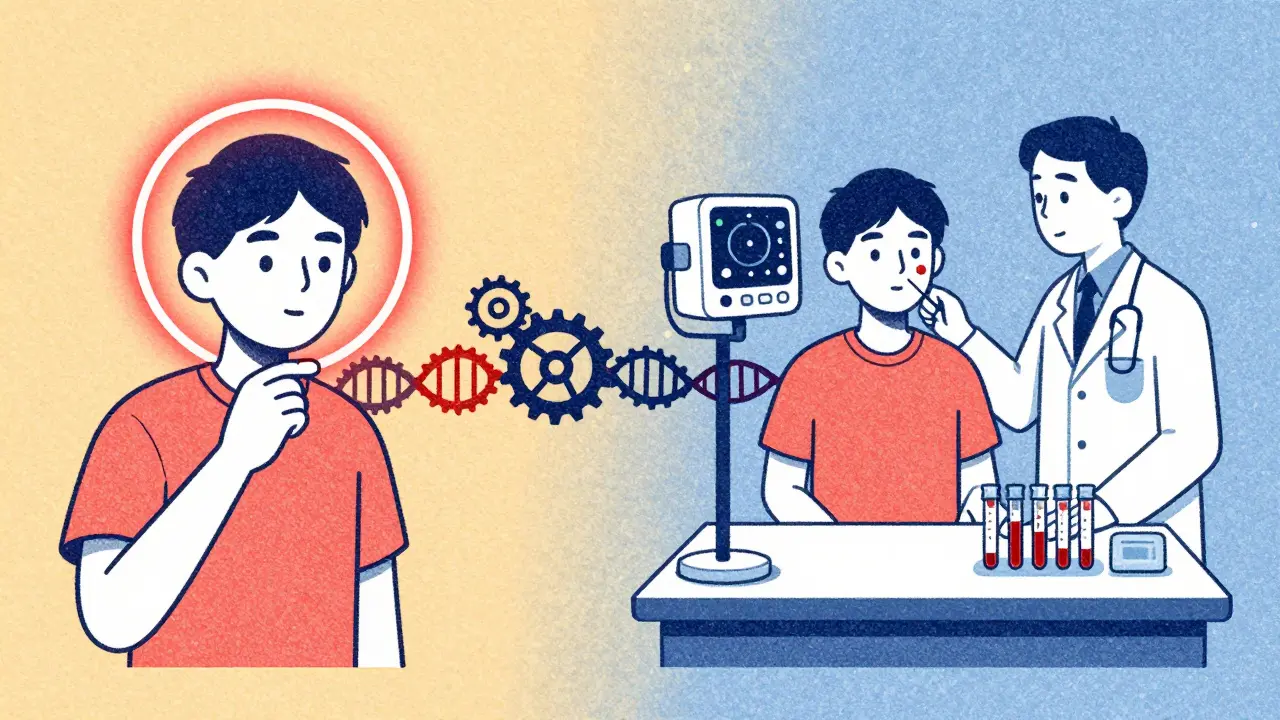
The FDA is moving toward smarter warnings. In 2023, they announced plans to include pharmacogenomic data-meaning warnings might soon say, "This drug increases risk of liver damage in people with a specific gene variant." That’s a big shift. Instead of warning everyone, they’ll warn only those at highest risk.Imagine getting a prescription and seeing: "Based on your genetic profile, you have a 1 in 20 chance of severe reaction to this drug. Alternative options are available." That’s the future. Personalized, precise, and far more useful.
For now, the system isn’t perfect. But it’s the best tool we have to prevent deaths from medications. The black box isn’t there to scare you. It’s there to save you.
Does a black box warning mean I can’t take the medication?
No. A black box warning doesn’t mean the drug is banned or unsafe for everyone. It means the risks are serious enough that you and your doctor must carefully weigh the benefits against the dangers. For many patients-especially those with severe or life-threatening conditions-the benefits still outweigh the risks when used correctly and under close monitoring.
Can a black box warning be removed?
Yes. If new evidence shows the risk is lower than originally thought-or if better safety measures are proven effective-the FDA can remove or modify the warning. This requires new clinical data, long-term studies, or real-world evidence showing fewer adverse events. It’s rare, but it happens. For example, some older warnings for certain birth control pills were updated after decades of safety data.
Do over-the-counter drugs have black box warnings?
No. Black box warnings only apply to prescription medications. The FDA regulates OTC drugs differently. They rely on clear labeling, dosage limits, and consumer education instead. However, some OTC drugs still carry strong warnings-for example, acetaminophen warnings about liver damage if taken in excess.
What should I do if I experience a side effect listed in a black box warning?
Contact your doctor immediately. Don’t wait. If you have symptoms like unexplained bruising, yellowing skin, chest pain, sudden mood changes, or severe rash, get help right away. Then report the event to the FDA through MedWatch. Your report helps the agency track patterns and protect others.
Are black box warnings the same in other countries?
No. Other countries have their own systems. The European Medicines Agency (EMA) uses "contraindications" and "warnings" but doesn’t use a black box format. Canada, Australia, and the UK have similar risk communication tools, but none use the exact same visual system as the FDA. Always check your country’s drug regulatory agency for local guidance.