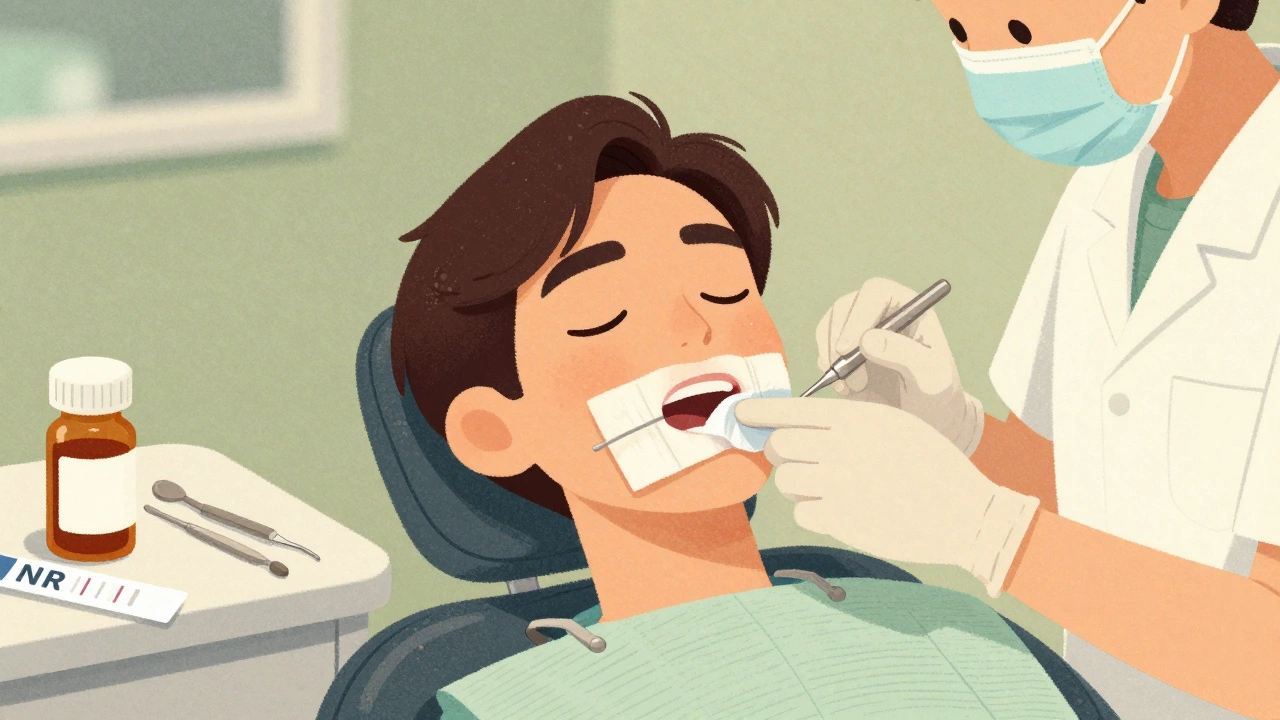
Getting a tooth pulled or a deep cleaning while on blood thinners can feel scary. You’ve heard stories about excessive bleeding, hospital visits, or worse-clots forming because you stopped your medication. The truth? Most dental work is safe to do without changing your blood thinner routine. In fact, stopping it can be riskier than keeping it. Dentists and medical experts now agree: for the vast majority of procedures, you should keep taking your blood thinners exactly as prescribed.
Why Stopping Blood Thinners Is Often More Dangerous
For years, dentists would tell patients to stop warfarin or other anticoagulants before any dental work. That changed after studies showed the real danger wasn’t bleeding-it was the clot. A 2022 review by the American Dental Association found that stopping even one blood thinner for a simple filling or cleaning increases the chance of a stroke or heart attack more than it reduces bleeding risk. The same holds true for newer drugs like apixaban, rivaroxaban, or dabigatran (known as DOACs). These drugs are now used in about 60% of new anticoagulant prescriptions, and stopping them for minor procedures offers no real benefit.Think of it this way: your body is constantly balancing between clotting and bleeding. Blood thinners tip that balance slightly toward bleeding to prevent dangerous clots. Interrupting them-even for a few days-can cause your blood to suddenly become too sticky. That’s when clots form in the heart, lungs, or brain. For someone with atrial fibrillation, a mechanical heart valve, or a history of deep vein thrombosis, that risk isn’t theoretical. It’s life-threatening.
Not All Dental Procedures Are the Same
Dentists now classify procedures by how much they’re likely to cause bleeding. This helps decide whether you need to adjust your meds or just manage the bleeding better.- Low-risk: Routine checkups, X-rays, cleanings, and fillings. No need to change anything. Your blood thinner stays on.
- Low-moderate risk: Root canals, deep scaling, gum treatments. Still safe with your medication. Some dentists may ask you to skip your morning dose if it’s a DOAC, but only if it’s convenient.
- Moderate risk: Removing one to three teeth, gum surgery, crown prep. Most patients can proceed without stopping. If your INR (a blood test for warfarin users) is under 3.5, you’re fine. Higher than that? Talk to your doctor first.
- High-risk: Multiple extractions, jaw surgery, complex implant work. These are rare. Even here, stopping anticoagulants isn’t automatic. Many cases can be handled in stages, with local techniques to control bleeding.
One big mistake? Trying to remove three back teeth in one visit. That’s asking for trouble. Better to do one tooth at a time, spaced a week apart. Less stress on your body, less bleeding, and safer overall.
INR Levels Matter-But Only for Warfarin Users
If you’re on warfarin (brand names like Coumadin or Jantoven), your doctor likely checks your INR regularly. This number tells how long your blood takes to clot. For dental work:- Low-risk procedures: INR under 3.5 is safe
- Low-moderate risk: INR under 3.0 is ideal
- Moderate risk: INR under 3.5 is acceptable with proper hemostasis
If your INR is above these levels, your dentist won’t proceed without checking with your doctor. But here’s the catch: if you’re on a DOAC (like Eliquis, Xarelto, or Pradaxa), INR doesn’t even apply. These drugs don’t show up on standard INR tests. That’s why your dentist needs to know exactly which drug you’re taking, not just that you’re on a "blood thinner."
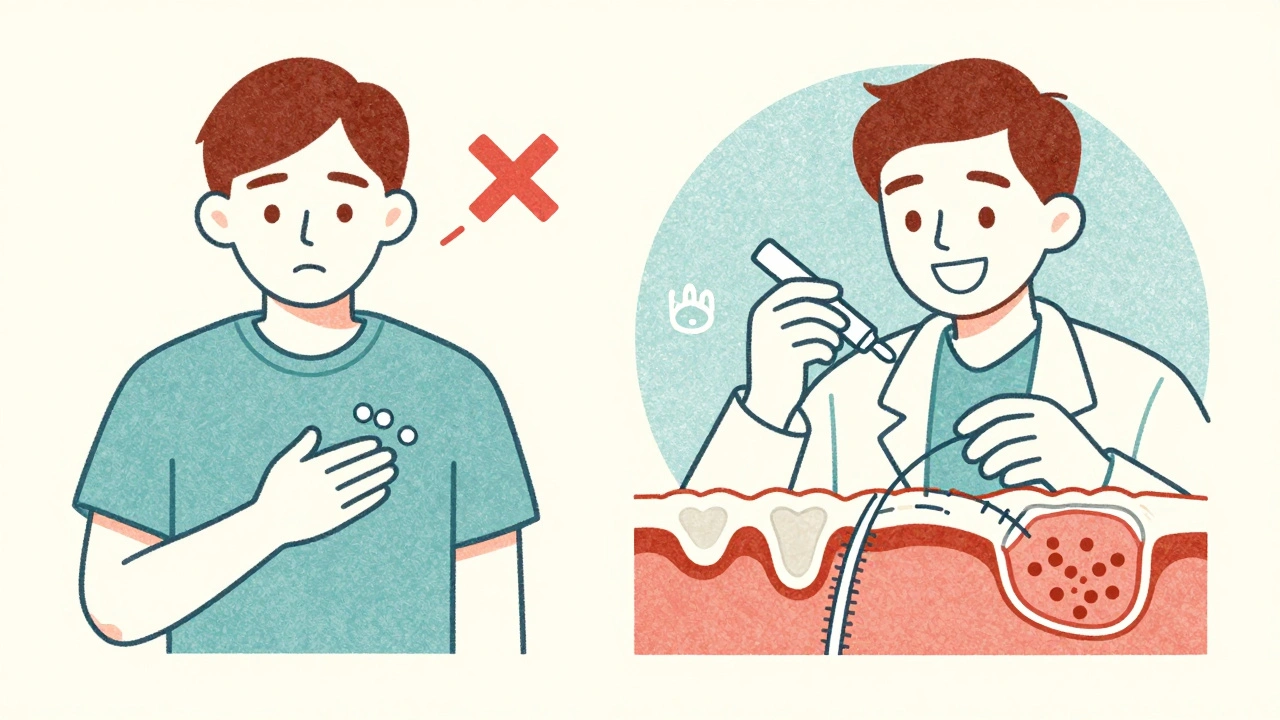
What to Do Before Your Appointment
Don’t show up to the dentist without preparing. Here’s what to do:- Bring your medication list. Include the name, dose, and when you last took it. Don’t just say "I take blood thinners." Say "I take apixaban 5mg twice daily."
- Don’t stop your meds unless your doctor says so. Even if your dentist suggests it, get confirmation from your cardiologist or anticoagulation clinic. Most don’t need to be stopped.
- Ask about your INR. If you’re on warfarin, get your INR checked within 7 days before your appointment. If it’s too high, your doctor might delay your dental work-not stop your meds.
- Tell your dentist about other drugs. NSAIDs like ibuprofen or aspirin can increase bleeding risk. So can some antibiotics and antifungals. Your dentist needs to know everything you’re taking.
How Dentists Control Bleeding Without Stopping Your Meds
You don’t need to stop your blood thinner to have a safe extraction. Dentists have tools and tricks:- Tranexamic acid mouthwash. A special rinse (usually 5% concentration) is swished for 1-2 minutes after the procedure, then spit out. It helps clots form faster. You can use it every 2 hours for up to 24 hours. It’s safe, non-prescription, and lasts 5 days if refrigerated.
- Stitches and pressure. Even if you’re on blood thinners, sutures and gauze pressure work just fine. Dentists often use absorbable sutures and pack the socket with hemostatic gels.
- Timing matters. For DOACs, scheduling your extraction at least 4 hours after your last dose lowers bleeding risk. That’s because the drug’s concentration in your blood drops naturally over time.
- Local techniques. Using epinephrine in numbing shots helps constrict blood vessels. Avoiding bone drilling near major vessels reduces bleeding sources.
Studies show that with these methods, bleeding complications are rare-even in patients on full-dose anticoagulation. One study from the University of Texas found that only about 5% of patients on warfarin had any noticeable bleeding after dental work, and nearly all of it was minor and stopped easily.
What to Do After Your Procedure
Follow these steps to avoid problems at home:- Don’t rinse or spit for 24 hours. Swishing can dislodge the clot. Just let saliva pool and swallow gently.
- Use ice packs. On your cheek for 15 minutes on, 15 minutes off. Helps reduce swelling and bleeding.
- Stick to soft foods. No crunchy, spicy, or hot foods for 2-3 days.
- Don’t smoke. Smoking delays healing and increases bleeding risk.
- Call your dentist if: Bleeding doesn’t stop after 2 hours of pressure, you’re swallowing blood constantly, you feel dizzy, or your heart races. These aren’t normal.

Special Cases: Younger Patients and Complex Health Situations
Blood thinners aren’t just for older adults anymore. You’re more likely to see patients in their 20s and 30s on these drugs now. Why? A 25-year-old athlete with a new diagnosis of atrial fibrillation. A 28-year-old woman after a pulmonary embolism postpartum. A 32-year-old with factor V Leiden after a long flight. These cases are rising-and they need special care.If you’re pregnant, have liver or kidney disease, or are on multiple blood thinners (like aspirin plus clopidogrel), your risk profile changes. Your dentist must work with your doctor to tailor the plan. For example, if you’re on dual antiplatelet therapy (aspirin + Plavix), guidelines say you can keep aspirin but pause the other drug for a day if you’re having a moderate-risk procedure.
What’s Changing in 2025?
Guidelines keep improving. More dental offices now have point-of-care INR machines, so they can check your clotting time right in the chair. Some clinics are testing personalized bleeding risk scores based on your age, kidney function, and medication history. In the next few years, we’ll likely see apps that sync your anticoagulant schedule with your dental appointments to remind you what to do before and after.Right now, 78% of U.S. dental practices follow the ADA’s 2022 guidelines. That’s a big jump from just five years ago. The message is clear: blood thinners are not a barrier to dental care. They’re a factor to manage-with knowledge, planning, and teamwork between you, your dentist, and your doctor.
Frequently Asked Questions
Should I stop my blood thinner before a tooth extraction?
No, not for most cases. Stopping warfarin or DOACs for a single extraction increases your risk of stroke or clot without significantly reducing bleeding. Only consider stopping if you’re having multiple extractions or major surgery-and even then, only after consulting your doctor. Most dentists can safely manage bleeding with local techniques.
Can I take ibuprofen after a tooth extraction if I’m on blood thinners?
No. Ibuprofen and other NSAIDs (like naproxen) increase bleeding risk when combined with anticoagulants. Use acetaminophen (paracetamol) instead for pain. Always check with your dentist or pharmacist before taking any over-the-counter meds.
How do I know if I’m on a DOAC or warfarin?
Check your prescription bottle. Warfarin is usually listed as "warfarin sodium" or by brand names like Coumadin or Jantoven. DOACs include apixaban (Eliquis), rivaroxaban (Xarelto), dabigatran (Pradaxa), and edoxaban (Savaysa). If you’re unsure, call your pharmacy or doctor. This matters because DOACs don’t require INR checks, and their management is different.
Is it safe to get a deep cleaning (scaling and root planing) on blood thinners?
Yes. Deep cleaning is considered low-moderate risk. Studies show no increased bleeding when patients continue their anticoagulants. Dentists use local hemostatic measures like gauze, sutures, and tranexamic acid rinses to control bleeding. No medication changes are needed.
What if my INR is too high for my dental appointment?
If your INR is above 3.5 for a simple procedure or above 3.0 for a deeper cleaning, your dentist will likely delay the work until you consult your doctor. The doctor may adjust your warfarin dose, but they won’t stop it entirely. Never adjust your dose yourself. Always get written approval from your anticoagulation clinic before proceeding.
Declan Flynn Fitness
December 1, 2025 AT 23:11
Just had a root canal last month on Eliquis-no issues. Dentist used tranexamic acid rinse and gave me ice packs. Zero bleeding past 30 mins. Seriously, don’t panic. Your dentist knows what they’re doing if they’re following ADA guidelines. Just bring your med list and chill.
Jack Arscott
December 2, 2025 AT 17:19
YES. This is the info I needed. 🙌 I was about to cancel my cleaning because I thought I had to stop Xarelto. So relieved. Sharing this with my mom too.
Lydia Zhang
December 3, 2025 AT 17:44
Interesting
Michelle Smyth
December 5, 2025 AT 10:17
How quaint-the medical-industrial complex has finally deigned to acknowledge that bleeding isn’t the existential threat it was once mythologized to be. The real paradigm shift lies not in dentistry’s newfound competence, but in the systemic abandonment of the outdated, fear-based paternalism that once dictated anticoagulant discontinuation. We’ve moved from dogma to epistemological humility. One might even say this is the death rattle of the old guard’s therapeutic nihilism.
Priyam Tomar
December 7, 2025 AT 05:15
Everyone’s acting like this is revolutionary. Newsflash: I’ve been on warfarin for 12 years and never stopped it for a cleaning. Your dentist is just catching up. Also, why are people still asking if they can take ibuprofen? It’s 2025. Acetaminophen is the only safe option. Stop being lazy.
Irving Steinberg
December 8, 2025 AT 20:22
So basically if you're on blood thinners you can't even take tylenol without a PhD in pharmacology? Just let me die in peace
Kay Lam
December 8, 2025 AT 23:23
I’m a 54-year-old woman on apixaban after a PE and I’ve had three extractions in the last year-all while staying on my meds. My dentist uses that tranexamic acid rinse and it works like magic. I didn’t even need to change my routine. The hardest part was convincing my cardiologist not to overreact. He wanted me to stop it for two days. I showed him the ADA guidelines and he just sighed and said fine. Point is: you know your body better than anyone. Bring the facts. Be calm. Be clear. And don’t let anyone scare you into doing something riskier than just staying on your meds.
Patrick Smyth
December 10, 2025 AT 12:41
I can’t believe people are still arguing about this. My wife had a tooth pulled last week and she was bleeding for hours. She didn’t stop her meds and now she’s on antibiotics and in pain. So much for your ‘safe’ guidelines. I don’t care what studies say-I saw the blood. This is not safe.
Declan Flynn Fitness
December 10, 2025 AT 14:56
Patrick, did she use the rinse? Or just gauze? Tranexamic acid is a game-changer. If she didn’t use it, that’s not the guideline failing-that’s execution. Also, bleeding for hours isn’t normal. Should’ve called the dentist sooner. 2 hours max is the rule.
Souvik Datta
December 10, 2025 AT 15:33
This is beautiful. Medicine is finally remembering that the body is not a machine to be broken and fixed, but a system to be respected. Blood thinners are not enemies-they are allies. And dentists, once seen as mere technicians, are now becoming true healers who collaborate with the whole person. This is not just dentistry. This is wisdom.
James Steele
December 12, 2025 AT 08:33
Let’s be real-this is just the latest iteration of clinical virtue signaling wrapped in ADA branding. We’ve replaced the old ‘stop it’ dogma with a new ‘never stop it’ orthodoxy. Where’s the nuance? Where’s the individualized risk stratification? You’re now replacing one form of medical authoritarianism with another, dressed up in the language of ‘evidence.’ And let’s not forget: those ‘point-of-care INR machines’? Half of them are calibrated wrong. The data’s only as good as the tech behind it. So yes, keep your meds-but don’t treat this like gospel.
Sean McCarthy
December 13, 2025 AT 18:45
According to the ADA 2022 guidelines, 78% of U.S. dental practices are compliant. However, according to the CDC’s 2024 National Dental Survey, only 42% of dentists document the specific anticoagulant type, and 68% of patients are unable to name their drug correctly. Furthermore, 31% of patients who reported ‘no bleeding’ after extraction had subclinical hematomas confirmed via ultrasound. Therefore, while the guidelines are statistically sound, real-world adherence and patient literacy remain critical failure points. You are not safe just because you didn’t bleed. You are safe only if you are monitored, informed, and compliant. And most aren’t.
Walker Alvey
December 15, 2025 AT 03:31
Wow. So we’ve turned dental care into a cult. ‘Bring your med list.’ ‘Don’t stop your meds.’ ‘Use the rinse.’ ‘Trust the system.’ When did dentistry become a spiritual practice? Next they’ll be handing out pamphlets titled ‘The Gospel of Tranexamic Acid’ and requiring patients to recite the ADA guidelines before getting a filling. Wake up. You’re not a patient. You’re a compliance metric.