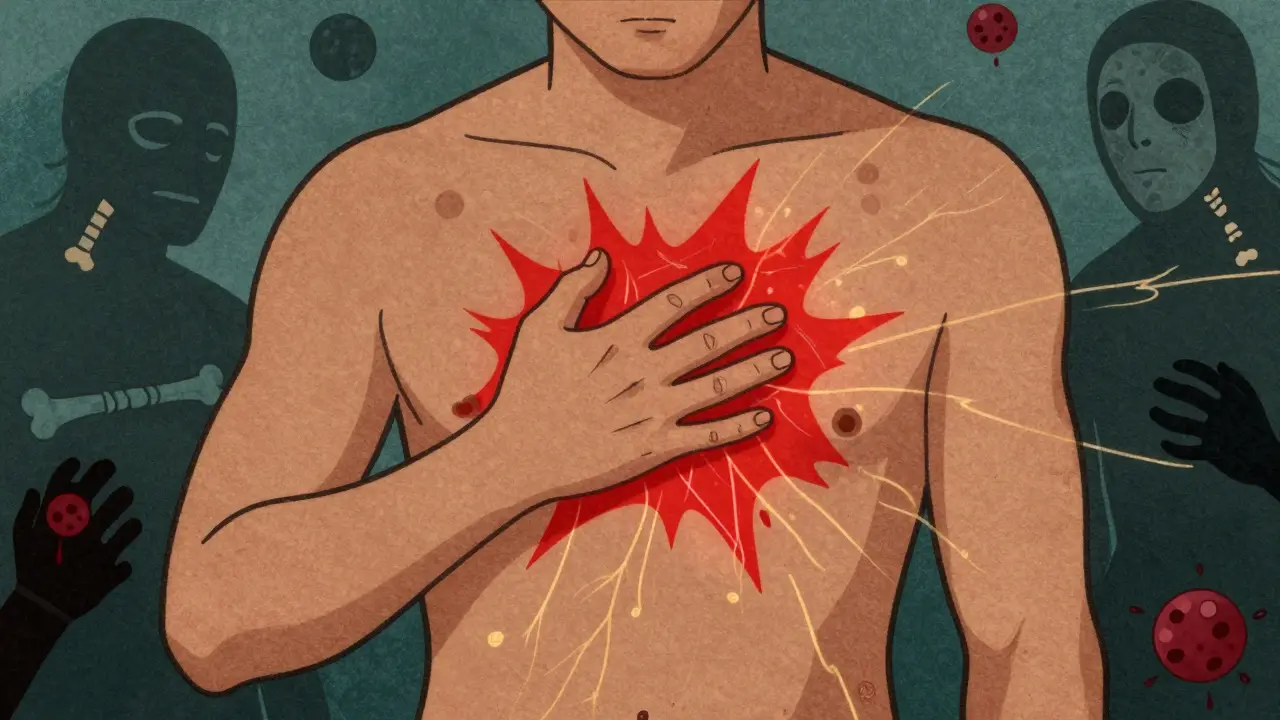
When you’re in pain - joints swollen, breathing tight, skin burning - corticosteroids can feel like a miracle. Within two days, the fever breaks. The swelling drops. You can breathe again. But what happens after the relief fades? That’s where the real story begins.
How Corticosteroids Work (And Why They’re So Fast)
Corticosteroids, like prednisone and hydrocortisone, are synthetic versions of cortisol, the stress hormone your body makes naturally. They don’t just reduce pain - they shut down inflammation at the source. That’s why they work faster than anything else. While a DMARD like methotrexate might take weeks to show results, a single dose of prednisone can cut joint swelling in half within 48 hours. For someone having a lupus flare or a severe asthma attack, that speed isn’t just helpful - it’s life-saving.
Doctors use them in three main ways: pills (the most common), shots into joints or muscles, and inhalers or creams for localized issues. A cortisone shot in a sore knee might take a week to kick in, but once it does, relief can last weeks or even months. That’s why athletes and older adults with arthritis often turn to them. But here’s the catch: the faster they work, the more damage they can do over time.
The Immediate Costs of Quick Relief
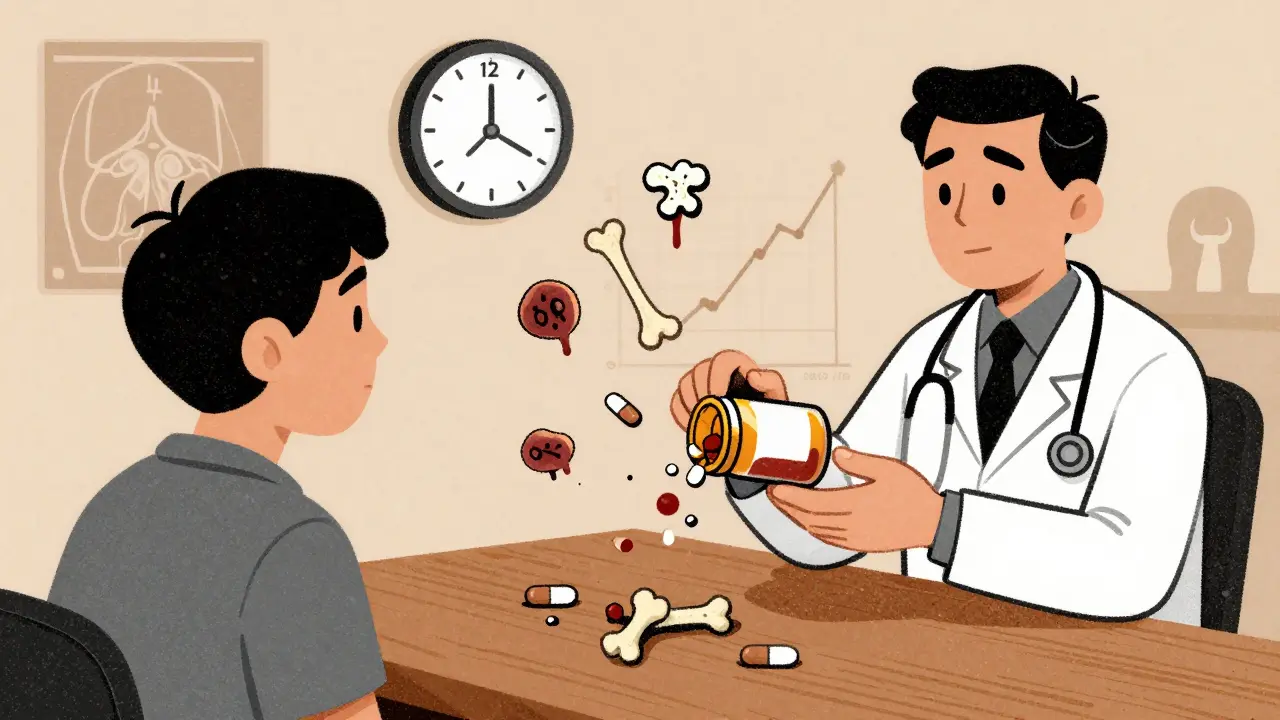
Even a short course - say, five to ten days - isn’t harmless. A 2021 study tracking 1.5 million patients found that within just 30 days of starting corticosteroids, the risk of sepsis jumped by 430%. Venous blood clots rose by 230%. Bone fractures went up by 90%. These aren’t rare side effects. They’re predictable.
Why? Because corticosteroids don’t just calm inflammation. They weaken your immune system, thin your bones, spike your blood sugar, and keep your body in a constant state of stress. Even healthy people can develop high blood pressure or blood sugar spikes after a short course. One patient on Reddit described getting moon face and bloating after just 10 days of 10mg prednisone. That’s not unusual. In fact, 87% of people in a 2023 survey of steroid users reported weight gain - averaging over 12 pounds in eight weeks.
And it’s not just physical. Insomnia hits 63% of users. Mood swings, anxiety, and even panic attacks are common. One ER nurse told a support group she went from calm to crying over spilled coffee after a three-day steroid course. She didn’t know it was the medication until her doctor asked if she’d been on steroids.
Long-Term Use: The Hidden Damage
If you’re on corticosteroids for more than three months, the risks shift from temporary to permanent. Your bones start breaking down at 3-5% per month. That’s faster than post-menopausal osteoporosis. By six months, 8% of users develop osteoporosis - and many never fully recover bone density, even after stopping.
Cataracts form. Diabetes appears. Muscle wasting sets in. A 2023 meta-analysis found that every extra month of steroid use beyond three months increased 10-year death risk by nearly 5%. That’s not a small trade-off. It’s a life-altering cost.
And here’s the worst part: many people don’t realize they’re at risk until it’s too late. A 2022 audit found that only 42% of primary care doctors follow basic monitoring rules - like checking bone density or blood sugar - for patients on long-term steroids. That means over half are flying blind.
When Corticosteroids Are Worth It
They’re not always the enemy. In emergencies, they’re irreplaceable. For a peritonsillar abscess, steroids cut the need for surgery by 27%. In severe asthma, they reduce hospital stays by almost two days. For autoimmune flare-ups - lupus, rheumatoid arthritis, vasculitis - they’re often the only thing that stops organ damage.
The key is knowing when to use them and when to stop. The American College of Rheumatology says: no more than 12 weeks for systemic use. The European League Against Rheumatism says: no more than 5mg daily beyond six months without a specialist review. And if you’re on steroids for longer than two weeks? You need a taper. Not a stop. A slow, controlled wean. Otherwise, your adrenal glands - which shut down during steroid use - won’t wake up. That can cause life-threatening low blood pressure and fatigue.
What You Can Do to Protect Yourself
If your doctor prescribes corticosteroids, ask these questions:
- Is this the shortest possible course? Can we try something else first?
- What’s the exact daily dose? (Lower is better - 5mg prednisone is safer than 20mg.)
- Will I need a taper? How long will it take?
- Do I need a bone scan, blood sugar check, or eye exam?
- Should I take calcium and vitamin D? Or even a bone-strengthening drug like zoledronic acid?
For anyone on more than 7.5mg daily for over three months, guidelines say you should get a DEXA scan. You should be taking 1,200mg of calcium and 800IU of vitamin D daily. And if you’re on 20mg or more for over a month, you may need an annual IV bone treatment. Yet most patients never hear this.
The Bigger Problem: Overuse
Here’s the uncomfortable truth: nearly half of all corticosteroid prescriptions in the U.S. are for conditions where they don’t help. Upper respiratory infections. Back pain. Sinus pressure. These are viral. Steroids don’t cure viruses. They just mask symptoms - while increasing your risk of pneumonia, blood clots, and hospitalization.
A 2021 study found that 21% of U.S. adults got a steroid prescription for a cold or bronchitis - conditions where the benefit is near zero. That’s 22 million prescriptions a year. And it’s costing the system $1.2 billion in avoidable complications.
Doctors are starting to catch on. In 2024, Medicare Advantage plans began requiring pre-approval for any steroid course longer than 10 days. Electronic health records now flag inappropriate prescriptions in 87% of U.S. hospitals. It’s a slow shift - but it’s happening.
The New Hope: Better Alternatives
There’s light at the end of the tunnel. In December 2023, the FDA approved the first selective glucocorticoid receptor modulator - fosdagrocorat. It works like prednisone to reduce inflammation but causes 63% less high blood sugar and weight gain. It’s not a magic bullet, but it’s a step toward safer control.
For many chronic conditions, biologics and DMARDs are now preferred long-term. They take longer to work - weeks, not days - but they don’t wreck your bones or kidneys. The goal now isn’t just to treat inflammation. It’s to treat it without destroying your body in the process.
Final Thought: Power With Limits
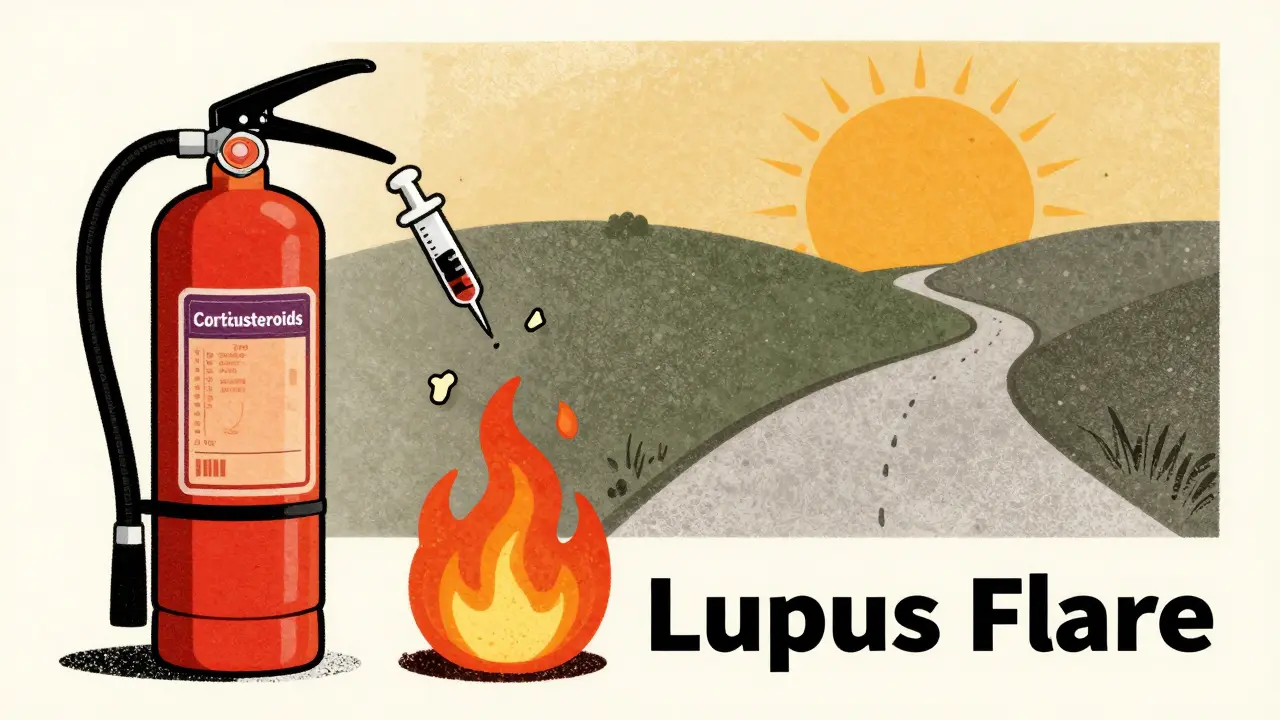
Corticosteroids are the fire extinguisher of medicine. You don’t want to live without one. But you don’t want to leave it running.
If you’ve been prescribed steroids, take them seriously. Don’t skip the follow-ups. Don’t ignore the side effects. Ask for a plan - not just a script. And if you’ve been on them for months without a clear end date, talk to your doctor. There’s almost always a better path forward.
The relief is real. But so are the consequences. Choose wisely - and don’t let speed blind you to the cost.
Can corticosteroids cause permanent damage even after stopping?
Yes. While some side effects like weight gain and mood swings reverse after stopping, others don’t. Bone loss from long-term use can lead to permanent osteoporosis. Cataracts, diabetes, and muscle wasting may persist even after discontinuation. Studies show 12% of long-term users develop cataracts, 8% get osteoporosis, and 7% develop steroid-induced diabetes - often requiring lifelong management.
Is it safe to stop prednisone suddenly after a short course?
If you’ve taken prednisone for less than two weeks, stopping abruptly is usually safe. But if you’ve been on it for more than two weeks, your adrenal glands may have shut down. Stopping suddenly can trigger adrenal insufficiency - causing fatigue, nausea, low blood pressure, and even shock. Always follow a taper schedule, even if your doctor didn’t mention it. A typical taper is 7-14 days, depending on dose and duration.
Are steroid injections safer than pills?
Local injections - like into a knee or shoulder - expose your body to much less steroid than pills. That makes them safer overall. But they’re not risk-free. Repeated injections can damage cartilage and tendons. And if the injection leaks into the bloodstream, you still get systemic side effects. Most doctors limit joint injections to 3-4 times per year per joint. For long-term relief, physical therapy or disease-modifying drugs are better options.
Can corticosteroids cause weight gain even at low doses?
Yes. Even 5mg of prednisone daily can cause weight gain over time. It’s not just water retention - steroids increase appetite and change how your body stores fat, especially around the abdomen and face. In one survey, patients on 10mg daily gained an average of 12.4 pounds in eight weeks. The weight often returns after stopping, but it can take months and requires strict diet and exercise.
Why do doctors prescribe steroids for colds if they don’t work?
Many doctors prescribe them out of habit, patient pressure, or misdiagnosis. Patients expect something strong for a bad cold, and steroids offer quick (though false) relief. But research shows they provide no meaningful benefit for viral infections like bronchitis or sinusitis. In fact, they increase the risk of pneumonia and delay recovery. In 2023, 47% of all corticosteroid prescriptions were for conditions with no proven benefit - a major quality-of-care issue.