
You've been at the pharmacy or the doctor's office, and the conversation turns to cost. Your provider suggests a "cheaper version" of your medication. But then you hear two different terms: generic and biosimilar. If you're not a pharmacist, these sound like the same thing-a low-cost alternative to a brand-name drug. But in reality, they are fundamentally different animals. Choosing between them isn't about picking a "better" drug, but about understanding the molecular science that determines how your body reacts to the treatment.
The core problem is that while both aim to save you money, the way they are made and regulated differs wildly. A generic is a chemical copy; a biosimilar is a biological approximation. For most people, this is a technicality, but for those treating complex autoimmune diseases or cancer, the distinction matters for your wallet and your long-term health strategy.
What exactly are we talking about?
To get this right, we first need to define our terms. Generic Drugs is a chemically synthesized small-molecule version of a brand-name drug that is an exact replica in terms of active ingredients, dosage, and strength. Think of it like a recipe for a cake: if you have the exact same ingredients and measurements, the cake comes out identical every single time.
On the other hand, Biosimilars are large-molecule biologic products derived from living organisms that are highly similar, but not identical, to a reference biologic drug. Using the cake analogy, a biosimilar is more like a sourdough bread. Because it uses living yeast and bacteria, you can't make two loaves exactly the same, even with the same recipe. They are "highly similar," but the molecular structure has tiny, natural variations.
Why does this matter? Because biologics-the drugs that biosimilars mimic-are used for the "heavy lifting" in medicine: oncology, rheumatoid arthritis, and chronic inflammatory bowel disease. They aren't just pills; they are complex proteins that interact with your immune system in intricate ways.
The Technical Breakdown: Small Molecules vs. Big Proteins
The difference comes down to size and source. Generics are small molecules, typically under 1,000 daltons in weight. They are made in a lab using chemical reactions. Because they are simple, the FDA just needs to see "bioequivalence"-essentially proving that the generic drug hits your bloodstream at the same rate and concentration as the brand name. This is why your generic atorvastatin for cholesterol works exactly like the brand-name Lipitor.
Biosimilars are a different story. These are massive proteins, often exceeding 10,000 daltons, grown inside living cells, such as Chinese hamster ovary cells. Because they are grown, not synthesized, they have three-dimensional shapes. A tiny tweak in the folding of that protein could, in theory, change how the drug works or whether your body sees it as a foreign invader (an immunogenicity risk).
| Feature | Generic Drugs | Biosimilars |
|---|---|---|
| Composition | Small molecule / Chemical | Large molecule / Biological |
| Manufacturing | Chemical synthesis | Living cell cultures |
| Similarity | Identical replica | Highly similar (not identical) |
| Typical Cost Savings | 80% to 85% | 15% to 20% |
| Storage | Often room temperature | Strict cold chain (2-8°C) |
Money and Access: The Real-World Trade-offs
If you're looking at the bottom line, generics win on price. They can slash your medication costs by over 80%. Biosimilars provide savings too, but they are more modest-usually around 15-20% less than the reference biologic. Why the gap? Because making a biosimilar is incredibly expensive. It costs roughly $100-250 million and takes up to a decade to develop, whereas a generic might cost $2-3 million and be ready in a few years.
Then there is the "substitution shuffle." In most U.S. states, a pharmacist can automatically swap a brand-name drug for a generic without calling your doctor. Biosimilars aren't that simple. Only a specific subset called Interchangeable Biosimilars-which have passed extra tests to prove that switching back and forth doesn't affect safety-can be swapped at the pharmacy level. Even then, your doctor often needs to be notified within 72 hours.
For a patient with Stage IV colon cancer using bevacizumab, switching to a biosimilar can mean dropping an out-of-pocket cost from $450 to $75 per infusion. That's a massive win. But for someone with a sensitive inflammatory bowel disease, the fear of a "switch" causing a flare-up is a real psychological burden, even if the clinical data says the risk is low.

Is it Safe to Switch?
This is the question everyone asks. The short answer is yes, but the long answer depends on your condition. For cardiovascular drugs, a landmark 2019 study in JAMA looked at 47 trials and found absolutely no difference in efficacy between generics and brand names. It's a safe bet.
For biologics, the evidence is also strong, though slightly more nuanced. A 2022 review of over 120 studies on infliximab (used for RA and Crohn's) found no meaningful difference in safety or efficacy between the biosimilar and the original. However, because biologics are proteins, there is a small risk that your immune system might react to a biosimilar differently than it did to the original. This is why doctors monitor you closely during the first few months of a switch.
Interestingly, the FDA's Adverse Event Reporting System actually showed that biosimilar infliximab had 0.12 adverse events per 100 patient-years, which was actually slightly lower than the reference product's 0.15. In most cases, the "fear of the switch" is more common than an actual adverse reaction.
How to Navigate the Choice with Your Doctor
If you're facing a decision, don't just ask "is it cheaper?" Ask about the specifics. If you're on a small-molecule drug, the generic is almost always the right move. If you're on a biologic, your conversation should focus on three things: stability, delivery, and support.
First, check the delivery device. As some pharmacists have noted, switching to a biosimilar like Basaglar might mean a different pen design. If you're older or have dexterity issues, a different device can lead to dosing errors. Second, look into manufacturer support. Because biosimilars are expensive to make, companies like Amgen often provide "SupportPlus" programs that offer financial assistance and education that you won't find with a generic drug.
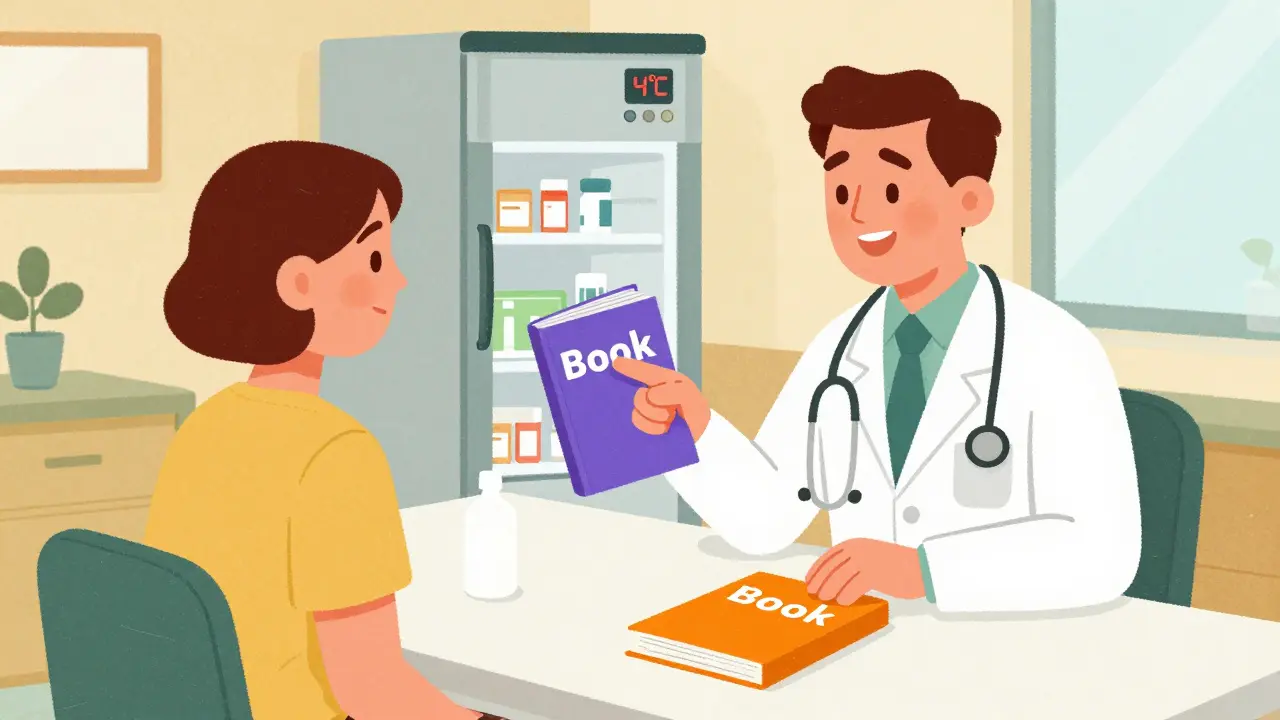
Third, understand the therapeutic equivalence of your specific drug. Use the FDA's "Purple Book" for biologics and the "Orange Book" for generics to see exactly what options are available. If your doctor is hesitant, it might be because they aren't familiar with the latest biosimilar data-only about 58% of non-specialist physicians feel "very confident" prescribing them, despite the robust science backing them.
Looking Ahead: The Future of Your Pharmacy Bill
The landscape is shifting fast. We are seeing a wave of new approvals, including interchangeable insulins and monoclonal antibodies. The Inflation Reduction Act has already started making biosimilars more attractive for Medicare patients by removing penalties for providers who switch. This means you'll likely see more biosimilar options at your clinic in the next few years.
We're also moving toward "next-generation" biosimilars with better delivery systems-think easier injectors or longer-lasting formulas. While patent battles often delay these drugs from hitting the market, the trend is clear: the era of the expensive, single-source biologic is ending.
Can a biosimilar be exactly the same as a brand-name biologic?
No. Because biologics are made from living cells, it is scientifically impossible to create an exact copy. However, biosimilars are "highly similar," meaning any minor differences in the molecular structure do not affect the drug's safety, purity, or potency.
Will my insurance cover the switch to a biosimilar?
Most insurance companies actually prefer biosimilars because they are cheaper. However, you may need to go through a "prior authorization" process, which can be more complex for biosimilars than for generics.
What is an "interchangeable" biosimilar?
An interchangeable biosimilar is a biosimilar that has met a higher regulatory bar to prove that switching between it and the reference product multiple times doesn't increase safety risks or reduce efficacy. These are the only biosimilars that can typically be swapped at the pharmacy without a new prescription.
Do generics and biosimilars require different storage?
Yes. Many generic drugs are stable at room temperature. Biosimilars, being complex proteins, almost always require a strict "cold chain," typically meaning they must be kept between 2-8°C to prevent the proteins from breaking down.
Are biosimilars safe for long-term use?
Yes. Clinical data and real-world evidence, including studies on TNF inhibitors for rheumatoid arthritis, show that biosimilars have safety and efficacy profiles comparable to their reference products over the long term.
Next Steps for Patients
If you're currently on a brand-name medication and want to lower your costs, start by identifying the drug type. If it's a small-molecule pill, ask your pharmacist if a generic is available. If it's an injectable or infusion biologic, ask your specialist about biosimilar options.
For those who are anxious about switching, ask your doctor to set up a monitoring schedule for the first 90 days. This ensures that any rare immunogenic reactions are caught early. If you're struggling with the cost of a biosimilar, check if the manufacturer offers a patient assistance program to bridge the gap.
Jay Vernon
April 5, 2026 AT 02:42
This is so helpful! Thanks for making it easy to understand 😊👍
Grace Lottering
April 6, 2026 AT 17:48
Big Pharma just wants you on the cheapest version so they can pocket the difference. The "similarity" is a lie to keep us docile.
Timothy Burroughs
April 7, 2026 AT 04:02
only in america do we have this mess of a system where you gotta read a whole manual just to know if your meds are fake or not lol pathetic
Michael Flückiger
April 8, 2026 AT 00:13
It is wonderful that we have these options available now!!! Patients deserve every chance to save money while staying healthy!!!
Jitesh Mohun
April 8, 2026 AT 16:49
listen up if you dont get this yet just think of it as a generic but for proteins stop overcomplicating it and just take the savings
Victoria Gregory
April 9, 2026 AT 16:05
I think it's all about finding a balance between our financial peace and our physical well-being... ✨ Life is so complex, but science helps us navigate the fog!! 🌿
Christopher Cooper
April 11, 2026 AT 12:25
The distinction regarding the "cold chain" is a vital point. Many people don't realize that a simple mistake in storage can render these expensive proteins completely useless, which makes the biosimilar transition even more precarious for some patients.
Vivek Hattangadi
April 12, 2026 AT 12:55
That's a great point about the storage! I've seen a few people struggle with the logistics of keeping their meds chilled during travel, but with a little planning and the right cooler bags, it's totally manageable. We can all support each other in figuring out the best ways to handle these requirements!
Jamar Taylor
April 12, 2026 AT 17:49
Keep pushing for those savings, everyone! It's all about taking control of your health journey and not letting the costs hold you back from the best treatment!
Rupert McKelvie
April 14, 2026 AT 10:14
It is quite reassuring to see that the clinical data for infliximab shows such minimal difference. I believe more people will feel confident switching once they see these actual numbers rather than relying on hearsay. It is a positive step forward for healthcare affordability across the board. The fact that adverse events were actually lower in some cases is a brilliant piece of evidence that should be highlighted more. We should trust the peer-reviewed science over the fear of change. It is simply a matter of education and patience. When we look at the long-term outcomes, the biosimilars are clearly doing their job. I am optimistic that we will see even more of these options soon. It will either lower the burden on the NHS or private insurance. Either way, the patient wins. Let us keep focusing on the evidence and stay positive about these advancements.