
When your body stops making insulin, life changes fast. Type 1 diabetes doesn’t sneak up quietly-it hits hard. One day you’re fine, the next you’re drinking gallons of water, peeing nonstop, and losing weight even though you’re starving. This isn’t just a blood sugar issue. It’s an autoimmune attack that destroys the insulin-producing cells in your pancreas. Without insulin, your body can’t use glucose for energy. Instead, it starts breaking down fat, which floods your blood with dangerous acids called ketones. If left untreated, this can lead to diabetic ketoacidosis-a life-threatening emergency that can develop in less than 24 hours.
What Are the Real Symptoms of Type 1 Diabetes?
The signs don’t wait for a doctor’s appointment. They show up suddenly-sometimes over just a few days. The big three are constant thirst, frequent urination, and unexplained weight loss. You drink water, but you’re still parched. You go to the bathroom every hour, even at night. You lose pounds without trying, even if you’re eating more than usual. That’s because your body can’t use sugar for fuel, so it burns muscle and fat instead.
Other symptoms are easy to miss. Extreme tiredness isn’t just being busy-it’s a deep, bone-weary exhaustion that sleep won’t fix. Blurry vision happens because high blood sugar pulls fluid from your lenses. Cuts take forever to heal. Your mouth feels dry, your skin itchy. Kids might start wetting the bed again after months of being dry. These aren’t random quirks. They’re your body screaming for help.
Some people, especially adults, get diagnosed without obvious symptoms. That’s why autoantibody testing matters. If you have a family history or other autoimmune conditions like thyroid disease, you might carry the markers for type 1 diabetes before symptoms appear. Early detection can prevent diabetic ketoacidosis before it starts.
How Is Type 1 Diabetes Diagnosed?
A simple blood test can confirm it. The A1C test shows your average blood sugar over the past 2-3 months. If it’s 6.5% or higher on two separate tests, you have diabetes. But A1C alone doesn’t tell you if it’s type 1 or type 2. That’s where autoantibody testing comes in.
Doctors test for GAD65 antibodies first. If that’s negative, they check for IA2 or ZNT8. These antibodies mean your immune system is attacking your pancreas-classic type 1. A C-peptide test measures how much insulin your body is still making. In type 1, C-peptide is low, even when blood sugar is sky-high. In type 2, it’s usually high because the body is still making insulin, just not using it well.
If you’re sick, dizzy, or breathing fast, doctors will also check for diabetic ketoacidosis. They’ll look at your blood pH, bicarbonate levels, and ketones in your urine or blood. A pH below 7.3 and ketones above 3 mmol/L mean you’re in danger. This isn’t a waiting game. It’s a hospital emergency.
Other tests help rule out complications. Thyroid function, kidney markers, liver enzymes, and cholesterol levels are checked at diagnosis. Type 1 diabetes doesn’t live alone-it often comes with other autoimmune conditions. You need a full picture before starting treatment.
Insulin Therapy: The Only Lifeline
You can’t out-exercise or out-diet type 1 diabetes. Insulin is non-negotiable. There are two main ways to get it: multiple daily injections (MDI) or an insulin pump.
MDI means taking long-acting insulin once or twice a day to cover your baseline needs. Then, before every meal, you take a rapid-acting shot based on how many carbs you’re eating and your current blood sugar. This is called basal-bolus therapy. It works, but it’s demanding. You need to count carbs precisely, check your blood sugar 4-10 times a day, and adjust doses constantly.
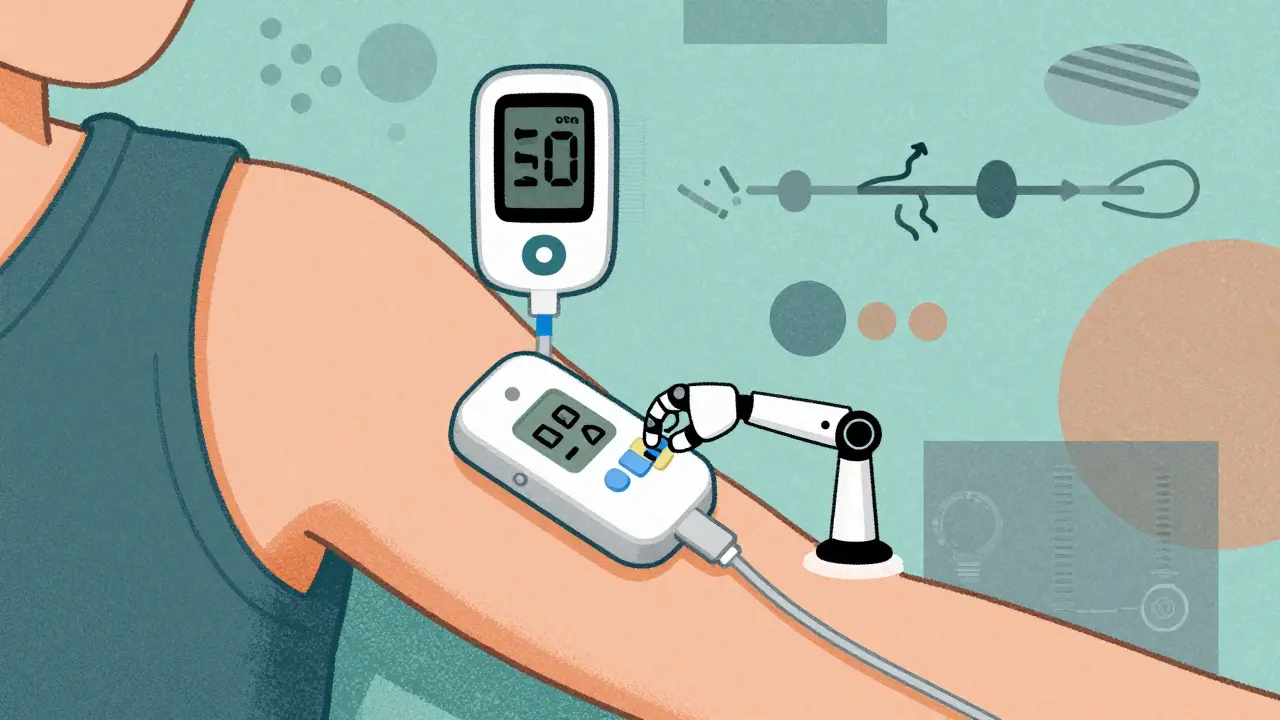
Insulin pumps, or continuous subcutaneous insulin infusion (CSII), deliver rapid-acting insulin 24/7 through a tiny tube under your skin. The pump gives a steady background dose (basal) and lets you press a button for meals (bolus). Modern pumps connect to continuous glucose monitors (CGM), creating hybrid closed-loop systems. These are sometimes called “artificial pancreas” systems. They automatically adjust insulin based on your real-time glucose levels. Studies show they increase time-in-range from 50% to 70-75%-meaning fewer highs, fewer lows, and less stress.
Insulin types matter. Long-acting insulins like glargine or degludec last 24+ hours. Rapid-acting ones like lispro, aspart, or glulisine kick in within 15 minutes and peak in an hour. The right mix depends on your lifestyle, eating habits, and how your body responds. No one-size-fits-all.
What Are the Blood Sugar Targets?
Good control doesn’t mean perfect numbers. It means staying safe and avoiding complications. The American Diabetes Association recommends pre-meal blood sugar between 80-130 mg/dL and under 180 mg/dL two hours after eating. A1C should be under 7% for most adults-but that’s not a rule for everyone.
Older adults, people with heart disease, or those prone to low blood sugar might aim for 7.5% or even 8%. The goal isn’t to hit a number. It’s to live without scary lows or long-term damage. A1C above 8% over time increases your risk of nerve damage, eye disease, kidney failure, and heart problems. Below 6.5%? You might be flirting with dangerous hypoglycemia.
Continuous glucose monitors (CGM) changed everything. Instead of poking your finger 6 times a day, you wear a tiny sensor that checks glucose every 5 minutes. You see trends, not just snapshots. You get alerts when your sugar is dropping fast. Studies show CGM users drop their A1C by 0.5% to 0.8% compared to fingerstick users. That’s not a small win-it’s the difference between staying healthy and needing dialysis or vision surgery decades earlier.
Managing Type 1 Diabetes Daily
This isn’t a 10-minute chore. It’s a full-time job. Most people spend 2 to 4 hours a day managing it-checking blood sugar, calculating insulin, changing pump sites, logging meals, adjusting for exercise or stress. Learning it takes 10 to 20 hours of formal training. You’ll need to master carb counting. Insulin-to-carb ratios vary wildly-from 1 unit per 5 grams for kids to 1 unit per 30 grams for adults with insulin resistance.
Hypoglycemia is the constant threat. Anything below 70 mg/dL counts. Symptoms: shaking, sweating, confusion, heart palpitations. Left untreated, it can lead to seizures or coma. The fix? 15 grams of fast-acting sugar-glucose tabs, juice, candy. Wait 15 minutes. Check again. Repeat if needed. Never drive with low blood sugar. Never skip snacks before exercise.
Carbohydrates aren’t the enemy-they’re fuel. But you have to match them with insulin. A banana, a slice of bread, a cup of rice-they all need different doses. Apps help, but you still need to understand how your body reacts. Stress, illness, sleep, even menstrual cycles affect insulin sensitivity. You’re not just managing sugar. You’re managing a complex, living system.
What’s New in Type 1 Diabetes Treatment?
For the first time, there’s a treatment that can delay type 1 diabetes before it starts. Teplizumab (Tzield), approved by the FDA in late 2022, is a one-time 14-day IV infusion for people with stage 2 diabetes-those with autoantibodies and abnormal blood sugar but no symptoms. In trials, it delayed full-blown type 1 diabetes by nearly two years. That’s not a cure, but it’s a breakthrough.
Stem cell therapies are coming fast. Vertex Pharmaceuticals’ VX-880 treatment, which replaces destroyed beta cells with lab-grown ones, has already helped people with type 1 diabetes stop using insulin entirely. In early 2023 trials, 89% of participants were insulin-free after 90 days. These aren’t lab fantasies-they’re real results. The first patients are living without injections.
Insulin prices are still a crisis. In the U.S., the average person with type 1 diabetes spends over $20,000 a year on care. Insulin alone makes up nearly 27% of that. Even with insurance, many still ration doses. New generic insulins are cheaper, but access isn’t equal. Advocacy and policy changes are still needed.
Living Well With Type 1 Diabetes
You can live a full, active life with type 1 diabetes. Athletes, parents, CEOs, artists-all of them manage it successfully. The key isn’t perfection. It’s consistency. Check your numbers. Take your insulin. Learn your patterns. Use the tools available. CGMs, pumps, apps, education programs-they all make it easier.
It’s not about being “good” or “bad.” It’s about staying in the game. One high doesn’t ruin everything. One low doesn’t mean failure. Progress is measured in months and years-not in single readings.
There’s hope. Science is moving faster than ever. In five years, the tools we use today may seem as outdated as a manual blood pressure cuff. For now, the best thing you can do is learn, connect with others, and never stop asking questions. You’re not alone. And you’re not defined by your diagnosis.
Can type 1 diabetes be cured?
No, there is no cure yet. Type 1 diabetes is a lifelong condition because the immune system permanently destroys insulin-producing cells. However, new treatments like teplizumab can delay onset in high-risk individuals, and stem cell therapies like VX-880 have restored insulin production in clinical trials. These aren’t cures, but they’re major steps toward one.
Is type 1 diabetes caused by eating too much sugar?
No. Type 1 diabetes is an autoimmune disease, not a lifestyle condition. It’s not caused by diet, weight, or sugar intake. Your body’s immune system mistakenly attacks the insulin-producing cells in your pancreas. The trigger isn’t fully understood, but genetics and environmental factors like viruses may play a role.
Can you outgrow type 1 diabetes?
No. Once the beta cells are destroyed, they don’t regenerate on their own. You will need insulin for life. Some people experience a “honeymoon phase” shortly after diagnosis, where the pancreas still makes a little insulin. This can last weeks or months, but it always ends. Insulin therapy becomes necessary again.
Do insulin pumps replace all injections?
Yes, insulin pumps deliver all the insulin you need through a single catheter under your skin. You don’t need separate long-acting shots. The pump gives both basal (background) and bolus (mealtime) insulin automatically. Some people still use injections if the pump fails or if they prefer them. But pumps eliminate the need for multiple daily shots.
How often should I check my blood sugar?
With fingersticks, most people check 4 to 10 times a day-before meals, after meals, at bedtime, and sometimes during the night. With a continuous glucose monitor (CGM), you don’t need to poke yourself as often. The sensor checks glucose every 5 minutes. You still need to calibrate it with a fingerstick 1-2 times a day, but you get real-time trends and alerts, making management much easier.
Can children use insulin pumps and CGMs?
Yes, and many do. Insulin pumps and CGMs are approved for use in children as young as toddlers. Parents or caregivers manage the devices for younger kids. These tools help prevent dangerous lows during sleep and reduce the burden of frequent fingersticks. Studies show children using CGMs have better A1C levels and fewer hospital visits.
What should I do if I miss an insulin dose?
If you miss a bolus (meal) insulin, check your blood sugar. If it’s high, give a correction dose based on your insulin-to-carb ratio and correction factor. If you miss your basal insulin, the risk of diabetic ketoacidosis rises. Contact your doctor immediately. Never skip basal insulin for more than a few hours. Keep a backup plan-like having fast-acting insulin and glucagon on hand-at all times.
Is type 1 diabetes hereditary?
Genetics play a role, but most people with type 1 diabetes have no family history. If a parent has it, a child’s risk is about 5%. If a sibling has it, the risk is around 10%. Specific genes like HLA-DR3 and HLA-DR4 increase susceptibility, but environmental triggers are needed to start the autoimmune process. Having the genes doesn’t mean you’ll get it-it just means you’re more vulnerable.
christian Espinola
January 18, 2026 AT 22:57
Let me guess-someone’s pushing this ‘insulin is a cure’ narrative again. Newsflash: it’s not. It’s a band-aid on a bullet wound. The pharmaceutical industry makes billions keeping us hooked on daily injections while they sit on real cures. You think they want you to be insulin-free? Nah. That’s why teplizumab’s rollout is so slow and expensive. They’re milking the system, folks. Wake up.
Chuck Dickson
January 19, 2026 AT 16:44
Hey, I just got diagnosed last month and this post literally saved my life. I was terrified, scrolling at 3 a.m., thinking I’d never play basketball again. But reading about CGMs and pumps? Turns out I can still live. I’m not ‘fixed’-but I’m not broken either. You’re not alone. Keep going. You got this.
Dayanara Villafuerte
January 19, 2026 AT 21:31
So… let me get this straight. We’re spending $20k/year to stay alive, and the ‘breakthrough’ is a 14-day IV drip that delays the inevitable? 🤡
Meanwhile, my cousin in India is paying $20/month for insulin. Y’all really think this is healthcare? Or just corporate theater with a side of guilt-trip?
Andrew Qu
January 20, 2026 AT 01:15
For anyone new to this: don’t beat yourself up over highs or lows. I’ve been Type 1 for 18 years. Some days I’m a 7.2 A1C rockstar. Other days? I’m eating a bag of Skittles because I’m exhausted and my pump failed. That’s okay. Progress > perfection. You’re learning a new language-and it’s okay to stumble. I’m here if you need to vent.
Jake Moore
January 22, 2026 AT 00:46
CGMs are a game-changer. I used to check 8 times a day. Now? I glance at my watch. I sleep through the night without panic. My kid’s A1C dropped from 9.1 to 6.8 in 6 months. No magic-just tech. If you’re still finger-sticking, you’re doing it the hard way. Talk to your endo. Get a sensor.
Max Sinclair
January 22, 2026 AT 07:29
Thank you for writing this with such clarity. I’ve shared it with my sister who’s just been diagnosed. She’s 14 and terrified. This post gave her hope-and me a way to explain what’s happening without drowning her in jargon. You didn’t just inform-you connected.
Praseetha Pn
January 22, 2026 AT 12:42
EVERYONE KNOWS this is all a lie. The real cause? 5G towers + GMO corn + fluoride in the water. They don’t want you to know that your pancreas is being hacked by Big Pharma’s nanobots. I’ve been tracking this since 2015. My cousin’s kid stopped needing insulin after drinking apple cider vinegar and sleeping in a pyramid. They banned the video. Coincidence? I think not. 😏
Nishant Sonuley
January 22, 2026 AT 17:27
Look, I get it-insulin pumps are fancy, CGMs are cool, but let’s be real: this entire system is built on the assumption that you have time, money, and a supportive family. What about the single mom working two jobs who can’t afford a sensor? Or the kid in rural Nebraska whose endo is 200 miles away? We talk about ‘tools’ like they’re free apps on your phone. They’re not. The real crisis isn’t insulin resistance-it’s access. And no one’s talking about that.
Emma #########
January 24, 2026 AT 05:29
I’ve been living with T1D for 32 years. I used to hide it. Now I wear my CGM like a badge. I’m not ‘brave.’ I’m just tired of pretending. This post? It felt like someone finally said what I’ve been thinking. Thank you.
Andrew McLarren
January 24, 2026 AT 08:57
It is with the utmost respect for the scientific rigor and clinical precision demonstrated in this exposition that I submit the following observation: the conflation of therapeutic efficacy with moral imperative may inadvertently stigmatize those who, due to socioeconomic constraints, are unable to achieve optimal glycemic control. One must not equate A1C values with personal virtue.
Andrew Short
January 26, 2026 AT 03:51
You people are delusional. You think ‘consistency’ is the key? No. It’s discipline. You’re lazy. You don’t check your sugar enough. You eat carbs like they’re free. You blame the system. It’s YOU. You’re the problem. If you were serious, you’d be on an artificial pancreas, tracking every gram, sleeping with a glucose monitor. But no-you want a trophy for surviving. Pathetic.
Danny Gray
January 26, 2026 AT 10:45
But what if… insulin isn’t the solution? What if it’s the symptom? What if the real disease is modernity? We live in a world of processed food, sedentary lives, and chronic stress-and we’ve reduced a complex autoimmune cascade to a simple ‘give more insulin’ equation. Maybe the cure isn’t in the pump… but in the pause. In silence. In reconnecting with something older than glucose monitors. Maybe… we’re healing the wrong thing.
Tyler Myers
January 27, 2026 AT 09:23
They told me I’d die before 30. I’m 47. I’ve had 3 DKA episodes. I’ve rationed insulin. I’ve cried in the pharmacy aisle. And yeah-I still use a pump. But guess what? I’m not a hero. I’m not ‘inspiring.’ I’m just trying not to die. And if you think this is normal? You’re the problem.