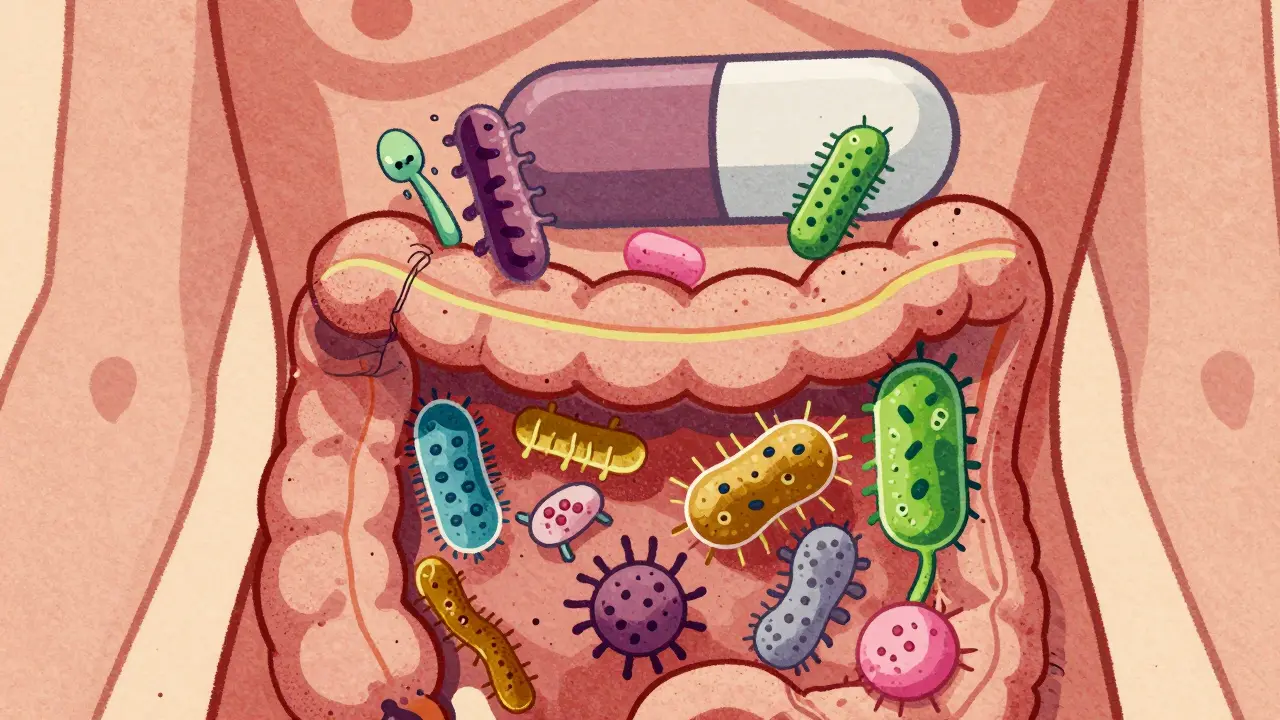
When you hear "probiotics," you might think of yogurt ads or a bottle of pills promising better digestion. But the science behind these supplements is far more complex - and more specific - than most marketing suggests. The truth? Probiotics aren’t a magic fix for every gut issue. They’re not even the same thing across brands. What works for one person might do nothing for another. And some products on the shelf might not even contain what’s listed on the label.
Let’s cut through the noise. Probiotics are live microorganisms. Not just any bugs. They’re specific strains of bacteria or yeast that, when taken in the right amount, can help your gut work better. This isn’t new. Back in the early 1900s, scientist Élie Metchnikoff noticed Bulgarian peasants who ate fermented milk lived longer. He guessed it was the lactic acid bacteria in the yogurt. Fast-forward to today, and we now know it’s not just about "good bacteria." It’s about which bacteria, how many, and for what.
What Probiotics Actually Do
Your gut holds about 100 trillion microbes from over 1,000 different species. Most of them - 95% - belong to just 40 to 50 types. These microbes aren’t just hanging out. They help break down food, make vitamins, train your immune system, and keep harmful bugs from taking over. When antibiotics wipe out good bacteria, or when stress or bad food messes up the balance, problems like diarrhea, bloating, or cramps can show up.
Probiotics step in to help restore that balance. But they don’t all do the same thing. Think of them like tools in a toolbox. A hammer doesn’t fix a leaky faucet. And a probiotic strain that helps with antibiotic diarrhea won’t necessarily help with IBS.
The Evidence: Where Probiotics Work
Some of the strongest proof for probiotics comes from studies on kids with infectious diarrhea. A 2020 Cochrane Review looked at 82 trials with over 12,000 children. Those who took probiotics had a 36% lower chance of diarrhea lasting more than 48 hours. That’s not small. The strains that stood out? Lactobacillus rhamnosus GG (a specific strain of bacteria often used in supplements and yogurt) and Saccharomyces boulardii (a yeast probiotic, not a bacteria). Both cut the duration of diarrhea by about a day on average.
For adults on antibiotics, the data is just as clear. When people took Lactobacillus rhamnosus GG at doses between 4 billion and 12 billion CFU daily for 10 days to 3 months, their risk of antibiotic-associated diarrhea dropped from 22.4% to 12.3%. That’s a nearly 50% reduction. Timing matters too. Taking probiotics at least 2 hours after your antibiotic dose gives the good bugs a fighting chance to survive.
For ulcerative colitis, a type of inflammatory bowel disease, certain probiotics like E. coli Nissle 1917 and the VSL#3 blend (a mix of 8 strains) have shown modest benefits in clinical trials. The American Gastroenterological Association says these might help maintain remission - but only for ulcerative colitis, not Crohn’s disease.
Where Probiotics Fall Short
Here’s where things get messy. For irritable bowel syndrome (IBS), the results are all over the place. Some studies show slight improvements in bloating or pain. Others show nothing. A 2023 review from the Mayo Clinic pointed out that there’s no clear, consistent benefit across the board. Why? Because IBS isn’t one condition. It’s a group of symptoms with different causes. One person’s IBS might be triggered by gas from bad bacteria. Another’s might be linked to nerve sensitivity. A probiotic that works for one won’t help the other.
And what about general "gut health" claims? The European Food Safety Authority (EFSA) has rejected over 90% of probiotic health claims because the evidence wasn’t strong enough. They only approved yogurt cultures for helping people digest lactose. That’s it. No "boosts immunity," no "detoxifies the body," no "cures leaky gut." Those are marketing words, not science.
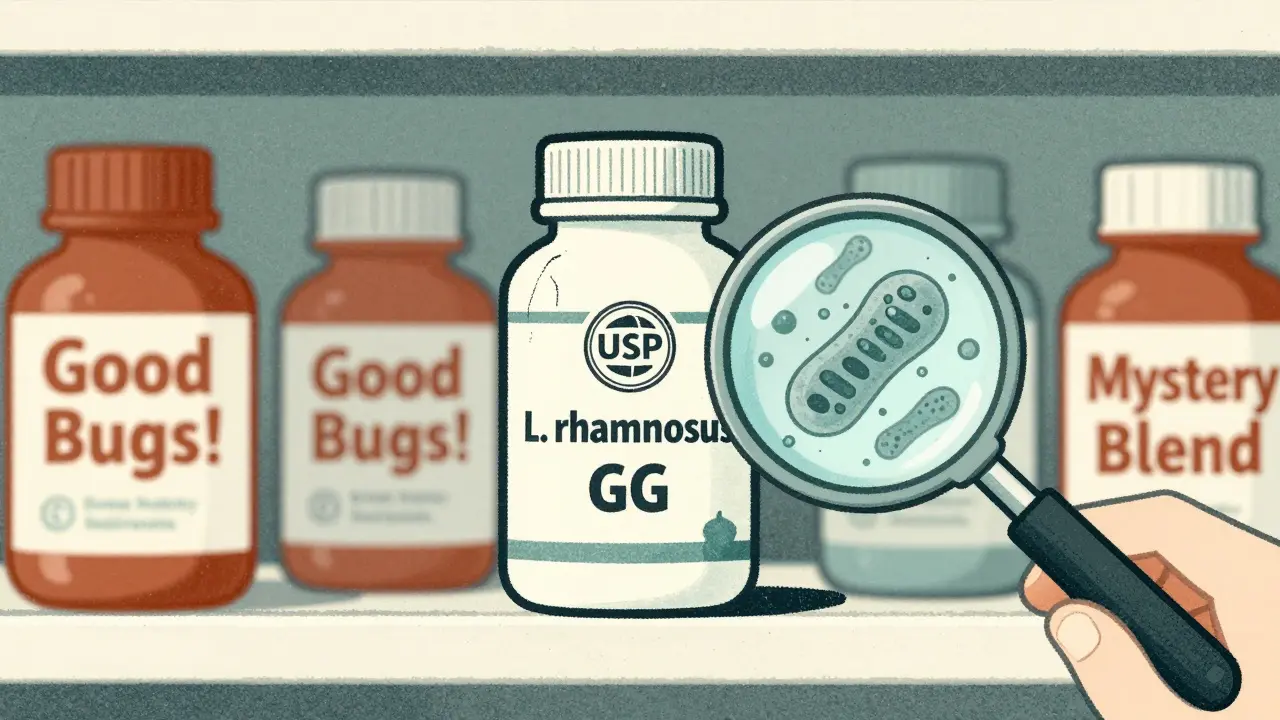
Strain Matters - A Lot
Not all Lactobacillus acidophilus is the same. There are at least five different strains: LA-1, LA-5, NCFM, DDS-1, and SBT-2026. Each behaves differently. One might help with lactose digestion. Another might reduce inflammation. A third might do nothing at all. Most supplements don’t tell you which strain they’re using - or worse, they list a strain that hasn’t been studied for the condition they’re claiming to treat.
Same goes for Lactobacillus plantarum DSM 9843. A 2013 study found that people with IBS who took this specific strain in a rose-hip drink had less pain and gas. But if you buy a probiotic with "L. plantarum" without the DSM 9843 label, you’re not getting the same thing.
That’s why you can’t just pick a probiotic based on the number of CFUs. A product with 50 billion CFUs of the wrong strain is just expensive bacteria.
What to Look For
If you’re thinking about trying a probiotic, here’s what actually matters:
- Strain name - Look for the full scientific name, like Lactobacillus rhamnosus GG, not just "Lactobacillus".
- CFU count - For diarrhea prevention, aim for at least 10 billion CFU daily. For IBS, studies often use 1-10 billion, but strain matters more.
- Research backing - Does the brand cite studies for this specific strain for this condition? If not, be skeptical.
- Third-party testing - Look for seals from USP, NSF International, or ConsumerLab. A 2019 test found 30% of probiotics had fewer live organisms than labeled.
- Storage - Some need refrigeration (like VSL#3). Others, like Saccharomyces boulardii, are shelf-stable. Check the label.

Real People, Real Results
Online forums tell a mixed story. On Reddit’s r/Probiotics, one user wrote: "After 3 weeks of LGG at 10 billion CFU, my toddler’s antibiotic diarrhea vanished." Another said: "Tried five brands over six months. Zero change." Amazon reviews for Culturelle (which contains LGG) average 4.1 stars across 15,000+ reviews. Garden of Life, with a mix of strains, sits at 3.8. Positive reviews often mention less bloating (62%) or faster recovery after antibiotics (48%). Negative reviews? 37% say they got worse gas at first. That’s normal. It usually clears up in 3-7 days as your gut adjusts.
A 2022 survey by the Council for Responsible Nutrition found 74% of users felt better. But 26% didn’t notice a thing. That’s the reality. It works for some. Not for others.
Who Should Avoid Them
Most healthy people can take probiotics safely. But if you’re immunocompromised - say, after a transplant, on chemo, or with severe immune disorders - there’s a risk. Rare cases of bloodstream infections from probiotic strains have been reported. Talk to your doctor first.
Also, don’t use probiotics as a replacement for medical treatment. If you have chronic diarrhea, blood in stool, or unexplained weight loss, see a gastroenterologist. Probiotics won’t fix Crohn’s disease, colon cancer, or celiac disease.
The Future: Personalized Probiotics
Companies like Viome and Thryve now offer gut microbiome tests and custom probiotic blends. The idea is simple: your gut is unique. So your probiotic should be too. Early research is promising, but it’s still experimental. No one can yet say which strain will fix your specific imbalance - not reliably, anyway.
For now, the best advice is this: If you’re taking antibiotics, consider Lactobacillus rhamnosus GG or Saccharomyces boulardii. If you have ulcerative colitis and it’s in remission, talk to your doctor about VSL#3 or E. coli Nissle 1917. If you’re just feeling bloated and want to try something, pick a well-tested brand with verified CFUs and a strain backed by studies. Don’t expect miracles. But don’t write them off either.
The market is huge - $50.2 billion in 2022 and growing. But science is still catching up. Probiotics aren’t magic. They’re medicine. And like medicine, they need the right dose, the right target, and the right person.
Do all probiotics help with digestion?
No. Only specific strains have proven digestive benefits. For example, Lactobacillus rhamnosus GG and Saccharomyces boulardii are backed by strong evidence for preventing antibiotic-associated diarrhea and infectious diarrhea in children. Other strains may have no effect at all. Probiotics are not interchangeable.
How long does it take for probiotics to work?
It varies. For acute issues like antibiotic-related diarrhea, you might see results in a few days. For chronic issues like IBS or bloating, it can take 2 to 8 weeks. Most people experience mild gas or bloating in the first 3-7 days as their gut adjusts. If symptoms persist beyond two weeks, the product may not be right for you.
Are refrigerated probiotics better?
Not necessarily. Some strains, like those in VSL#3, require refrigeration to stay alive. Others, like Saccharomyces boulardii, are naturally heat-stable and work fine at room temperature. What matters is whether the product is stored as directed and contains enough live organisms at the time of use. Check the label and choose brands with third-party testing.
Can I get enough probiotics from food instead of supplements?
Yes - but only for general gut support. Yogurt, kefir, kimchi, sauerkraut, and kombucha contain live cultures that can help maintain a healthy microbiome. But they don’t deliver the high, targeted doses needed for medical conditions like antibiotic-associated diarrhea or ulcerative colitis. Supplements are more reliable for specific therapeutic use.
Why do some probiotics make me feel worse at first?
When you introduce new bacteria into your gut, your existing microbes react. This can cause temporary gas, bloating, or cramping as your microbiome adjusts. It’s similar to starting a new exercise routine - your body needs time to adapt. These symptoms usually fade within a week. If they don’t, stop taking the supplement and try a different strain.
Are probiotics safe for kids?
Yes, for healthy children. Lactobacillus rhamnosus GG and Saccharomyces boulardii are well-studied and safe for children as young as 6 months. They’re commonly used to reduce the duration of infectious diarrhea. Always choose age-appropriate products and consult a pediatrician if your child has a weakened immune system or serious illness.
Can probiotics help with weight loss or blood sugar?
Some early studies suggest certain strains may influence metabolism and insulin sensitivity, but the evidence is still weak and inconsistent. No probiotic is approved for weight loss or diabetes management. Don’t rely on them for these purposes. Focus on diet, exercise, and medical advice instead.
What’s the difference between probiotics and prebiotics?
Probiotics are live beneficial bacteria. Prebiotics are non-digestible fibers (like in onions, garlic, and bananas) that feed those bacteria. They work together - prebiotics help probiotics survive and thrive. Many supplements now combine both (called synbiotics), but they’re not the same thing.
Aisling Maguire
February 28, 2026 AT 16:00
So I tried that LGG stuff after my kid got sick from antibiotics, and holy crap it worked. Like, within 3 days the diarrhea just vanished. I was skeptical too - thought it was just hype - but now I keep a bottle in the fridge like ibuprofen. No more panic when the doctor prescribes antibiotics.
Brandon Vasquez
March 1, 2026 AT 06:34
Appreciate the breakdown. Too many people treat probiotics like vitamins. They’re not. Strain specificity matters. I’ve seen too many folks waste money on 50-billion-CFU blends with zero research backing.
Vikas Meshram
March 1, 2026 AT 22:13
Uhhhh… you forgot to mention that most probiotics are destroyed by stomach acid anyway. So unless they’re enteric-coated or from a reputable lab, they’re just expensive poop. Also, the FDA doesn’t regulate them like drugs so you’re basically gambling. I’ve seen 30% of bottles have 0 CFUs left. That’s not science. That’s a scam.
Ben Estella
March 3, 2026 AT 20:35
Europeans think they’re so smart with their EFSA rulings. Meanwhile, we’ve got real science here in the States. LGG? Proven. S. boulardii? Proven. If you’re not using these, you’re just buying placebo bottles from Amazon. Don’t let your gut get hijacked by marketing.
Jimmy Quilty
March 4, 2026 AT 06:37
Did you know the FDA secretly allows probiotic companies to use dead bacteria as long as they label it "live cultures"? I read a whistleblower report. The whole industry is a cult. Big Pharma hates probiotics because they’re cheap and people stop buying their $200 gut meds. They’re even lobbying to ban probiotics in hospitals. Why? Because they don’t want you to heal naturally.
Miranda Anderson
March 4, 2026 AT 13:10
I’ve been on probiotics for like 4 years now - started because of IBS, which I think is more about stress than food honestly - and I’ve tried everything. LGG, VSL#3, Garden of Life, Renew Life… some worked for a bit, others made me feel like a balloon. I think it’s trial and error. What helped me most was pairing it with prebiotic fiber - like raw garlic and green bananas - and just letting my body adjust slowly. No rush. No magic. Just patience. Also, I cry a lot now. Not because of gut stuff. Just… life. But my gut’s better. So that’s something.
Gigi Valdez
March 5, 2026 AT 17:14
The scientific consensus remains cautious but open. While certain strains demonstrate statistically significant efficacy in controlled trials, generalization across populations is not warranted. The heterogeneity of the human microbiome necessitates individualized approaches. Further longitudinal studies are required to establish long-term outcomes.
Sneha Mahapatra
March 6, 2026 AT 22:12
It’s funny how we treat gut health like a machine that needs fixing. What if it’s not broken? What if we’re just out of sync? The bacteria in our gut didn’t evolve to survive a 3pm protein bar and 7 hours of screen time. Maybe we don’t need more bugs. Maybe we need less chaos. I’ve stopped taking probiotics. Started eating fermented veggies daily. Walked more. Slept better. My gut? Quiet. Peaceful. Like it remembers how to be alive.
bill cook
March 7, 2026 AT 04:15
My gut’s been a disaster since I moved here from Canada. I tried every probiotic. None worked. Then I started crying every night. Not because I’m sad. Because my gut hurts. I don’t know if it’s the food, the stress, or just my soul. But I swear, the day I stopped Googling "best probiotics for IBS" and just ate plain yogurt… I felt something. Like, I don’t know. Maybe I’m just tired. But I’m not taking anything anymore. I’m just… here.
Byron Duvall
March 8, 2026 AT 23:46
Probiotics are a scam run by Big Yogurt. They’re just trying to get you hooked on supplements so you’ll keep buying their overpriced powders while they sell your microbiome data to Google and Amazon. I saw a guy on YouTube who got his gut sequenced - turns out he had 12 different strains that weren’t even listed on the bottle. That’s not science. That’s surveillance capitalism. Stop trusting labels. Start trusting your own gut.
Katherine Farmer
March 10, 2026 AT 22:05
Let’s be real: if you’re buying probiotics because you ate a burrito, you’re not healing your gut - you’re indulging in pseudoscience. The only strain worth mentioning is L. rhamnosus GG, and even then, only if you’re on antibiotics. Everything else? Marketing. The fact that people pay $40 for a bottle of "100 billion CFU" with no strain disclosure? That’s not wellness. That’s gullibility.
Full Scale Webmaster
March 12, 2026 AT 08:28
Okay, I’ve been reading this whole thing and I’m furious. I’ve spent $2,000 on probiotics in the last year. I’ve tried 17 different brands. I’ve read every study. I’ve tracked my poop in a journal. I’ve even tried enemas with kombucha. And guess what? Nothing worked. Not LGG. Not VSL#3. Not even the $89 "gut reset" from a guy on TikTok who said he cured his Crohn’s with turmeric and moonlight. I’m 38. I have chronic bloating. I can’t eat dairy. I can’t eat gluten. I can’t eat onions. I can’t eat ANYTHING. My husband says I’m obsessed. My therapist says I’m using gut health to avoid my trauma. But I’m not crazy. I’m just… hungry. And tired. And alone. And I just want to feel normal again. So if anyone has a real solution - not a supplement, not a theory - I’m all ears. I’ll even pay you.
Brandie Bradshaw
March 13, 2026 AT 17:06
There’s a profound irony here: we live in a world where we can sequence the human genome in hours, yet we still treat the gut microbiome like a black box filled with "magic bugs." The fact that we rely on anecdotal Reddit posts and Amazon reviews to guide our health choices speaks volumes about the collapse of scientific literacy. We need standardized, strain-specific, double-blind, placebo-controlled trials - not influencer testimonials. And until then, we’re not healing - we’re performing wellness.
Sumit Mohan Saxena
March 15, 2026 AT 00:30
It is imperative to note that the efficacy of probiotics is contingent upon strain-specific evidence, dosage consistency, and viable delivery mechanisms. The World Health Organization has delineated criteria for probiotic efficacy, which include: (1) identification at the strain level; (2) quantification of viable organisms at time of consumption; (3) clinical validation in peer-reviewed, randomized controlled trials; and (4) absence of pathogenicity. Products failing any of these criteria should not be recommended. Consumers are advised to consult peer-reviewed databases such as the National Center for Biotechnology Information (NCBI) for evidence-based strain selection.