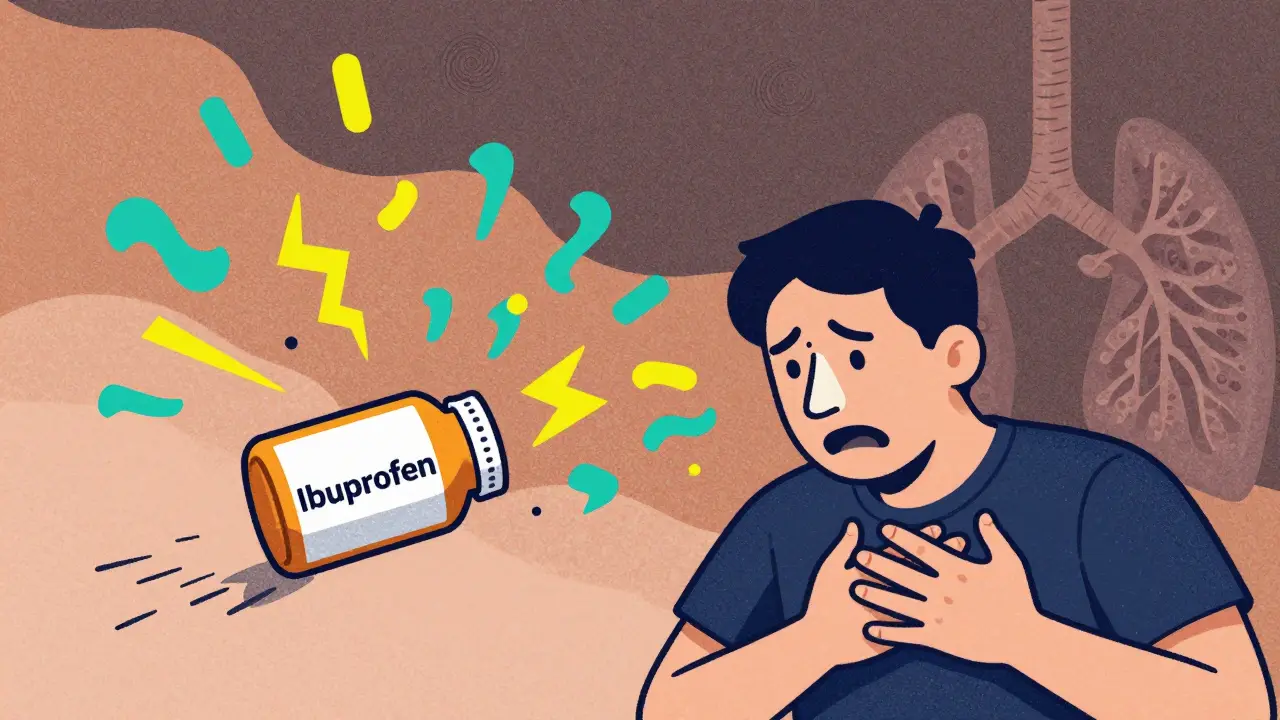
If you have asthma and reach for ibuprofen or aspirin for a headache, you could be setting off a silent alarm in your airways. This isn’t just a rare side effect - it’s a well-documented condition called NSAID-Exacerbated Respiratory Disease (NERD), sometimes known as Aspirin-Exacerbated Respiratory Disease (AERD). About 7% of adults with asthma have it. For some, even a single low-dose aspirin can trigger a sudden, dangerous asthma attack.
What Happens When NSAIDs Trigger Asthma?
NSAIDs like ibuprofen, naproxen, diclofenac, and aspirin work by blocking an enzyme called COX-1. In most people, that’s fine. But if you have NERD, blocking COX-1 throws your body’s inflammation system out of balance. Instead of making protective prostaglandins, your body floods your airways with leukotrienes - powerful chemicals that cause your bronchial tubes to tighten, your nose to swell, and mucus to pour out.
The reaction doesn’t take long. Within 30 minutes to 3 hours after swallowing an NSAID, you might feel:
- Sudden nasal congestion or a runny nose
- Wheezing or chest tightness
- Difficulty breathing
- Worsening asthma symptoms, even if you were stable before
For some, it’s mild. For others, it’s an emergency. Hospital visits are common when people mistake this for a cold or allergy and keep taking painkillers.
Who’s Most at Risk?
Not everyone with asthma is at risk. NERD tends to follow a clear pattern:
- You’re likely female
- You’re between 30 and 40 years old
- You’ve had chronic sinus problems or nasal polyps for years - often before asthma showed up
- You’ve had asthma for a while, but it’s been harder to control than others’
Here’s the kicker: if you have chronic rhinosinusitis with nasal polyps, your chance of having NERD jumps to 40-50%. That’s not a coincidence. The same inflammation that swells your sinuses also affects your lungs. Many people don’t realize their nasal congestion and asthma are linked until they have a reaction to an NSAID.
Studies also show that people with NERD often have worse asthma symptoms overall - more shortness of breath, more nighttime awakenings, more sputum, and more frequent use of rescue inhalers. It’s not just about the painkiller. It’s about the underlying disease.
What Pain Relievers Are Safe?
You don’t have to live in pain. There are alternatives - but you need to know which ones to pick.
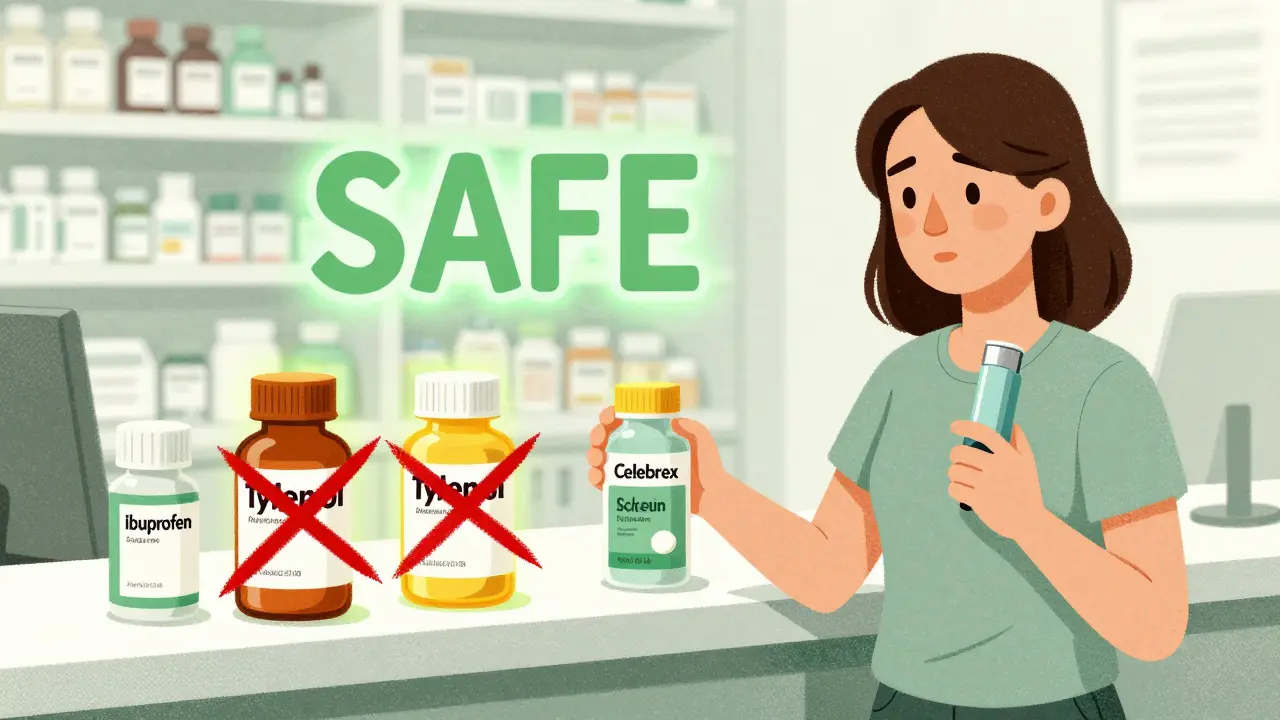
Acetaminophen (Tylenol) is usually safe for most people with NERD. Doses up to 1,000 mg per dose are generally well-tolerated. But here’s the catch: 5-10% of people with NERD still react to acetaminophen, especially at higher doses or with repeated use. If you’ve never tried it, start low and watch for symptoms.
Celecoxib (Celebrex) is a COX-2 selective NSAID. Unlike aspirin or ibuprofen, it doesn’t block COX-1. Multiple studies show it doesn’t trigger reactions in NERD patients. It’s a prescription option, but for those who need daily pain relief, it’s often the best choice.
Other NSAIDs like ibuprofen, naproxen, diclofenac, and aspirin - avoid them. Even if you’ve taken them before without issue, NERD can develop over time. Once you’ve had one reaction, you’ll likely react to all NSAIDs. There’s no safe dose for most people with confirmed NERD.
Aspirin Desensitization: A Real Option
Some patients - especially those with severe nasal polyps and uncontrolled asthma - may benefit from aspirin desensitization. This isn’t something you do at home. It’s a carefully controlled process done in a hospital or allergy clinic over several hours or days.
Doctors slowly increase your aspirin dose until your body stops reacting. Once you’re desensitized, you take a daily low-dose aspirin. The result? Many patients report fewer sinus infections, smaller nasal polyps, less asthma flare-ups, and fewer hospital visits.
It’s not for everyone. But if your asthma and sinus issues are badly controlled, it’s worth talking to an allergist. Studies show up to 70% of patients who complete desensitization see long-term improvement.
Hidden NSAIDs Are Everywhere
Most people know ibuprofen is in Advil. But NSAIDs hide in dozens of other products:
- Some cold and flu remedies (like NyQuil, Excedrin, Midol)
- Muscle rubs and topical gels (like Bengay, Icy Hot)
- Some migraine medications
- Combination painkillers with caffeine or codeine
Always check the “Active Ingredients” list. Look for these names:
- Aspirin
- Ibuprofen
- Naproxen
- Diclofenac
- Ketoprofen
- Indomethacin
- Mefenamic acid
If you see any of these - skip it. Even if the label says “for headache” or “for menstrual cramps,” it’s still an NSAID. Many patients don’t realize they’ve been exposed until they have a reaction.

What to Do If You Suspect NERD
If you’ve ever had a sudden asthma attack after taking painkillers, don’t ignore it. Talk to your doctor or an allergist. Here’s what to prepare:
- Write down every time you took a painkiller and what happened
- Bring your medication list - including OTC products
- Note if you have nasal polyps, chronic congestion, or sinus infections
Your doctor may refer you for a supervised aspirin challenge test. This is the only way to confirm NERD. It’s done in a controlled setting with emergency equipment on standby. If confirmed, you’ll get a personalized action plan.
Long-Term Management Tips
- Wear a medical alert bracelet that says “NSAID Allergy” or “AERD”
- Keep a list of safe medications and share it with every new doctor
- Always ask pharmacists to check for NSAIDs when filling prescriptions
- Use your asthma action plan - if symptoms worsen after any medication, treat it like an asthma flare
- Don’t assume “natural” or “herbal” pain relievers are safe - some contain salicylates, which can trigger reactions too
Managing NERD isn’t about fear. It’s about awareness. You can live well with asthma and NSAID sensitivity - as long as you know what to avoid and what’s safe. The goal isn’t to eliminate pain relief. It’s to find the right options so you don’t trade one problem for a worse one.
Can I take Tylenol if I have NSAID-sensitive asthma?
Yes, acetaminophen (Tylenol) is usually safe for people with NSAID-sensitive asthma. Most tolerate doses up to 1,000 mg per dose without issue. However, about 5-10% of people with NERD still react to acetaminophen, especially at higher doses or with frequent use. Start with a low dose and monitor for symptoms like wheezing or nasal congestion.
Is aspirin the only NSAID that causes problems?
No. Any NSAID that inhibits the COX-1 enzyme can trigger a reaction in people with NERD. This includes ibuprofen, naproxen, diclofenac, ketoprofen, and others. Aspirin is the most common trigger because it’s the strongest COX-1 blocker, but reactions are not limited to aspirin alone. If you react to one, you’ll likely react to all.
Can children develop NSAID-sensitive asthma?
Yes, but it’s rare. NERD typically develops in adults between ages 30 and 40. While some studies show short-term NSAID use may increase asthma exacerbation risk in children, true NERD is almost never diagnosed before age 20. Children with asthma should still avoid NSAIDs if they have nasal polyps or severe asthma, but the condition is uncommon in younger populations.
What’s the difference between NERD and a regular allergy?
NERD isn’t an IgE-mediated allergy like peanut or pollen allergies. It’s a pharmacological reaction caused by how NSAIDs interfere with your body’s inflammation pathways. You won’t test positive for allergies to aspirin on skin or blood tests. Diagnosis requires a clinical history and often a supervised aspirin challenge. Symptoms are similar to asthma attacks but happen predictably after taking NSAIDs.
Are there any new treatments for NERD?
Yes. Researchers are exploring therapies that target the excess leukotrienes causing inflammation. Biologics like anti-IL-5 drugs (mepolizumab, reslizumab) and anti-IL-4/13 drugs (dupilumab) are showing promise in reducing nasal polyps and improving asthma control in NERD patients. Some studies are also testing LXA4 analogs to restore the body’s natural anti-inflammatory signals. Aspirin desensitization remains the most proven long-term treatment.
Can I use topical NSAIDs like creams or gels?
Some people with NERD can tolerate topical NSAIDs like diclofenac gel or ibuprofen cream because very little enters the bloodstream. But there’s no guarantee. Cases of reactions from topical use have been reported. If you have severe NERD, it’s safest to avoid them. Talk to your doctor before using any topical NSAID.
Should I avoid all painkillers if I have asthma?
No. Only avoid NSAIDs if you’ve been diagnosed with NERD or have nasal polyps and asthma. Acetaminophen and COX-2 inhibitors like celecoxib are safe for most. The key is knowing your risk. If you’ve never had a reaction, you can likely use NSAIDs cautiously. But if you’ve had breathing problems after painkillers, assume you have NERD until proven otherwise.
Darren McGuff
January 9, 2026 AT 20:31
Man, I wish I’d known this 10 years ago. I kept taking ibuprofen for my migraines, thought the wheezing was just stress. Ended up in the ER three times before an allergist connected the dots. NERD isn’t rare-it’s just ignored. If you have polyps and asthma, assume you have it until proven otherwise. Don’t be like me.
Heather Wilson
January 10, 2026 AT 11:39
Typical. Another article scaring people away from OTC meds. Acetaminophen is liver toxic if you drink. Celecoxib is a cash grab for Big Pharma. And aspirin desensitization? Only for rich people with good insurance. This isn’t medicine-it’s fearmongering dressed up as advice.
Micheal Murdoch
January 11, 2026 AT 09:43
It’s funny how we treat pain like it’s a moral failing. We reach for pills before we ask why we’re inflamed in the first place. NERD isn’t just about avoiding NSAIDs-it’s a sign your body’s been screaming for balance for years. Maybe the real question isn’t ‘what drug to take,’ but ‘what’s your body trying to tell you?’
Patty Walters
January 11, 2026 AT 15:59
just wanted to say tylenol can still mess u up if u take too much. i had a reaction at 1500mg. start low. listen to your lungs. also, check the back of your toothpaste-some have sodium lauryl sulfate, which can irritate too. not related but fyi.
Jacob Paterson
January 12, 2026 AT 08:18
Oh wow, so if you’re a woman over 35 with sinus issues, you’re basically a walking time bomb unless you’re on celecoxib? And if you’re poor? Too bad. Guess I’ll just suffer through migraines with ice packs and prayer. Thanks for the detailed guide to medical elitism.
Alicia Hasö
January 13, 2026 AT 00:59
To anyone reading this: you are not broken. You are not overreacting. If your breathing changed after a painkiller, that’s not ‘bad luck’-it’s your body giving you data. Please, find an allergist who listens. I was told I was ‘just anxious’ for five years. Then I got diagnosed with NERD. I can breathe again. You deserve that too.
Matthew Maxwell
January 14, 2026 AT 00:46
Anyone who takes NSAIDs without knowing their asthma status is either reckless or ignorant. This isn’t a ‘personal choice’-it’s a public health hazard. People die from this. If you don’t know your risk, you’re a liability to yourself and others. Get tested. Stop being lazy.
Pooja Kumari
January 14, 2026 AT 14:28
I’ve had nasal polyps since I was 22, asthma since 25, and I didn’t connect them until I had a full-on attack after taking Excedrin for my period. I cried for an hour after the ER doc told me it was NERD. I felt so stupid. But then I found a support group online-women just like me. We share safe med lists, horror stories, and memes about how we miss Advil. You’re not alone. I’m here if you wanna talk. No judgment.
Jeffrey Hu
January 15, 2026 AT 20:36
Actually, the 7% stat is misleading. It’s 7% of asthmatics in the US, but in Europe it’s 12%. Also, the 40-50% nasal polyp overlap? That’s from a 2017 study with 87 patients. Most recent meta-analysis says 35%. And acetaminophen reactions? More like 15% at 1000mg. This article cherry-picks data to scare people. Read the original papers before you panic.
tali murah
January 17, 2026 AT 18:42
Oh look, another ‘you’re special, here’s a 10-step plan’ post. Meanwhile, my cousin’s kid has asthma, takes ibuprofen every other day, and runs track. She’s fine. Your ‘NERD’ is just a label for people who don’t know how to manage stress. Maybe stop blaming drugs and start blaming your lifestyle.
Phil Kemling
January 18, 2026 AT 12:19
What if the real problem isn’t the NSAIDs, but the way modern life suppresses our natural anti-inflammatory responses? We’re overmedicated, under-slept, and constantly inflamed. Maybe NERD isn’t an allergy to aspirin-it’s a symptom of a society that treats pain as an enemy to be erased, not a signal to be understood.
Elisha Muwanga
January 19, 2026 AT 08:57
As a medical professional, I’ve seen this too many times. Patients come in after a near-fatal reaction, blaming the drug. But they never mention they’ve been taking NyQuil weekly for ‘sleep.’ Or using Icy Hot for back pain. You can’t diagnose NERD if you don’t ask about the hidden stuff. Always ask: ‘What else are you putting on or in your body?’