Every year, over a million people in the U.S. end up in the emergency room because of problems with their medications. Many of these cases aren’t caused by bad drugs or careless doctors-they’re caused by lifestyle. Eating too much salt, skipping sleep, sitting all day, or drinking alcohol while on pills can turn a safe treatment into a dangerous one. The good news? You don’t need to rely on more pills to fix this. Simple, everyday changes can cut your risk of side effects, lower your doses, and sometimes even help you stop taking medications you no longer need.
Why Lifestyle Changes Work Better Than You Think
Medications treat symptoms. Lifestyle changes treat the root cause. If you’re on blood pressure pills because your arteries are stiff from years of salty food and inactivity, no pill will fix that stiffness unless you change what you eat and how you move. The same goes for diabetes, high cholesterol, and even anxiety. A 2023 review of 247 studies involving over 3.4 million people found that people who made consistent lifestyle changes cut their need for medications by 25% to 50% for common chronic conditions.This isn’t theory. It’s clinical fact. The American College of Lifestyle Medicine, founded in 2004, has spent two decades proving that diet, movement, sleep, and stress management aren’t just "nice to have"-they’re essential parts of treatment. And they’re not meant to replace your meds. They’re meant to work with them.
Lower Blood Pressure Without Adding More Pills
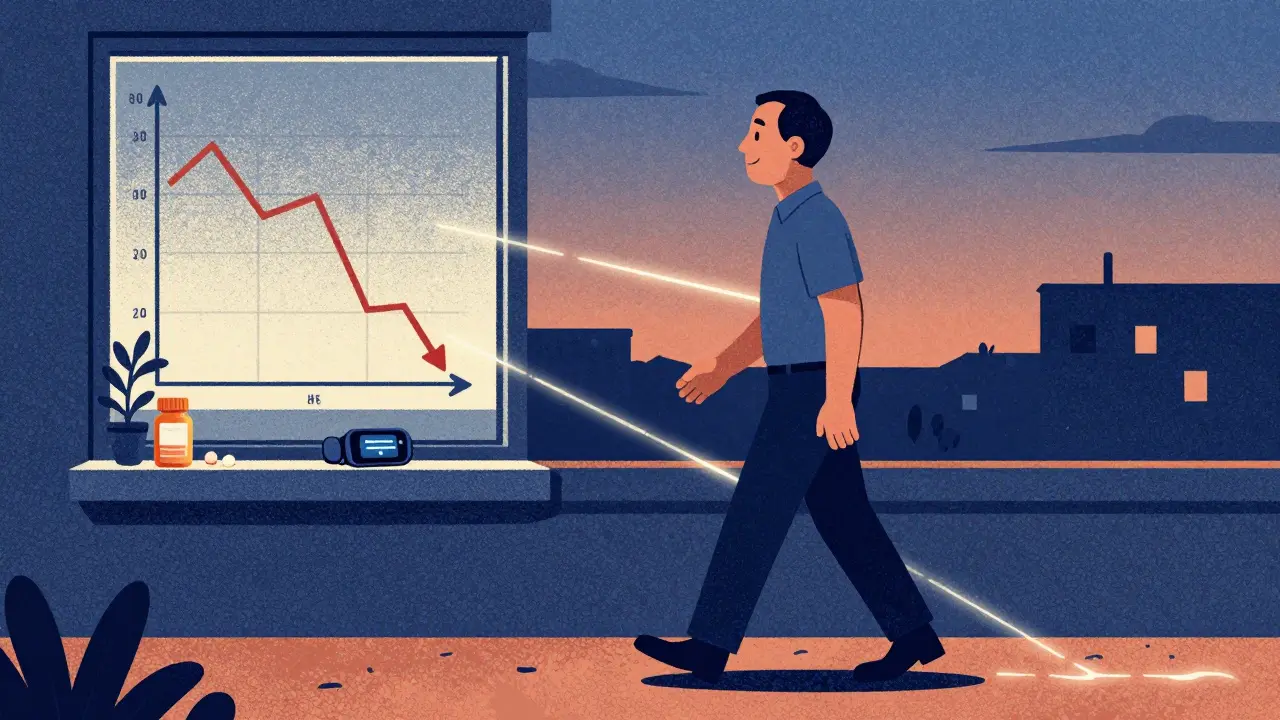
If you’re on hypertension medication, you’ve probably heard to cut the salt. But most people don’t realize how powerful this one change can be. Reducing sodium from 3,500 mg to 1,500 mg a day-about the amount in one fast-food meal-can drop your blood pressure as much as a single pill. That’s not a guess. It’s from a 2023 study in the New England Journal of Medicine.Pair that with the DASH diet-rich in vegetables, fruits, whole grains, and low-fat dairy-and you’re looking at a 11/5 mm Hg drop in blood pressure. That’s the same as taking lisinopril or amlodipine. One Reddit user in Perth, "HypertensionWarrior," dropped from 150/95 to 125/80 in six months by walking 30 minutes three times a week and cutting salt. His doctor took him off one of his two blood pressure pills.
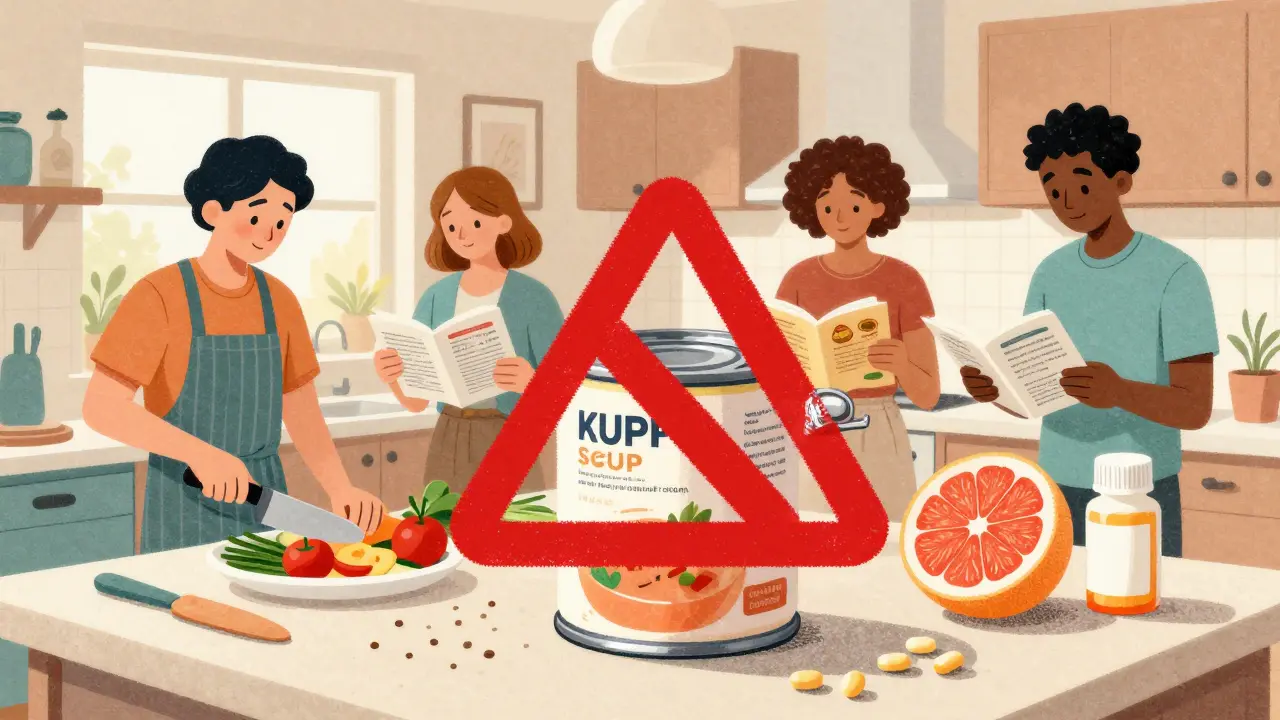
Don’t just stop adding salt. Check labels. Bread, canned soups, and frozen meals are often loaded with sodium. Swap them for fresh or frozen veggies, plain rice, and grilled chicken. You’ll feel the difference in energy, sleep, and how your clothes fit.
Manage Type 2 Diabetes by Losing Just 5% of Your Weight
For people with Type 2 diabetes, medication isn’t always the answer. In fact, losing 5% to 7% of your body weight-about 10 pounds for someone who weighs 150-can cut the need for insulin or metformin by up to 60% in prediabetes and 40% in those already diagnosed.This isn’t about extreme diets. It’s about consistency. A 2024 presentation at UC Davis Wellness Academy showed that combining daily movement with a plate that’s half non-starchy vegetables, a quarter lean protein, and a quarter whole grains works better than any pill alone. One patient cut her HbA1c from 8.2% to 6.4% in five months without adding a new drug.
And it’s not just about sugar. People with diabetes are twice as likely to die from heart disease. That’s why the American Heart Association’s Know Diabetes by Heart program says: managing blood sugar isn’t enough. You need to move, sleep, and reduce stress too.
Sleep Isn’t Optional-It’s Medicine
If you’re sleeping less than seven hours a night, you’re making your medications work harder-and possibly less effectively. Chronic sleep loss raises cortisol, spikes blood sugar, increases inflammation, and makes your body more resistant to insulin. It’s a silent trigger for high blood pressure, weight gain, and even depression.Studies show that people who get 7-9 hours of sleep every night respond better to antidepressants, blood pressure meds, and diabetes drugs. You don’t need fancy gadgets. Just turn off screens an hour before bed, keep your room cool, and stick to the same bedtime-even on weekends. One woman in her 60s, on three medications for hypertension and sleep apnea, started sleeping 8 hours a night. Within three months, her doctor lowered her blood pressure dose. She didn’t change a single pill. She just slept more.
Exercise Isn’t About Getting Ripped-It’s About Surviving
You don’t need to run marathons. You don’t even need a gym. Thirty minutes of brisk walking, three times a week, is enough to strengthen your heart, lower blood pressure, and improve insulin sensitivity. That’s the recommendation from JenCare Medical Centers based on their 2023 clinical analysis.And it’s not just walking. Strength training twice a week-lifting light weights, doing bodyweight squats, or even carrying groceries-helps your muscles absorb glucose better. That means your body needs less insulin. The Michigan State University College of Pharmacy recommends 150 minutes of moderate activity per week plus two days of strength training. That’s 30 minutes, five days a week. Start with two. Then three. Then five.
One man in his 50s, on statins and metformin, started walking after dinner. He didn’t lose weight fast, but his cholesterol dropped 18% and his A1C fell from 7.8% to 6.6% in six months. His doctor said: "You’re doing better than most people on the same meds."
Food Can Interfere With Your Meds-Here’s What to Watch For
Not all healthy foods are safe with every medication. Grapefruit, for example, blocks enzymes in your liver that break down 85% of statins. That means your cholesterol pill builds up to dangerous levels. One sip of grapefruit juice can cause muscle damage or kidney failure.Leafy greens like spinach and kale are full of vitamin K, which can make blood thinners like warfarin less effective. If you suddenly eat a big salad every day, your INR could drop and you could clot. But if you eat the same amount every day, your dose can be adjusted safely.
Dairy can interfere with antibiotics like tetracycline and ciprofloxacin. Don’t take them with milk, yogurt, or cheese. Wait two hours.
The solution? Talk to your pharmacist. Not your doctor. Your pharmacist knows every drug you take and how food, supplements, and even herbal teas interact with them. They’re free to consult with. Use them.
Stress, Alcohol, and Smoking-The Hidden Medication Killers
Chronic stress raises your blood pressure, spikes your blood sugar, and makes your body hold onto fat. It also makes you less likely to take your pills on time. Yoga, meditation, or even 10 minutes of deep breathing a day can reduce stress hormones enough to lower your blood pressure by 5-10 mm Hg.Alcohol? It’s a double threat. It raises blood pressure, interacts with antidepressants and painkillers, and can cause liver damage when mixed with statins or acetaminophen. Men should limit to two drinks a day. Women, one.
Smoking? It makes every medication less effective. It thickens your blood, narrows your arteries, and increases your risk of stroke and heart attack-even if you’re on blood thinners. Quitting cuts your heart attack risk by half within a year.
Don’t Stop Your Meds-Work With Your Doctor
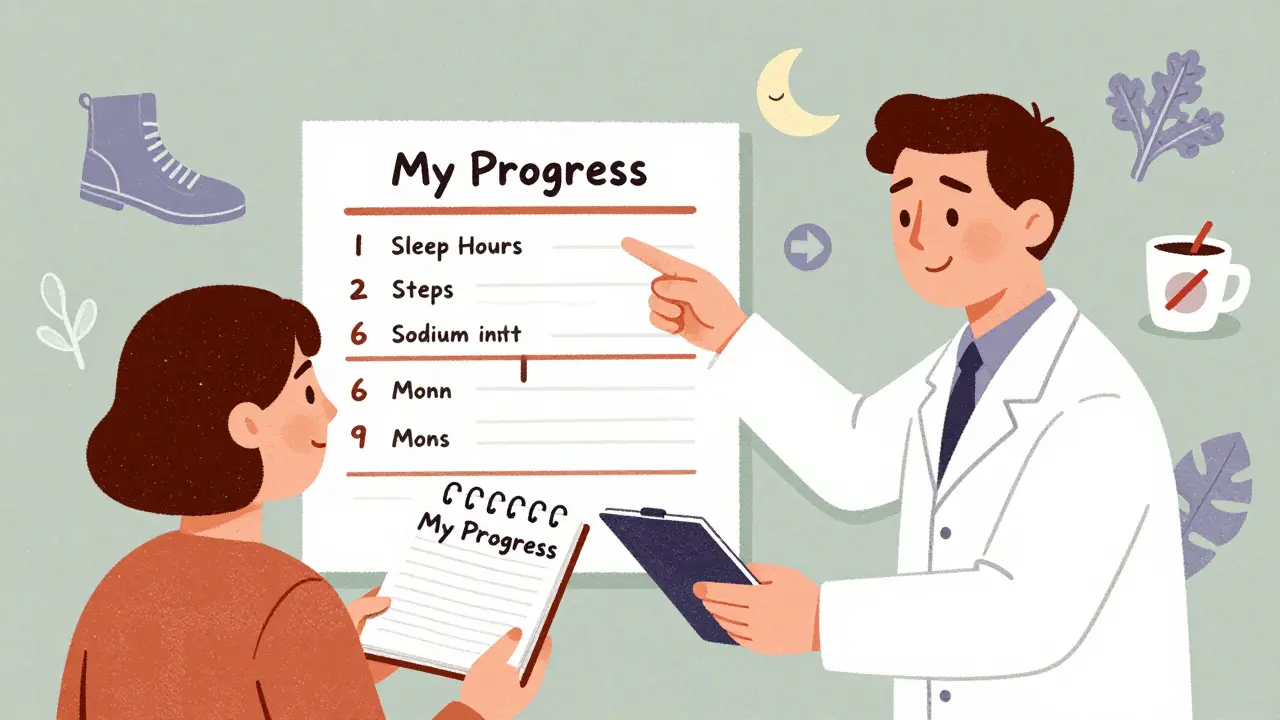
This isn’t about going off your meds. It’s about making them work better. Many people think, "I’m taking pills, so I don’t need to change." That’s the biggest mistake. One Harvard doctor put it bluntly: "People slack off on diet and exercise if they’re taking a statin or blood pressure pill. That’s like putting a bandage on a bullet wound."Always talk to your doctor before making changes. Never stop or reduce a medication on your own. But do ask: "Can lifestyle changes help me lower my dose?" Bring your food diary, your step count, your sleep log. Show progress. Doctors are more likely to adjust your meds when they see real, consistent change.
One woman on three medications for diabetes, high blood pressure, and cholesterol cut her pills to one after six months of walking, sleeping better, and cooking at home. Her doctor didn’t take her off anything-he just lowered the doses. She said: "I feel like I’m finally healing, not just masking."
What to Track and How to Stay on Track
You don’t need to do everything at once. Start with one change. Pick the easiest one. Maybe it’s walking after dinner. Or cutting soda. Or going to bed 30 minutes earlier.Track it. Use a notebook, a phone app, or even sticky notes on your fridge. Write down:
- How many minutes you moved each day
- How many hours you slept
- What you ate that had salt or sugar
- How you felt-energized, tired, anxious
After four weeks, look back. Did you feel better? Sleep deeper? Have fewer headaches? That’s your proof. That’s your motivation.
Use digital tools if they help. A 2024 study showed that people who used apps to track diet, sleep, and movement were 47% more likely to stick with changes than those who didn’t. But the tool doesn’t matter. Consistency does.
It’s Not About Perfection-It’s About Progress
You don’t have to be perfect. You don’t have to eat kale every day. You don’t have to run five miles. You just have to do better than yesterday.One man in his 70s, on six medications, started by just walking to the mailbox every morning. Then he walked to the corner store. Then he walked around the block. After nine months, he dropped two pills. He didn’t lose 50 pounds. He didn’t become a vegan. He just moved more and ate less processed food.
That’s the power of small changes. They add up. They stick. And they save lives.
When You’ll Start to See Results
Don’t expect miracles in a week. Lifestyle changes take time:- 4-6 weeks: Better sleep, more energy, less brain fog
- 8-12 weeks: Noticeable drop in blood pressure or blood sugar
- 3-6 months: Reduced medication doses, fewer side effects
Be patient. Be consistent. And remember: you’re not just avoiding side effects-you’re building a life where you don’t need as many pills to feel okay.
Can I stop my medication if I start eating better and exercising?
No. Never stop or change your medication without talking to your doctor. Lifestyle changes can help reduce your need for medication over time, but they should always be done alongside your current treatment-not instead of it. Your doctor can safely adjust your doses as your health improves.
What’s the most important lifestyle change for medication safety?
The most impactful change is reducing sodium intake, especially if you’re on blood pressure medication. Cutting salt can lower blood pressure as much as a pill. Next is consistent movement-just 30 minutes of walking three times a week can make a measurable difference in how your body responds to meds.
Can grapefruit really interfere with my pills?
Yes. Grapefruit interferes with 85% of statins and many other common medications, including some blood pressure and anxiety drugs. It causes your body to absorb too much of the drug, which can lead to dangerous side effects like muscle damage or kidney failure. Avoid it completely if you’re on these meds, and always ask your pharmacist if your pills interact with citrus.
How long does it take for lifestyle changes to lower my blood pressure or sugar?
You may notice better sleep and more energy in 4-6 weeks. Measurable drops in blood pressure or blood sugar usually show up after 8-12 weeks of consistent effort. For significant reductions in medication needs, most people need 3-6 months. Patience and consistency are key.
Do I need to join a program or hire a coach to make these changes?
No. While structured programs can help, you don’t need them. Start small: walk more, eat less processed food, sleep earlier. Track your progress. Talk to your pharmacist about food-drug interactions. Many people succeed on their own. If you feel stuck, ask your doctor for a referral to a dietitian or lifestyle coach-some Medicare Advantage plans now cover these services.
Medications save lives. But they’re not magic. They work best when your body is supported by the basics: good food, movement, sleep, and calm. You don’t need to be perfect. You just need to be consistent. And that’s something every single person can do.
Susannah Green
January 21, 2026 AT 12:42
Okay, but can we talk about how nobody tells you that grapefruit is a silent killer with statins? I had a friend who drank grapefruit juice every morning with his pills-no idea it was dangerous. He ended up in the hospital with rhabdomyolysis. Don’t be that person. Talk to your pharmacist. Seriously. They’re not just the people who hand you the pills-they’re your secret weapon.
Also, salt isn’t just in the shaker. It’s in your ‘healthy’ granola, your ‘low-fat’ yogurt, your ‘baked’ chips. Read labels like your life depends on it-because it does.
Vanessa Barber
January 22, 2026 AT 07:41
Interesting. But I’m skeptical about all this ‘lifestyle as medicine’ stuff. What if I just don’t care to walk 30 minutes a day? Or I like my bread? Or I need my wine? Are you saying I’m just going to die early because I’m not perfect?
Medications exist for a reason. Not everyone has the time, energy, or privilege to be a wellness influencer.
charley lopez
January 24, 2026 AT 02:15
The clinical evidence supporting lifestyle interventions as adjunctive therapy for chronic disease is robust, particularly in the context of metabolic syndrome and cardiovascular risk stratification. However, the generalizability of these findings is constrained by socioeconomic determinants, access to nutritional resources, and adherence metrics.
Moreover, the conflation of correlation with causality in patient-reported outcomes-e.g., ‘I felt better after walking’-is methodologically problematic without biomarker validation. While behavioral modification is ideal, it cannot be universally prescribed without structural support.
Anna Pryde-Smith
January 24, 2026 AT 18:02
THIS IS THE MOST IMPORTANT THING I’VE READ ALL YEAR. I was on FOUR meds for hypertension, diabetes, and cholesterol. I thought I was doing fine because I took my pills. Then I started walking after dinner, sleeping 8 hours, and ditching the canned soup. SIX MONTHS LATER-three meds gone. One dose lowered. I cried in my doctor’s office. I’m not ‘healing’-I’m LIVING. If you’re still reading this, stop scrolling and go make one change TODAY. Your future self will thank you.
PS: Grapefruit is not your friend. I learned that the hard way.
Stacy Thomes
January 26, 2026 AT 00:20
YESSSSSS! I did this. I cut soda. I walked with my dog. I went to bed at 10:30. I didn’t even lose weight-but my blood sugar dropped from 11.2 to 7.1 in three months. My doctor said, ‘I don’t know what you did, but keep doing it.’ I didn’t need a fancy app or a coach. Just me, my phone alarm, and a little grit.
You don’t have to be perfect. Just show up. Even if it’s just 10 minutes. That’s your win.
Dawson Taylor
January 26, 2026 AT 23:28
Consistency, not intensity, is the primary variable in behavioral adherence. The data suggests incremental change yields higher long-term retention than abrupt transformation. The notion of ‘lifestyle medicine’ as a complementary modality, rather than a replacement, aligns with biopsychosocial models of care. Minimal interventions, when sustained, produce statistically significant clinical outcomes across populations.
Sallie Jane Barnes
January 27, 2026 AT 01:49
I appreciate this post deeply. As someone who works with elderly patients, I’ve seen too many people believe that pills are enough. They stop moving, stop sleeping, stop eating well-and then wonder why they feel worse. The truth is: your body isn’t broken. It’s neglected.
But please-don’t shame people who can’t walk 30 minutes. Maybe they’re in pain. Maybe they’re depressed. Maybe they’re working two jobs. Small changes matter. Even if it’s just drinking water instead of soda. That’s a win.
Andrew Smirnykh
January 27, 2026 AT 15:57
Interesting how this mirrors traditional healing practices in many cultures-food as medicine, movement as ritual, rest as sacred. The West has spent decades outsourcing health to pharmaceuticals, but the roots of wellness were always in daily rhythm. I wonder if the reason these changes work isn’t just physiology-but psychology. When you take control of your routine, you reclaim agency. And that changes everything.
Kerry Evans
January 27, 2026 AT 21:45
Everyone’s acting like this is some groundbreaking revelation. It’s not. People have known for decades that salt, sugar, and inactivity are killers. What’s new is that the medical industry finally realized they can’t profit off ‘lifestyle changes’ the way they profit off pills. So now it’s ‘evidence-based.’
Meanwhile, the poor still can’t afford fresh produce, and the working class can’t take 30 minutes to walk because their job won’t let them. This post is nice. But it’s not justice.
Kerry Moore
January 29, 2026 AT 06:50
Thank you for this. I’ve been on statins and metformin for five years. I started walking after dinner six months ago. I didn’t tell my doctor. I just tracked my numbers. My LDL dropped 22%. My HbA1c fell from 7.3 to 6.1. When I brought it to him, he said, ‘I’m lowering your statin dose.’ I didn’t ask. He just did it.
Don’t underestimate the power of quiet, consistent action. You don’t need to announce it. You don’t need to post it. Just do it. And let your body speak for itself.