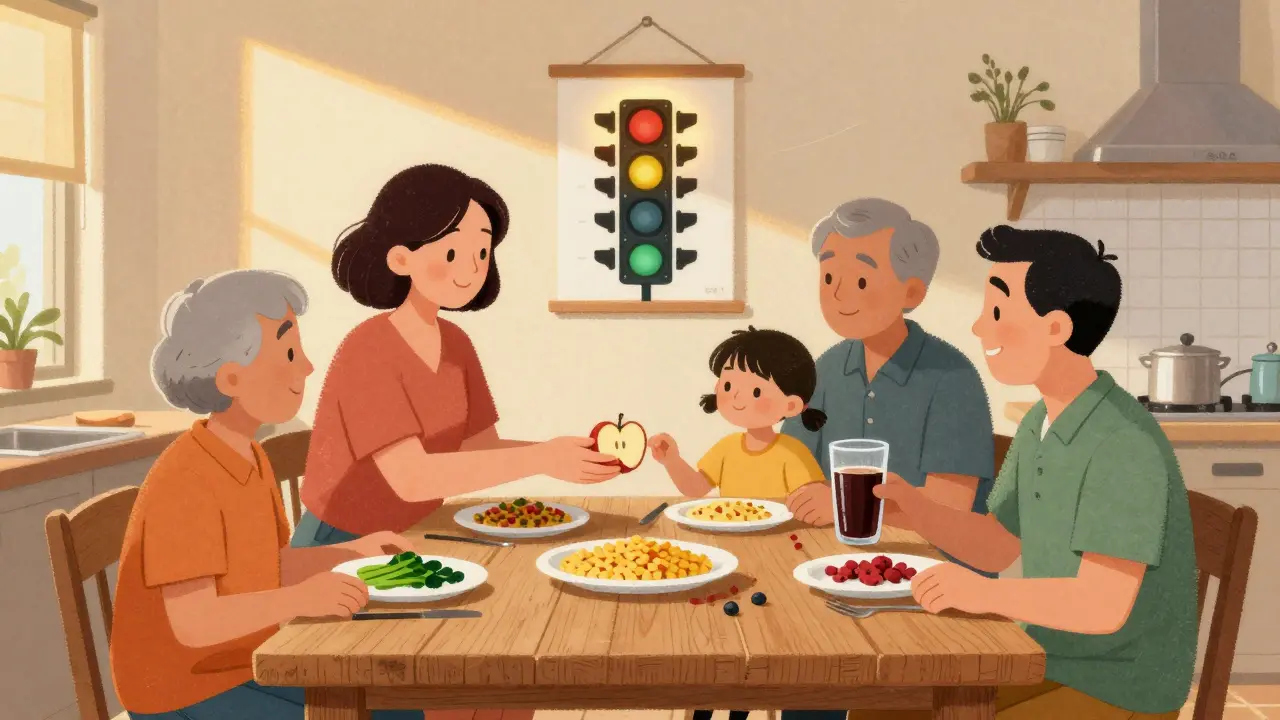
Childhood obesity isn't just about a child being overweight. It’s about a pattern of habits that started at home, grew over time, and now affects their health, confidence, and future. The numbers are stark: nearly 1 in 5 U.S. children and teens ages 2 to 19 have obesity, according to CDC data from 2017-2020. That’s more than 14 million kids. And it’s not getting better. But here’s the good news: the most effective way to turn this around isn’t through diets, weight-loss pills, or isolated counseling for the child. It’s through the family.
Why Family-Based Treatment Is the Gold Standard
For decades, doctors tried treating childhood obesity by focusing only on the child-giving them nutrition advice, setting exercise goals, or even prescribing medications. But the results were weak. Kids often lost weight temporarily, then gained it all back. Why? Because kids don’t live in a vacuum. They eat what’s in the fridge, watch TV after school, and copy what their parents do. If the whole household is eating fast food, drinking sugary drinks, or sitting down for hours in front of screens, no amount of telling the child to “eat better” will stick.
Family-based behavioral treatment (FBT) changed all that. Developed by researchers like Dr. Leonard Epstein in the 1980s, FBT treats the family as the system that needs to change-not just the child. It’s not about blaming parents. It’s about equipping them with tools to create a home environment where healthy choices are the easiest choices. The American Academy of Pediatrics, the American Psychological Association, and the National Institutes of Health all agree: FBT is the gold standard for treating children aged 2 to 18.
How FBT Actually Works: The Core Components
A typical FBT program runs for 6 to 24 months and includes 16 to 32 sessions. But it’s not just about talking. It’s about doing. Here’s what it looks like in practice:
- The Stoplight Diet: This isn’t a fad. It’s a simple, visual system. Green foods (fruits, veggies, whole grains) can be eaten freely. Yellow foods (dairy, lean meats, starchy carbs) should be eaten in moderation. Red foods (sugary snacks, fried foods, sugary drinks) are for rare occasions. Studies show this method reduces a child’s percentage overweight by nearly 10% in just six months.
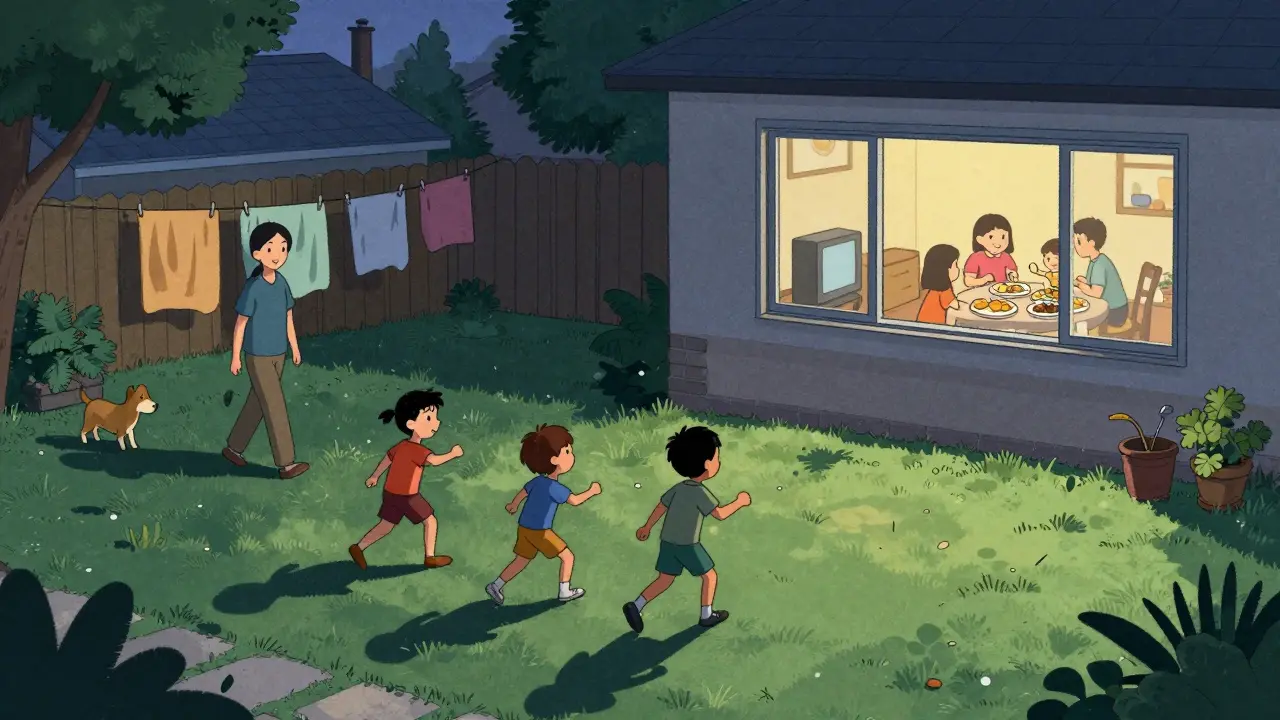
- Daily movement: Kids need at least 60 minutes of moderate-to-vigorous activity every day. That doesn’t mean soccer practice five nights a week. It means walking the dog, dancing after dinner, or playing tag in the yard. The goal is to get their heart rate up-not to turn them into athletes.
- Behavior tracking: Families keep simple journals: what they ate, how long they were active, and how they felt. No calorie counting. Just awareness. This helps spot patterns-like snacking after screen time or skipping breakfast before school.
- Parenting skills: Parents learn how to set limits without yelling, reward effort instead of weight loss, and avoid using food as comfort or punishment. Simple things like “We don’t eat in front of the TV” or “Let’s pick a fruit for dessert” become habits.
The most powerful part? FBT doesn’t stop at the child. Parents lose weight too. In a major 2023 JAMA trial, parents in FBT programs lost 5.7% more body weight than those in usual care. When moms and dads model healthy habits, kids follow-not because they’re told to, but because it’s normal.
What Happens to Siblings? The Ripple Effect
One of the most surprising findings from recent research is that siblings who aren’t even part of the program still improve. In the same JAMA trial, siblings in FBT families saw a 7.2% better weight outcome than siblings in control families. Why? Because when one child starts eating vegetables, the whole family starts buying them. When the family starts walking after dinner, everyone walks. The home environment shifts. That’s the power of systems change.
It’s not just about one child. It’s about changing the way the whole family lives. And that’s why FBT is more effective than any child-only program. A 2019 meta-analysis found FBT produced 0.55 standard deviations greater weight loss than interventions focused only on the child.
Early Intervention Is Key
The earlier you act, the better the outcome. Pediatricians now recommend starting FBT as early as age 4 or 5-if a child is already on a trajectory of rapid weight gain. Waiting until they’re 12 or 14 makes it harder. By then, unhealthy habits are deeply rooted, and self-esteem is often damaged. Dr. Stephen Cook from the University of Rochester puts it bluntly: “If you make a slight change now, you will have a much better long-term projection for the child than when they have severe obesity later and small changes won’t matter as much.”
That’s why the 2023 AAP guidelines now recommend FBT for children as young as 2. It’s not about labeling a toddler as obese. It’s about catching the pattern early and gently redirecting it.
Real-Life Changes That Make a Difference
You don’t need a fancy program to start. Small, consistent changes work better than big overhauls. Here’s what the data says works:
- Family meals: Eating together at least 3 times a week lowers obesity risk by 12%. It doesn’t have to be fancy. A sandwich, an apple, and milk counts.
- Screens: Limiting screen time to under 2 hours a day cuts BMI by 0.8 units over time. That’s like dropping a full pound per child in a year.
- Sugary drinks: Cutting out soda, juice, and sweetened teas leads to a 1.0 BMI unit drop in 12 months. One less soda a day = 14 pounds less sugar a year.
- Modeling behavior: Parents who eat vegetables, walk regularly, and sleep enough are 3 times more likely to have kids who do the same. Kids don’t listen to lectures. They copy actions.
And it’s not just about food. Sleep matters. Kids who sleep less than 9 hours a night are 40% more likely to become obese. Stress matters too. Families under financial pressure often rely on cheap, calorie-dense foods. That’s why FBT includes support for managing stress, not just meals.
Barriers and Real-World Challenges
FBT works-but it’s not easy to access. Only 8% of children with obesity get any kind of structured treatment. Why? Because most pediatric clinics don’t have the staff, training, or time. Specialty clinics are far away, with wait times of 14 weeks on average. Travel distance? Over 22 miles for many families.
And then there’s cost. While FBT costs about $3,200 per family over two years (far cheaper than specialty care), many insurance plans still don’t cover it fully. Medicare and Medicaid do reimburse for intensive behavioral therapy (code G0447), but only 5% of eligible kids get it.
There’s also a fairness gap. Hispanic and Black children make up 54% of cases but only 31% of FBT participants. Language barriers, cultural differences in food, and lack of trust in the system keep many families out. Programs that hire bilingual coaches, use culturally familiar foods, and offer flexible hours are starting to close that gap.
What’s Next? Digital Tools and Community Support
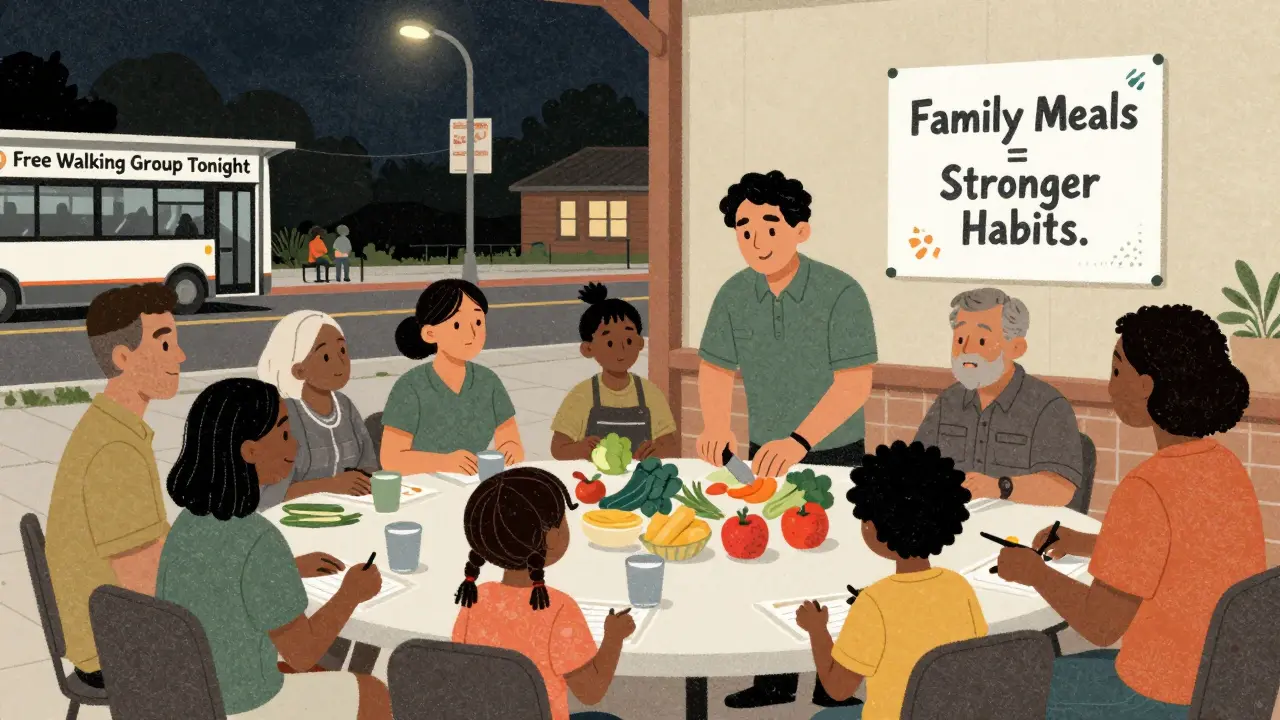
The future of FBT is hybrid. Apps that let families log meals, set activity goals, and get reminders from their coach are boosting engagement by 32%. Video sessions help families in rural areas. Community centers, libraries, and schools are starting to partner with clinics to offer free cooking classes, walking groups, and family fitness nights.
And the data shows it works. In a 2023 trial across 12 pediatric clinics, 78% of families completed at least 12 sessions-compared to just 55% in traditional specialty settings. When treatment is brought into the doctor’s office, where families already go for checkups, they show up.
When FBT Isn’t Enough
For some children-especially those with severe obesity (BMI ≥120% of the 95th percentile)-FBT alone may not be enough. In these cases, the 2023 AAP guidelines say it’s time to consider additional options: medications like semaglutide or liraglutide, or even metabolic surgery for teens over 13 with serious health complications. But even then, FBT is still the foundation. These treatments work best when combined with family support, not replaced by them.
What You Can Do Today
You don’t need to wait for a referral. Start small:
- Swap one sugary drink a day for water or milk.
- Turn off screens 30 minutes before bedtime.
- Have one family meal together this week-even if it’s just scrambled eggs and toast.
- Take a 10-minute walk after dinner. No phones. Just talk.
- Praise effort: “I liked how you tried the broccoli,” not “You lost weight.”
Change doesn’t happen overnight. But it does happen-when the whole family moves together.
What is the Stoplight Diet and how does it help with childhood obesity?
The Stoplight Diet is a simple, visual tool that categorizes foods into three groups: green (eat freely-fruits, vegetables, whole grains), yellow (eat in moderation-dairy, lean meats, starchy carbs), and red (eat sparingly-sugary snacks, fried foods, sugary drinks). It helps families make consistent, sustainable choices without counting calories or banning foods. Studies show it reduces a child’s percentage overweight by nearly 10% in six months by shifting the home food environment, not just the child’s behavior.
Is family-based treatment only for the obese child, or does it help the whole family?
Family-based treatment helps everyone. Parents typically lose 5-7% of their body weight during the program, and even siblings who aren’t directly involved show improved weight outcomes. The program changes the family’s routines-meal times, screen use, activity levels-so healthy habits become the norm for everyone. It’s not about fixing one child; it’s about rebuilding the home environment.
Can FBT work for families with limited time or money?
Yes, but it requires adaptation. You don’t need a 32-session program to start. Small, consistent changes-like swapping soda for water, eating one meal together daily, or taking a 10-minute walk after dinner-create real impact. Many community health centers now offer free or low-cost FBT groups. Insurance may cover sessions under code G0447. The key is consistency, not perfection.
Why do some families struggle to stick with FBT?
Common barriers include scheduling conflicts (38% of families report this), parental resistance to changing their own habits (29%), cultural disconnects in food advice, and lack of access to trained providers. FBT works best when it’s integrated into regular pediatric care, offered in flexible formats (like evening or virtual sessions), and delivered by coaches who understand the family’s background and challenges.
Is childhood obesity just about eating too much?
No. While diet plays a big role, other factors matter just as much: lack of sleep, too much screen time, chronic stress, and even genetics. Children in high-stress or low-income homes often rely on cheap, calorie-dense foods because they’re more accessible. FBT addresses all of this-not just food-by helping families build routines that support health in every area of life.